Expert analysis of Pietro Perugino’s Madonna of Consolation
Style: High Renaissance · Genre: religious painting
Expert Analysis: Madonna of Consolation by Pietro Perugino
Style & Period Significance
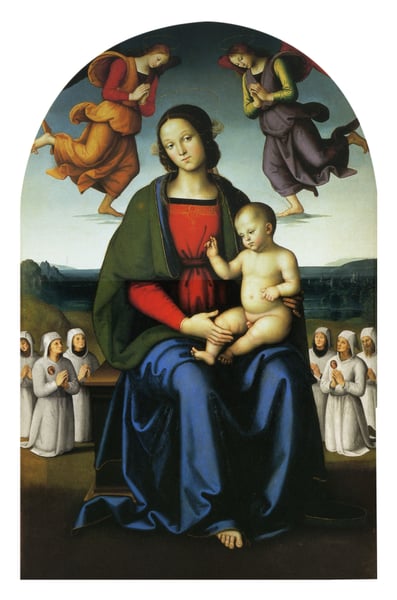
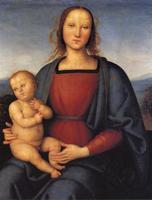
As a High Renaissance religious painting, Perugino’s Madonna of Consolation embodies the period’s ideals of harmonious balance, serene spirituality, and classical clarity. The painting’s significance lies in its masterful synthesis of the High Renaissance preoccupations: idealized human forms, calm symmetry, and a tranquil, luminous atmosphere that elevates the sacred narrative. Perugino, a leading figure of the Umbrian school, was renowned for his soft, atmospheric landscapes and graceful figures—elements that here create a sense of divine consolation through visual order.
Religious Genre & Composition
The work fulfills its devotional purpose through a centered, pyramidal composition typical of High Renaissance altarpieces. The Madonna and Child are placed in a calm, symmetrical arrangement, with the Virgin’s gentle downward gaze and the Christ child’s symbolic gesture reinforcing the theme of maternal solace and redemption. Perugino’s use of delicate chiaroscuro and clear, cool colors (often blues, pinks, and golds) imbues the scene with a spiritual purity, while the balanced placement of saints or angels (if present) would further anchor the composition in a celestial, ordered realm.
Key Innovation: Atmospheric Unity
What makes this painting significant within the High Renaissance is Perugino’s ability to unify the divine and human through a cohesive, airy landscape. The soft, hazy background—a hallmark of his style—fuses the holy figures with a natural setting that feels both earthly and ethereal, inviting the viewer into a state of contemplative consolation. This approach directly influenced his student Raphael, who later perfected these ideals of grace and compositional harmony.
Conclusion
Madonna of Consolation stands as a quintessential example of Perugino’s contribution to the High Renaissance: a devotional image that achieves profound spiritual resonance through formal clarity, gentle emotion, and a timeless, balanced aesthetic. Its significance lies in how it encapsulates the era’s pursuit of ideal beauty as a vehicle for sacred meaning.
Visually similar
20 works with related composition and palette
Terranuova Madonna
Raphael
Madonna and Child with two cherubs
Pietro Perugino
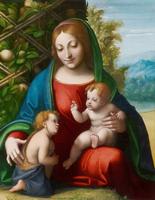
Madonna and Child
Correggio
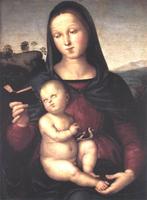
Solly Madonna
Raphael
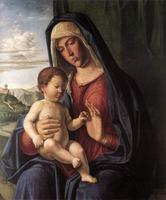
Madonna and Child
Cima da Conegliano
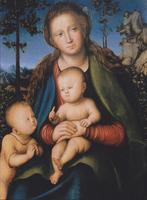
Madonna
Lucas Cranach the Elder
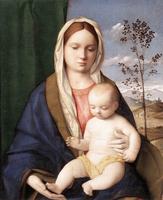
Madonna and child
Giovanni Bellini
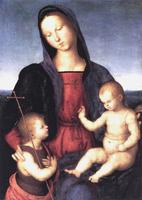
Diotalevi Madonna
Raphael
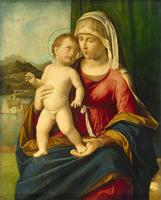
Madonna and Child
Cima da Conegliano
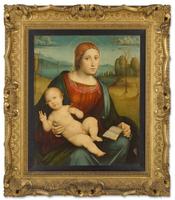
Madonna and Child
Francesco Francia
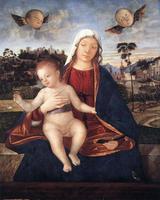
Madonna and Blessing Child
Vittore Carpaccio
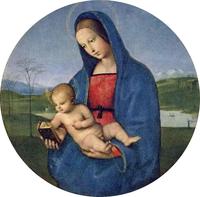
The Madonna Conestabile
Raphael
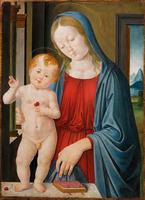
Madonna and Child
Andrea del Verrocchio
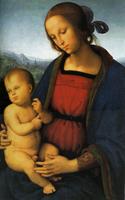
Madonna with Child
Pietro Perugino
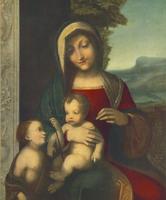
Madonna
Correggio
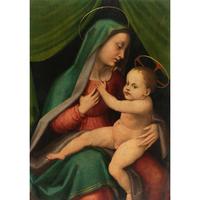
MADONNA MIT KIND
Fra Paolino da Pistoia
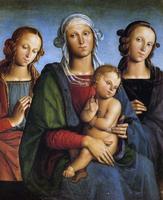
Madonna and Child with St. Catherine and St. Rosa
Pietro Perugino
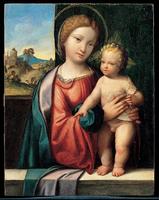
Madonna with the Child
Benvenuto Tisi
Niccolini-Cowper Madonna
Raphael
Madonna with Child
Pietro Perugino