Expertenanalyse zu Pietro Peruginos Pieta between St. John and Mary Magdalene
Stil: High Renaissance · Genre: religious painting
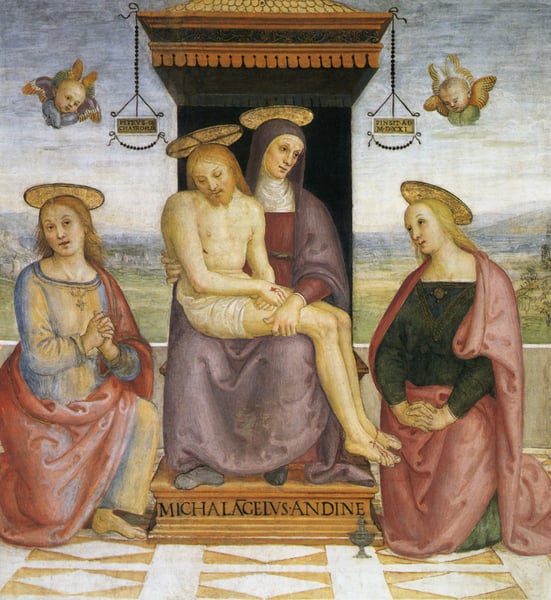
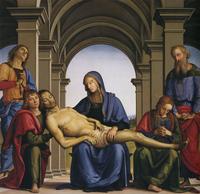
This exquisite painting by Pietro Perugino, "Pietà between St. John and Mary Magdalene," stands as a quintessential example of the High Renaissance style—a period defined by a pursuit of balance, clarity, and idealized grace. As a religious painting, it treats the timeless subject of the Lamentation, but Perugino’s rendering elevates the scene through a serene, harmonious composition that prioritizes spiritual contemplation over raw emotional anguish.
What makes this work significant within the High Renaissance:
- Mastery of Spatial Harmony: Perugino was a pioneer of the balanced, pyramidal grouping that would later be perfected by his student, Raphael. Here, the figures of the Virgin Mary (with the dead Christ), St. John, and Mary Magdalene are arranged in a calm, stabilizing triangular formation. This structure creates a sense of order and eternal stillness, inviting the viewer into a meditative space.
- Serene, Idealized Figures: True to Perugino’s signature, the facial expressions are subdued and peaceful, emphasizing divine sorrow rather than violent grief. The soft, delicate modeling and gentle, saccharine sweetness of the faces reflect the High Renaissance ideal of beauty as a reflection of the divine.
- Atmospheric Perspective and Color: The landscape behind the figures—a hallmark of Perugino’s Umbrian School heritage—recedes into a hazy, luminous distance. The soft blues and pale greens of the sky and hills contrast with the warm, muted reds and blues of the drapery, creating a unified tonal harmony that draws the eye inward.
- Influence on Raphael: Perugino was Raphael’s most important teacher. The compositional clarity, the graceful poses, and the integration of figures with landscape in works like this directly prefigure Raphael’s own “Pietà” and “The Entombment.” Studying this work reveals the foundational principles that Raphael would later carry to the Vatican.
In short, the significance of Perugino’s “Pietà between St. John and Mary Magdalene” lies in its distillation of High Renaissance ideals: perfect compositional balance, emotional restraint, and a luminous, almost ethereal atmosphere that transforms a tragic subject into a vision of serene piety. It is a key document of the moment when Italian religious painting achieved its most poised and classical expression.
Visuell ähnlich
20 Werke mit ähnlicher Komposition und Farbpalette
Pieta with St. Jerome and Santa Maria Magdalena
Pietro Perugino
Pala di Sant Agostino (Pieta)
Pietro Perugino
Pieta
Pietro Perugino
Christ in Pieta
Pietro Perugino
Lamentation of Christ
Carlo Crivelli
Pietà
Carlo Crivelli
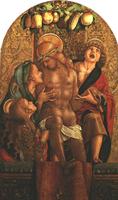
Lamentation Over the Dead Christ
Carlo Crivelli
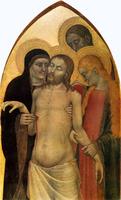
Pieta
Giovanni da Milano
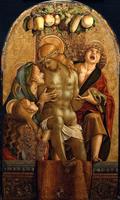
Lamentation Over the Dead Christ
Carlo Crivelli
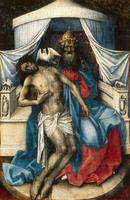
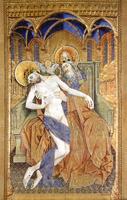
Mourning Trinity (Throne of God)
Robert Campin
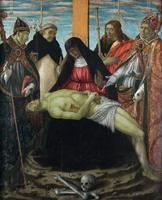
Pietà Con San Ludovico Di Tolosa, San Domenico, San Giacomo Maggiore E San Nicola Di Bari
Francesco Botticini
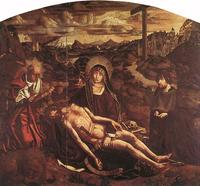
Pietà of Canon Luis Desplá
Bartolome Bermejo
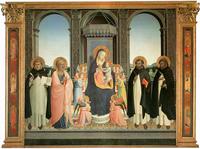
San Domenico Altarpiece
Fra Angelico
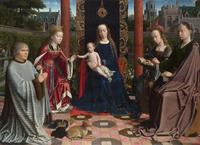
The Virgin and Child with Saints and Donor
Gerard David
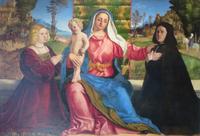
Madonna and Child with Donors
Palma Vecchio
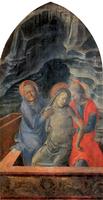
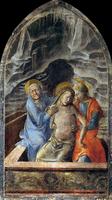
Dead Christ Supported by Mary and St. John the Evangelist
Filippo Lippi
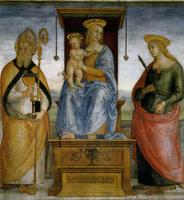
Virgin Enthroned with Saints Catherine of Alexandria and Biagio
Pietro Perugino
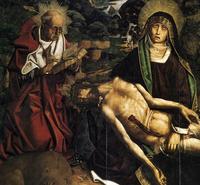
Pietà of Canon Luis Desplá (detail)
Bartolome Bermejo
Holy Trinity
Robert Campin
Pietà
Filippo Lippi