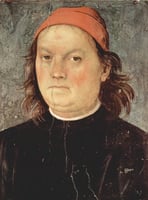
Analisi esperta di Saint di Pietro Perugino
Stile: High Renaissance · Genere: religious painting
Artwork: Saint (likely a single figure or part of a polyptych)
Artist: Pietro Perugino
Style: High Renaissance
Genre: Religious painting
Analysis of Significance
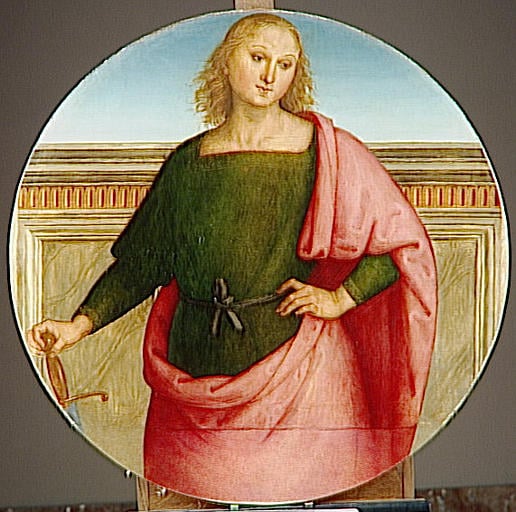
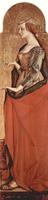
Pietro Perugino’s Saint exemplifies the defining ideals of the High Renaissance: harmonious composition, serene naturalism, and a balanced fusion of spiritual gravity with human beauty. As a religious painting, it captures the devotional calm and idealized grace that made Perugino one of the most sought‑after masters of his time—and the teacher of Raphael.
Key elements of its significance within the High Renaissance style:
- Balanced composition and clear spatial order – Perugino’s figures are typically placed in a shallow, luminous landscape or architectural setting, with a strong central axis and symmetrical arrangement that convey stability and divine order. This painting likely mirrors that tendency, using smooth, flowing contours to lead the eye toward the saint’s contemplative face.
- Soft, atmospheric sfumato – While Leonardo da Vinci perfected the technique, Perugino pioneered a softer, more lyrical version that softens edges and bathes the figure in a gentle, diffused light. This creates a sense of otherworldly tranquility, appropriate for religious devotion.
- Idealized, gentle humanism – The saint’s features are not rugged or ascetic but refined and serene, reflecting the High Renaissance belief that spiritual perfection could be expressed through physical beauty. The downward gaze, parted lips, and slight tilt of the head convey quiet prayer, inviting the viewer into a meditative experience.
- Influence on Raphael – Perugino’s masterful handling of perspective, color, and graceful figures directly shaped the young Raphael’s early style. Paintings such as The Madonna of the Pinks and The Marriage of the Virgin echo Perugino’s clarity and sweetness. Thus, Saint stands as a testament to the transmission of High Renaissance ideals from one genius to another.
Conclusion:
Perugino’s Saint is significant not only as a beautiful religious icon but as a key example of how High Renaissance painters synthesized realism, classical balance, and spiritual serenity. It demonstrates why Perugino was called “the best master in Italy” before Raphael rose to prominence, and it remains a touchstone for the era’s quest to harmonize the physical and the divine.
Museum / Gallery
Visivamente simili
20 opere con composizione e palette affini
St. Barbara
Giovanni Antonio Boltraffio
Polyptych Annunziata (St. Illuminata)
Pietro Perugino

Pala di Sant Agostino (St. Bartolomeo)
Pietro Perugino
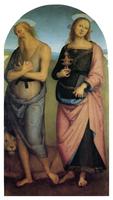
Pala di Sant Agostino (St. Jerome and Santa Maria Magdalena)
Pietro Perugino
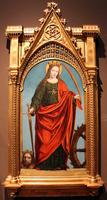
Saint Catherine of Alexandria
Ambrogio Bergognone
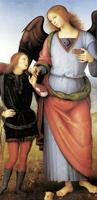
Archangel Raphael with Tobias
Pietro Perugino
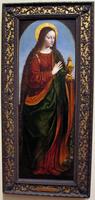
Santa Maria Maddalena
Ambrogio Bergognone
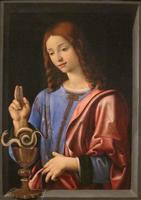
St. John the Evangelist
Piero di Cosimo
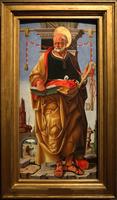
Saint Peter
Francesco del Cossa
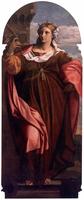
Polyptych of St Barbara (central Panel)
Palma Vecchio
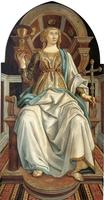
Faith
Piero del Pollaiolo
Mary Magdalene
Luca Signorelli
Salvator Mundi
Correggio
John the Baptist
Antoniazzo Romano
Episode from the Genesis
Mariotto Albertinelli
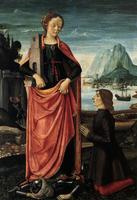
St. Barbara Crushing Her Infidel Father
Domenico Ghirlandaio
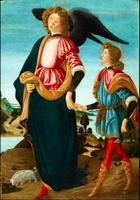
Tobias and the Archangel Raphael
Francesco Botticini
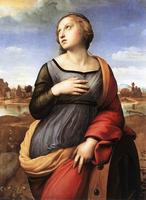
St. Catherine of Alexandria
Raphael
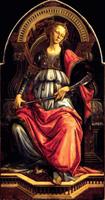
Fortitude
Sandro Botticelli
Saint Mary Magdalene
Carlo Crivelli