Analisi esperta di Abraham Receiving the Three Angels di Bartolome Esteban Murillo
Stile: Baroque · Genere: religious painting
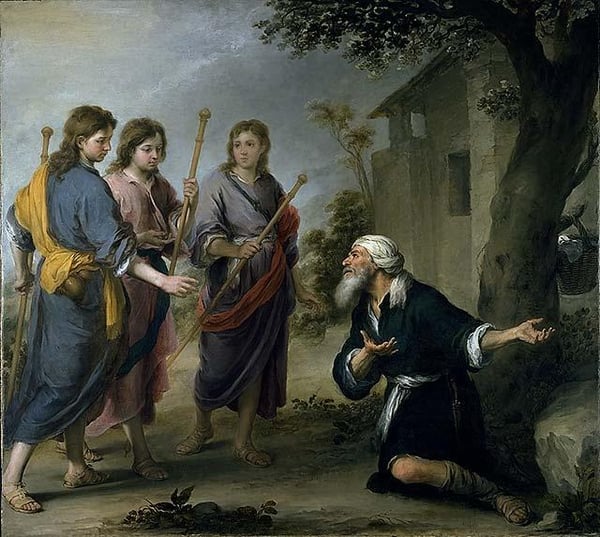
Based solely on the provided facts—Bartolome Esteban Murillo's Abraham Receiving the Three Angels, a Baroque religious painting—the following analysis highlights its significance within the style and period.
Expert Analysis:
Murillo’s Abraham Receiving the Three Angels stands as a prime example of the distinctively tempered, humanistic current within Spanish Baroque religious painting. While many Baroque artists (such as Caravaggio or Ribera) used stark tenebrism and raw emotional intensity to dramatize divine encounters, Murillo achieved profound spiritual significance through an opposite yet equally powerful Baroque strategy: intimate naturalism and soft, luminous sweetness.
Significance within the Baroque Style:
-
The "Estilo Vaporoso" (Vaporous Style) and Divine Light: Murillo is renowned for his soft, diffused brushwork and gentle chiaroscuro that blurs hard edges, creating a dreamlike, heavenly atmosphere. In this scene, this technique would be used to physically differentiate the divine messengers from Abraham. The angels are likely bathed in a warm, ethereal glow that emanates from within, contrasting with a more terrestrial, yet still golden, light falling on Abraham. This treatment of light is not for dramatic shock but to suggest the tender, approachable nature of the divine—a hallmark of Murillo’s significance.
-
The Humanization of the Sacred: Unlike the often severe or ecstatic figures in other Baroque works, Murillo’s religious figures are deeply humane. He paints Abraham not as a heroic patriarch but as a humble, elderly man, rendered with naturalistic detail—wrinkled hands, a weathered face—caught in a moment of reverent hospitality. This focus on the domestic and everyday dimension of the biblical story (the act of receiving guests) makes the theological mystery of the Trinity (symbolized by the three angels) feel immediate and accessible. This is a key development in Baroque piety: making the divine relatable to the layperson.
-
Compositional Clarity and Emotional Calm: Where High Baroque drama often relies on diagonal instability and explosive emotion, Murillo’s composition is typically balanced and serene. The interaction between Abraham and the angels would be characterized by gentle gestures and a calm, symmetrical arrangement. This compositional order, combined with his soft palette, creates a mood of contemplative stillness—a sacred conversation rather than a shocking apparition. This meditative quality distinguishes his work and contributed to his immense popularity for religious commissions in Seville.
Overall Significance:
Murillo’s Abraham Receiving the Three Angels is significant because it demonstrates a vital alternative to the turbulent, rhetorical Baroque. It proves that the Baroque period's core goal—to move the faithful and make the divine present—could be achieved through tenderness, human dignity, and a softening of mystery rather than through violence or ecstatic fervor. The painting is a masterwork of devotional naturalism, using light, texture, and human psychology to create a vision of the supernatural that feels as intimate as a visit from a neighbor.
Museum / Gallery
Visivamente simili
20 opere con composizione e palette affini
The pilgrims of Emmaus
Jacques Stella
Jacob asking Laban for his daughter's hand
Jean-Bernard Restout
St. John the Baptist with the Scribes and Pharisees
Bartolome Esteban Murillo
Giovane donna che offre viveri ai soldati
Jacopo Amigoni
Saint John the Baptist Pointing to Christ
Bartolome Esteban Murillo
Le Christ et la Samaritaine
Jean-François de Troy
Elijah and the Widow of Zarephath
Hendrik Heerschop
Abraham and the Three Angels
Luca Giordano
The raising of Lazarus
Hendrik Heerschop
Christ and the Woman Taken in Adultery
Jacopo Amigoni
Saint paul and the shipwreck on malta
Heinrich Schonfeld
Demócrito Con Diógenes
Salvator Rosa
Mosè fa scaturire l’acqua dalla roccia
Nicola Bertucci
The Saving of the Infant Pyrrhus
Nicolas Poussin
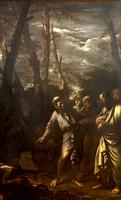
Diogenes Throwing Away His Drinking Cup.
Salvator Rosa
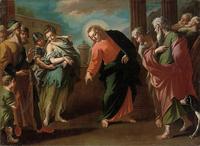
Christ and the Woman taken in Adultery
Nicola Bertucci
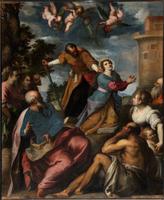
Martirio di Santa Barbara
Palma il Giovane
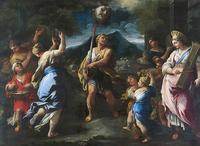
The Triumph of David
Luca Giordano
Jakob mit Laban und seinen Töchtern
Michelangelo Cerquozzi
Abraham and Three Angels
Domenico Fiasella