Analisi esperta di Daniel in the lions' den di Bartolome Esteban Murillo
Stile: Baroque · Genere: religious painting
Expert Analysis: "Daniel in the Lions' Den" by Bartolomé Esteban Murillo
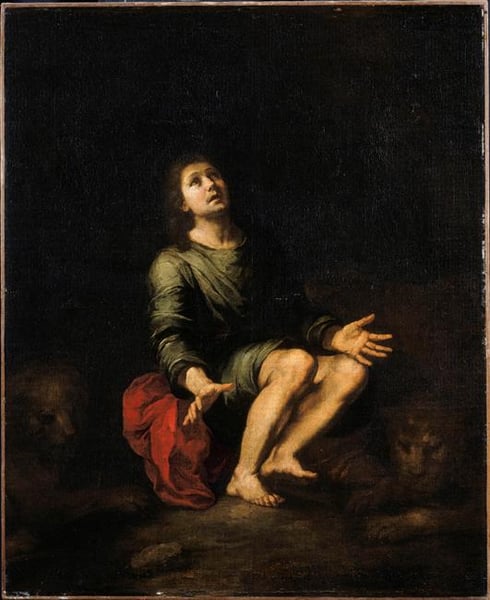
Bartolomé Esteban Murillo’s Daniel in the Lions’ Den is a masterful example of Spanish Baroque religious painting, distinguished by the artist’s characteristic blend of naturalistic warmth, tender piety, and restrained drama. While many Baroque artists emphasized theatrical chiaroscuro and violent emotion, Murillo’s interpretation of this Old Testament miracle stands out for its serene, almost intimate quality—a visual prayer rather than a spectacle.
Significance within the Baroque Style:
Murillo’s treatment aligns with the Baroque goal of engaging the viewer’s faith, but he achieves this through soft, diffused lighting and a calm, balanced composition rather than sharp contrasts or dynamic movement. The lions, often depicted as savage beasts, are rendered with a gentle, almost docile demeanor, emphasizing divine protection over mortal danger. This reflects the Counter-Reformation emphasis on God’s mercy and the power of faith, core themes in Spanish Baroque devotional art.
Religious Genre Innovation:
As a religious painting, the work transforms a potentially terrifying narrative into a vision of peace. Daniel is shown unharmed, his pose and expression conveying trust in God rather than fear. Murillo’s signature sfumato—a soft blending of colors—and his use of warm, glowing tones (especially in Daniel’s halo-like illumination) create a celestial atmosphere, reinforcing the miracle’s spiritual significance. This approach made the scene accessible and emotionally resonant for 17th-century viewers, who sought personal connection with biblical stories.
Contribution to Murillo’s Legacy:
Murillo’s Daniel in the Lions’ Den exemplifies his unique position within Baroque art: while contemporaries like Zurbarán or Ribera often used stark realism and austere devotion, Murillo introduced a gentle naturalism that made religious subjects approachable without losing their sacred power. This painting, in particular, demonstrates his skill in balancing narrative clarity with emotional subtlety—a hallmark that secured his reputation as the leading painter of Seville’s Golden Age and a master of the barroco pleno (full Baroque).
In sum, the artwork’s significance lies in its ability to express profound religious faith through quiet stillness and luminous grace, offering a distinctive, tender counterpoint to the more dramatic Baroque traditions of its time.
Visivamente simili
20 opere con composizione e palette affini
The Deliverence of St. Peter from Prison
Jusepe de Ribera
La mort de Lucrèce
Ludovico Carracci
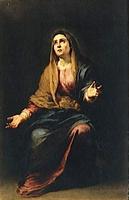
Mother of Sorrows
Bartolome Esteban Murillo
Roman Charity
Nicolas Tournier
Santa Cecilia E Due Angeli
Giulio Cesare Procaccini
Saint Roch
Guido Reni
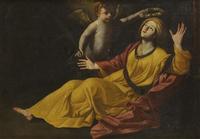
The death of St. Cecilia
Nicolas Tournier
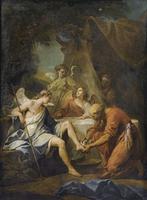
Abraham and the three angels
Jean II Restout
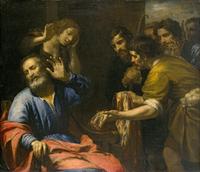
Joseph's Coat Brought to Jacob
Domenico Fiasella
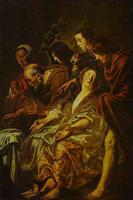
Holy Women at the Sepulchre
Jacob Jordaens
Elia Cibato From angel
Palma il Giovane
Democritus
Peter Paul Rubens
Le Christ et la Samaritaine
Jean-François de Troy
De droom van Sint-Jozef
Francisco Pacheco
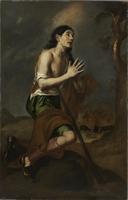
The Prodigal Son Among the Swine
Bartolome Esteban Murillo
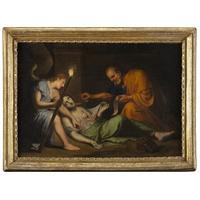
Saint Peter healing Saint Agatha in prison
Jacques Stella
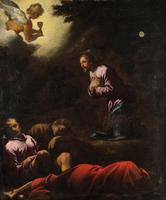
Agony in the Garden
Tintoretto
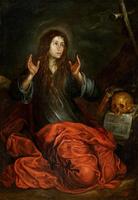
Penitent Magdalene
Juan Martín Cabezalero
Martyrdom of Saint Sebastian
Giulio Cesare Procaccini
Descent from the Cross (outside right panel)
Peter Paul Rubens