Expert analysis of Bartolome Esteban Murillo’s Madonna and Child
Style: Baroque · Genre: religious painting
Expert Art Historical Analysis: "Madonna and Child" by Bartolomé Esteban Murillo
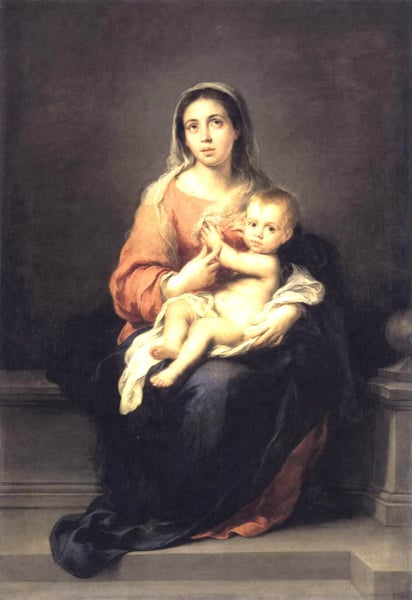
Bartolomé Esteban Murillo’s Madonna and Child stands as a quintessential example of the Spanish Baroque’s fusion of naturalistic intimacy and Counter-Reformation piety. While many Baroque artists emphasized dramatic chiaroscuro and theatrical grandeur, Murillo is celebrated for a softer, more lyrical approach that made religious subjects accessible and deeply human. This work is significant for several reasons:
-
Emotional Accessibility within Baroque Conventions: The Baroque period (c. 1600–1750) sought to evoke visceral emotional responses to Catholic themes. Murillo achieves this not through the turbulent dynamism of Caravaggio or the celestial visions of El Greco, but through a tender, almost domestic portrayal of the Virgin and Christ Child. The gentle interaction—often with the Child gazing at his mother or reaching for her—invites the viewer into a personal, meditative relationship with the divine.
-
Mastery of Light and Atmosphere: Murillo’s distinctive “vaporoso” style (a soft, sfumato-like blending of light and shadow) characterizes this work. The warm, diffused illumination envelops the figures, creating a sense of spiritual serenity. This treatment of light is a hallmark of Sevillian Baroque, where local artists like Murillo prioritized subtle tonal gradations over stark tenebrism.
-
Genre-like Realism in Religious Painting: Murillo often infused his sacred subjects with the naturalism of everyday life—a hallmark of his significance. The Madonna may appear as a young, humble Sevillian woman, and the Christ Child as a playful infant. This approach made the holy family relatable to common viewers, aligning with the Baroque Church’s goal of making faith tangible.
-
Influence on Later Art: Murillo’s Madonna and Child became an icon of pious sentiment, influencing later Rococo and even 19th-century devotional imagery. His ability to balance idealized beauty with human warmth set a standard for religious painting in Spain and its colonies.
In sum, this artwork’s significance lies in how it embodies the Spanish Baroque’s unique blend of realism, tenderness, and spiritual accessibility—transforming a traditional religious theme into an intimate, timeless encounter.
Museum / Gallery
Visually similar
20 works with related composition and palette
Virgin and Child
Bartolome Esteban Murillo
Madone Et Enfant Avec Deux Anges
Giambattista Pittoni
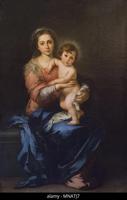
Virgin with Child
Bartolome Esteban Murillo
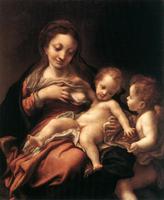
Virgin and Child with an Angel
Correggio
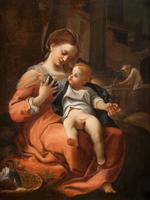
The Madonna of the Basket
Correggio
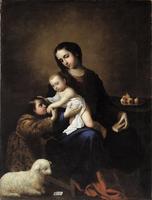
The Virgin and Child with the Infant St John the Baptist
Francisco de Zurbaran
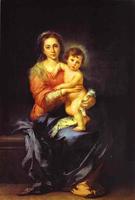
Madonna and Child
Bartolome Esteban Murillo
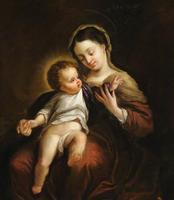
The Virgin and Child
Correggio
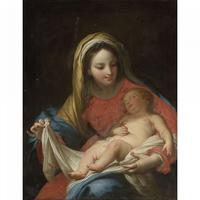
MADONNA AND CHILD
Pietro de' Pietri
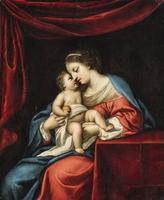
Virgin and Child holding an apple
Jacques Stella
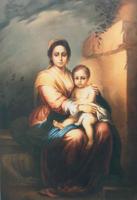
Maternity
Gheorghe Tattarescu
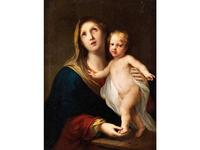
DIE MADONNA MIT DEM JESUSKNABEN
Jacopo Amigoni
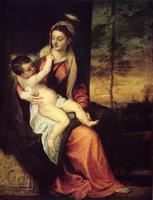
Mary with the Christ Child
Titian
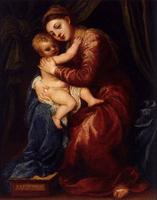
Virgin and Child
Titian
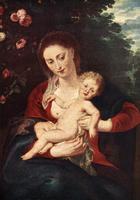
Virgin and Child
Peter Paul Rubens
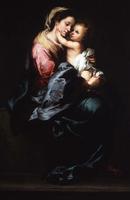
Virgin and Child
Bartolome Esteban Murillo
MARIA MIT DEM KIND UND DEM JOHANNESKNABEN
Hans Rottenhammer I
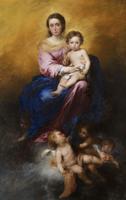
The Madonna of the Rosary
Bartolome Esteban Murillo
Madonna and Child
Joseph Paelinck
The Virgin and Child
Alonzo Cano