Expert Analysis:
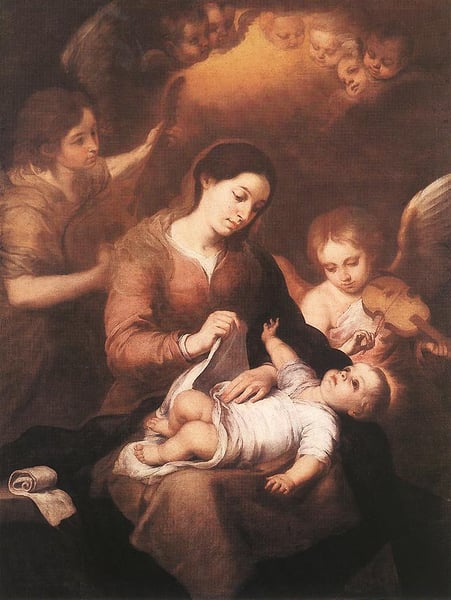
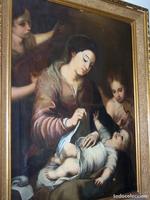
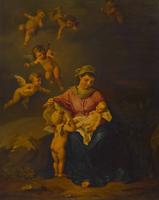
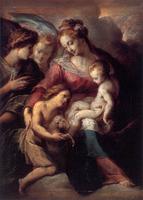
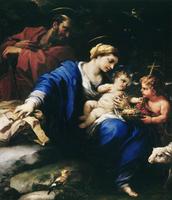
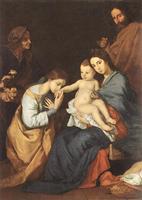
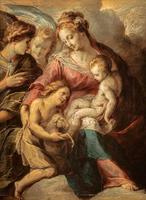
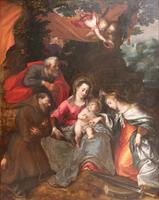
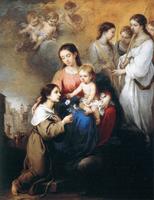
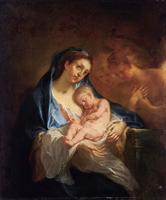
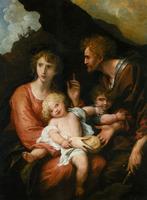
Bartolomé Esteban Murillo’s Mary and Child with Angels Playing Music exemplifies the intimate, devotional character of Spanish Baroque religious painting. Unlike the dramatic tenebrism of some contemporaries, Murillo favors a soft, luminous palette and a gentle, accessible tenderness. The Virgin and Child are presented not as distant hieratic figures but as a relatable mother and son, surrounded by playful angels whose musical instruments (likely a lute, violin, or harp) evoke heavenly harmony.
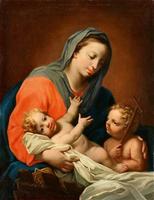
The composition balances celestial grace with human warmth—a hallmark of Murillo’s mature style. The angels’ musical activity emphasizes the theme of divine praise, while Mary’s serene gaze and the Christ Child’s reaching gesture invite the viewer into a personal, emotional encounter. This accessibility made Murillo one of the most beloved Baroque painters of religious subjects, particularly in Seville, where his works adorned churches and convents.
Significantly, the painting reflects the Counter-Reformation’s emphasis on art as a tool for piety and meditation. The soft sfumato, rich but warm colors, and the joyful, naturalistic interaction among figures all contribute to a vision of the Holy Family that is both sublime and approachable—a key achievement of Murillo’s Baroque religious imagery.