Expert Analysis: "Rebecca and Eliezer" by Bartolome Esteban Murillo
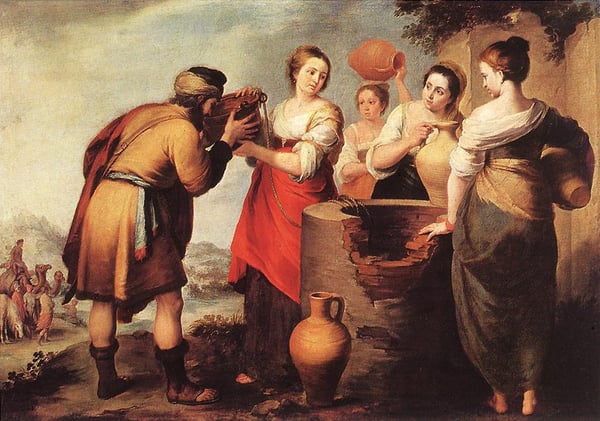
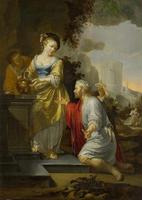
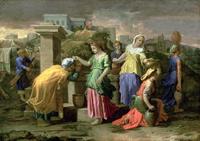
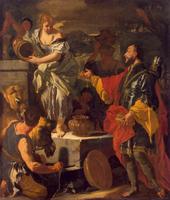
As a masterwork of the Baroque period and a prime example of religious painting, Murillo’s "Rebecca and Eliezer" achieves significance through its deeply human, intimate portrayal of a biblical narrative. The artist’s genius lies in translating a moment of divine providence—the meeting of Abraham’s servant Eliezer with the future matriarch Rebecca at the well (Genesis 24)—into a scene of tender, everyday realism characteristic of the Spanish Baroque. Unlike the dramatic chiaroscuro and theatricality of many Baroque contemporaries, Murillo employs a softer, more lyrical naturalism, bathing the figures in warm, diffused light that emphasizes the compassionate interaction between the two. The work’s importance is rooted in its fusion of sacred history with accessible domesticity: Rebecca’s humble act of offering water becomes a vehicle for conveying virtue and divine orchestration. This approach makes the painting a quintessential example of Baroque religious art’s ability to inspire piety through emotional accessibility, while Murillo’s refined handling of texture and sentiment showcases his distinctive contribution to the period’s devotional imagery.