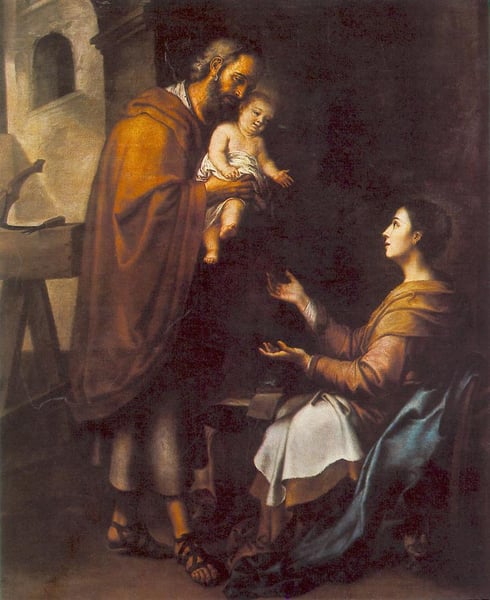
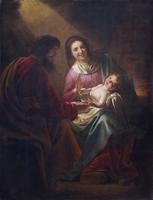
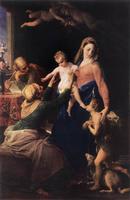
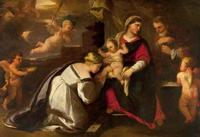
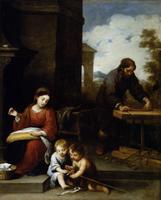
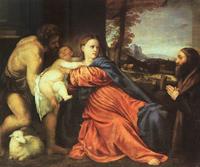
The "The Holy Family" by Bartolome Esteban Murillo is a quintessential example of Baroque religious painting, distinguished by its intimate, tender representation of sacred figures—a hallmark of Murillo’s uniquely accessible style. Within the broader Baroque period, which often emphasized dramatic chiaroscuro and dynamic compositions, Murillo’s work stands out for its soft, naturalistic treatment of the Holy Family, blending everyday domesticity with spiritual grace.
The painting’s significance lies in how it humanizes the divine: Mary, Joseph, and the infant Jesus are depicted in a serene, close-knit arrangement, with gentle expressions and warm, diffused lighting that evoke a sense of loving family life. This approach was central to Murillo’s popularity in 17th-century Seville, as it made religious narratives emotionally relatable to ordinary viewers, aligning with the Counter-Reformation’s goal of fostering personal devotion. The composition’s balanced harmony and subtle interplay of shadow and light—characteristic of Baroque naturalism—further elevate the scene, transforming a traditional biblical theme into a palpable vision of piety and human tenderness. In the context of Spanish Baroque religious painting, Murillo’s The Holy Family remains significant for its enduring ability to inspire both aesthetic admiration and spiritual reflection through its quiet, heartfelt realism.