Expertenanalyse zu Bartolome Esteban Murillos The Prodigal Son Feeding Swine
Stil: Baroque · Genre: religious painting
Expert Analysis: "The Prodigal Son Feeding Swine" by Bartolome Esteban Murillo
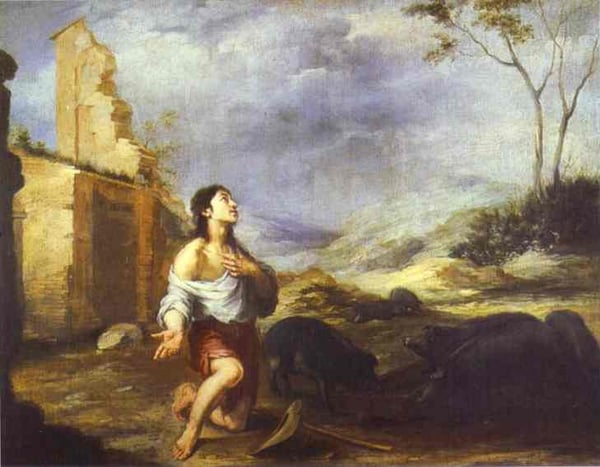
This work stands as a quintessential example of Spanish Baroque religious painting, specifically illuminating Murillo’s mastery in marrying theatrical drama with profound human tenderness. The subject—drawn from the biblical parable of the Prodigal Son (Luke 15:11–32)—depicts the moment of the son’s lowest degradation, reduced to feeding swine in a foreign land. Within the Baroque context, Murillo does not merely illustrate a moral lesson but transforms it into an intimate, emotionally resonant scene that invites the viewer into the sinner’s repentance.
Significance within the Baroque Style:
- Dramatic realism with soft naturalism: Unlike the stark tenebrism of Caravaggio, Murillo employs a gentler chiaroscuro, bathing the figures in a warm, diffused light that emphasizes the son’s ragged clothing and the coarse texture of the swine. This softening of Baroque drama aligns with Murillo’s signature estilo vaporoso (vaporous style), making the sacred story accessible and emotionally immediate.
- Counter-Reformation appeal: As a religious painting, it directly serves the Catholic Church’s post-Tridentine goals—humanizing biblical narratives to inspire penance and devotion. The son’s kneeling posture, his gaze cast downward in shame, and the swine’s animalistic indifference all underscore the gravity of sin, while the potential for mercy (implicit in the parable) is conveyed through Murillo’s characteristic grace.
- Genre-like observation: Murillo infuses the scene with meticulous detail of peasant life—the trough, the mud, the swine’s bristled hides—blending high religious art with the everyday realism that made his work popular. This fusion of genres (religious painting with genre-like elements) distinguishes him from his more austere contemporaries and underscores the Baroque’s embrace of sensory access to the divine.
In essence, Murillo’s Prodigal Son Feeding Swine is significant for its ability to transform a moment of abject failure into a tender, hopeful tableau, exemplifying how the Baroque period used naturalistic emotion to make religious experience both intimate and universal.
Museum / Gallery
Visuell ähnlich
20 Werke mit ähnlicher Komposition und Farbpalette
The prodigal son abandoned
Bartolome Esteban Murillo
The Prodigal Son Among the Swine
Bartolome Esteban Murillo
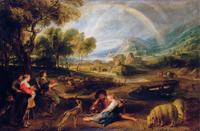
Landscape with a Rainbow
Peter Paul Rubens
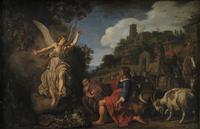
The Angel Raphael Takes Leave of Old Tobit and his Son Tobias
Pieter Lastman
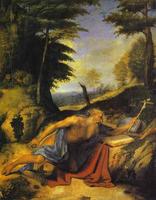
St. Jerome in the Desert
Lorenzo Lotto
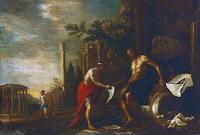
Chronos takes Cupid's wings
Heinrich Schonfeld
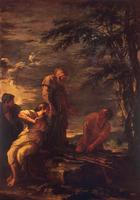
Democrito E Protagora
Salvator Rosa
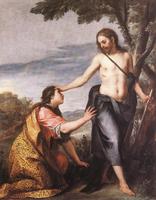
Noli Me Tangere
Alonzo Cano
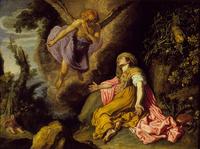
Hagar and the Angel
Pieter Lastman
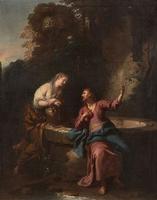
Le Christ et la Samaritaine
Jean-François de Troy
The Sacrifice of Manoah
Luca Giordano
The Resurrection of Christ
Paolo Veronese
Romolo and Remo
Giovanni Francesco Romanelli
King Midas Turns An Oak Branch to Gold
Nicolas Poussin
Cadmus and Minerva
Jacob Jordaens
Saint John Baptizing in the River Jordan
Nicolas Poussin
The Martyrdom of Saint Stephen
Pietro da Cortona
The Parable of the Prodigal Son. The Penitent Swineherd
Luca Giordano
Pythagoras Emerging from the Underworld
Salvator Rosa
Burning bush
Sebastien Bourdon