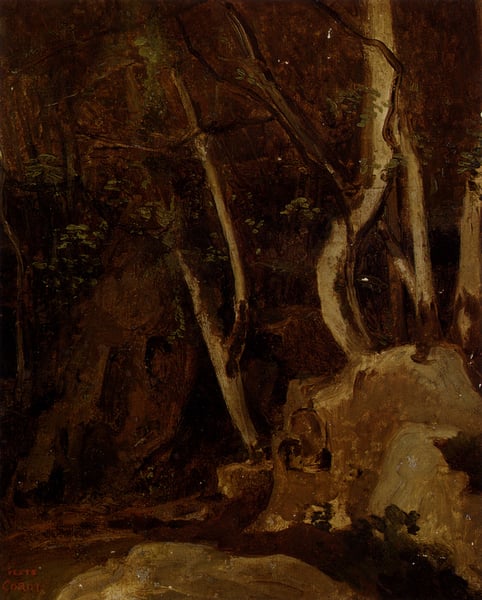
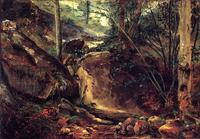
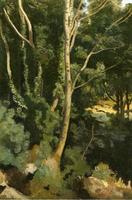
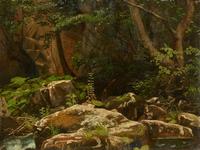
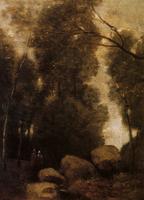
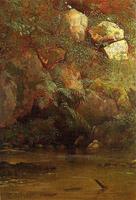
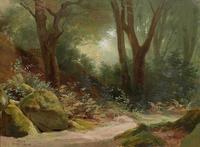
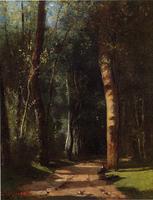
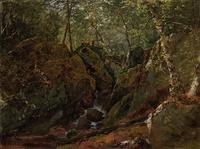
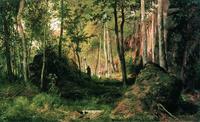
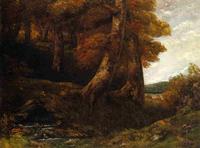
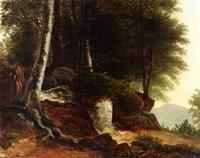
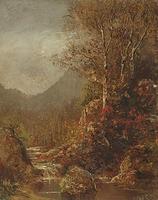
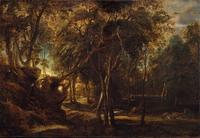
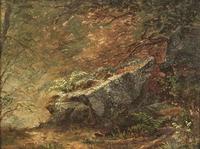
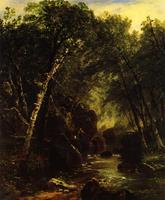
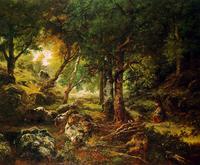
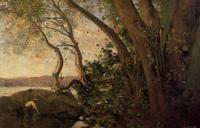
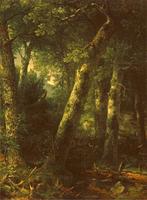
Camille Corot's At Civetta Castellana, Wooded Rocks is a significant Realist landscape because it exemplifies the movement's core commitment to direct, unidealized observation of nature. Rather than composing a classical or picturesque scene, Corot focuses on the specific, rugged topography of the Italian site—the tangled vegetation, fractured rock formations, and dappled light filtering through the trees. This approach elevates a mundane, localized woodland view into a subject worthy of serious artistic attention, breaking with the tradition of grand, staged landscapes. By capturing the transient effects of atmosphere and the particular character of the terrain, the work anticipates the plein-air naturalism that would later influence Impressionism, while remaining firmly grounded in Realism's dedication to truthfully rendering the physical world.