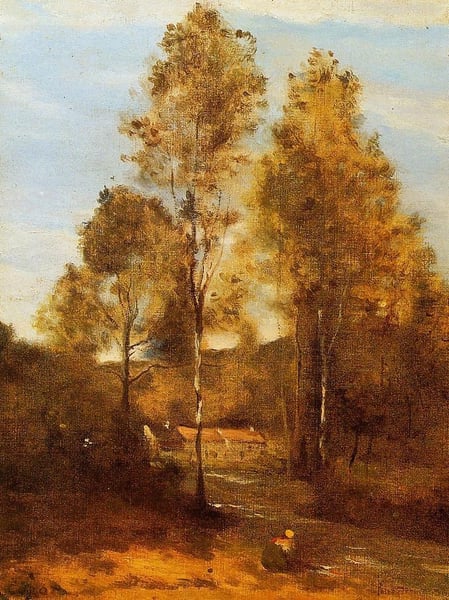
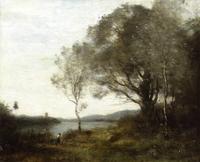
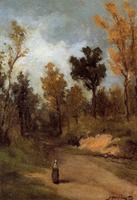
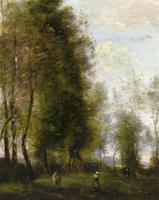
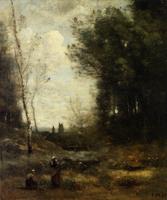
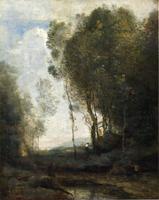
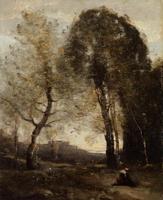
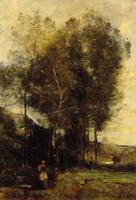
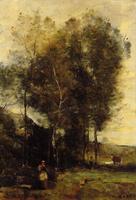
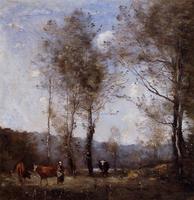
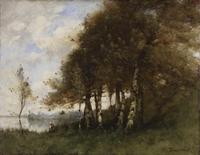
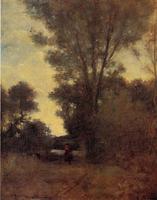
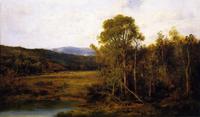
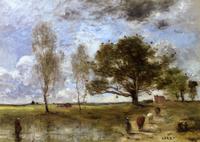
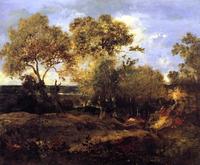
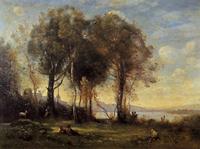
This work is significant as a quintessential example of Realist landscape painting, where Camille Corot elevates a specific, unidealized natural location—the clearing at Bois Pierre—into a subject worthy of serious artistic attention. By focusing on a modest, everyday scene rather than a grand historical or mythological vista, Corot aligns with Realism's core commitment to depicting contemporary life and the natural world with fidelity. The painting’s significance lies in its ability to balance observed detail with a soft, atmospheric treatment of light and space, creating a sense of calm immediacy that anticipates the plein-air innovations of later landscape painters. This approach underscores the Realist movement's shift toward direct visual experience and the poetic potential found in ordinary nature.