Expert Analysis of "Olevano, La Serpentara" by Camille Corot
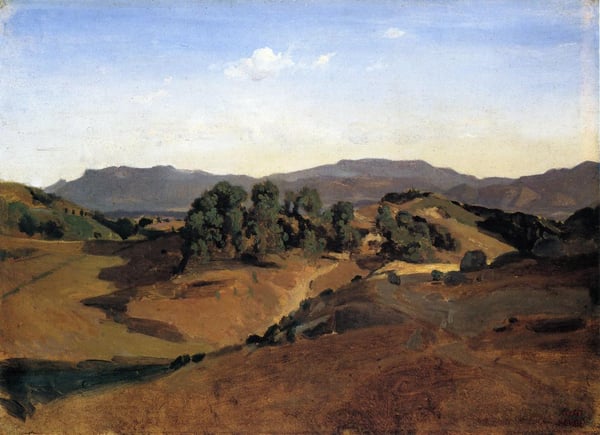
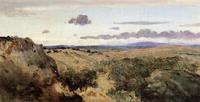
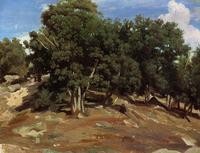
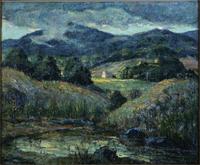
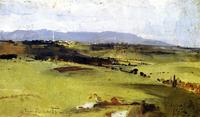
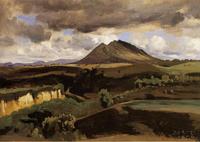
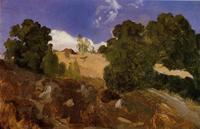
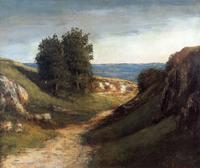
As a landmark of the Realist movement, this painting exemplifies the shift from idealized, heroic landscapes to a truthful, unembellished record of nature. Belonging to the genre of landscape, the work captures a specific, recognizable site—the rugged terrain of Olevano and its Serpentara valley—with a fidelity that aligns with Realism’s core tenet: to depict the world as it is, without Romantic exaggeration.
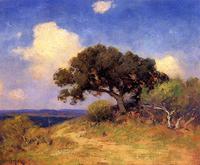
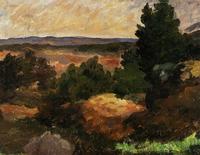
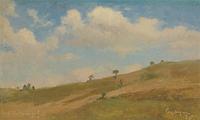
The significance of Olevano, La Serpentara within the Realist period lies in its focus on direct observation and the mundane beauty of the natural environment. Rather than composing a dramatic, imaginary vista, Corot presents a measured, even humble view of rocky slopes, scattered trees, and open sky. The composition is grounded in the artist’s immediate perception, a hallmark of Realist practice that breaks from the studio-bound conventions of earlier styles. The painting’s quiet, unforced harmony—achieved through subtle tonal gradations and a restrained palette—emphasizes the authenticity of the scene over narrative or emotional manipulation.
In the context of mid-19th-century art, this work helped redefine landscape painting as a vehicle for truth rather than allegory. By anchoring his vision in the actual geography of Olevano, Corot asserted that the ordinary countryside, rendered with sincere observation, could hold as much artistic weight as any historical or mythological subject. The painting thus stands as a testament to Realism’s enduring contribution: making the tangible world—its light, its earth, its stillness—the primary subject of serious art.