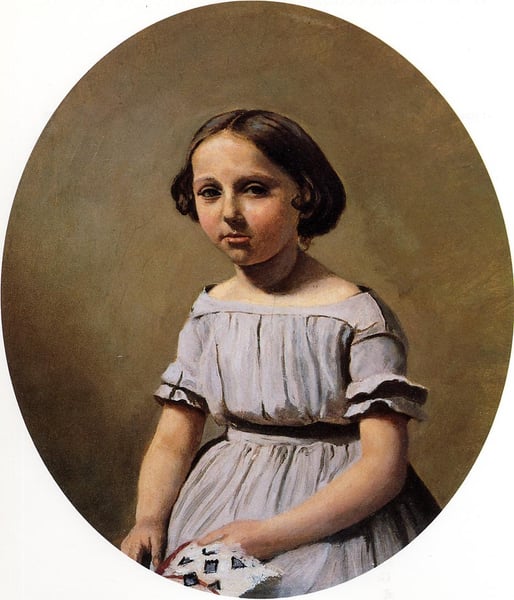
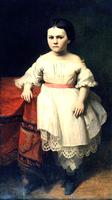
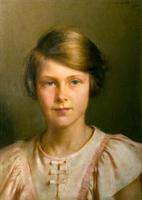
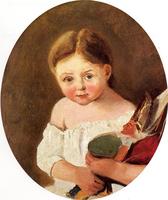
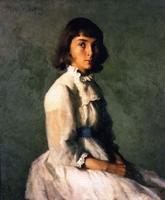
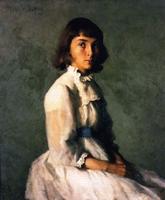
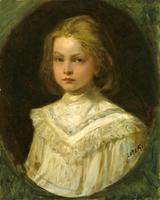
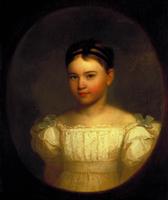
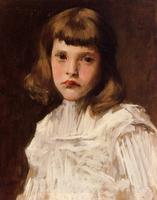
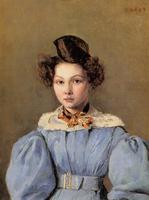
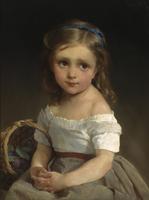
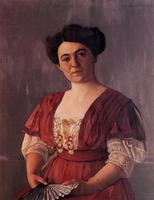
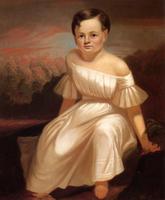
Camille Corot’s portrait The Eldest Daughter of M. Edouard Delalain (Mme. de Graet) is a compelling example of Romantic portraiture that quietly subverts the era’s more dramatic conventions. While Romanticism often prized heightened emotion and theatrical gesture, Corot brings a meditative restraint to this work, focusing on the sitter’s inner life through subtle tonal harmony and soft, diffused light.
The significance lies in Corot’s ability to merge the intimate realism of a personal likeness with the Romantic ideal of conveying a soulful presence. The sitter is not idealized or posed in grandiose fashion; instead, her gaze and quiet composure suggest a reflective dignity that aligns with Romanticism’s interest in individual psychology. Corot’s characteristic use of a muted, silvery palette and delicate brushwork—borrowed from his landscape practice—imbues the portrait with a poetic, almost atmospheric quality, blurring the boundary between figure and background. This treatment anticipates the tonalism and introspective mood later explored by the Barbizon school and early Impressionists.
In the context of Corot’s oeuvre, this portrait is significant because it demonstrates his mastery beyond his famed landscapes, proving that his sensitivity to light and mood could translate directly into the human subject. It stands as a refined fusion of Romantic introspection and classical restraint, offering a model of portraiture that privileges authenticity over spectacle.