Expert Analysis: Winter Night by Konstantin Korovin
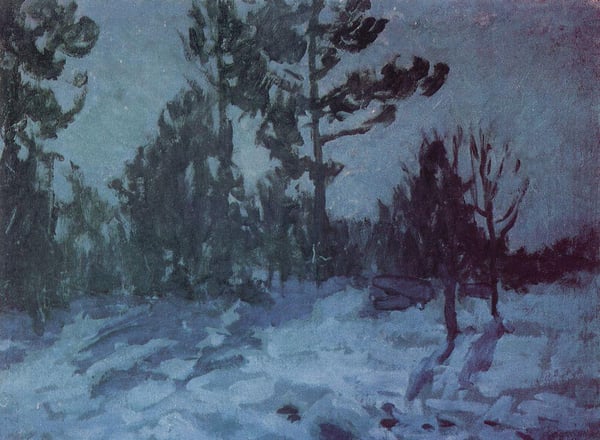
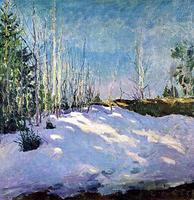
Korovin’s Winter Night is a quintessential example of Russian Impressionism, a movement that adapted the French preoccupation with light and atmosphere to distinctly northern, often elegiac landscapes. Here, the artist captures not just a snowy scene but the ephemeral quality of twilight—the deep blues and lavenders of the sky contrasted with the warm, glowing yellows of lit windows. The loose, visible brushwork and broken color technique dissolve form into shimmering patches, emphasizing the sensory experience of cold air, muffled stillness, and the soft reflection of artificial light on snow.
What makes this work significant within Impressionism is Korovin’s ability to balance spontaneity with a uniquely Russian sense of intimacy. Unlike the more clinical, suburban views of French Impressionists, Korovin infuses the landscape with a quiet, emotional resonance—a feeling of isolation wrapped in domestic warmth. This painting exemplifies how Russian artists transformed Impressionist methods into a vehicle for national identity, moving beyond mere optical study to evoke the poignant poetry of a winter night.