Analisi esperta di Polonaise di Konstantin Korovin
Stile: Art Nouveau (Modern) · Genere: design
Expert Analysis: "Polonaise" by Konstantin Korovin
Style & Period Context
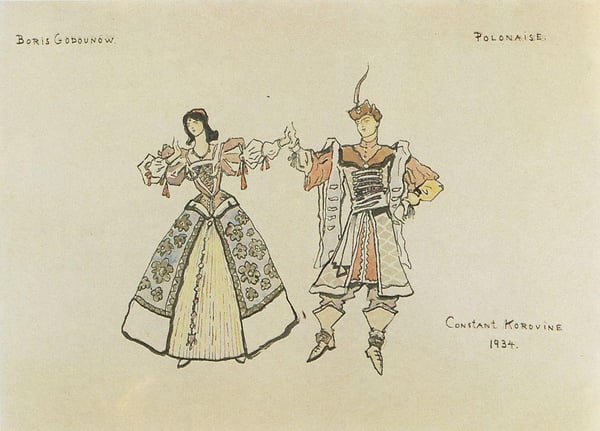
Created within the Art Nouveau movement (Modern), Korovin’s "Polonaise" exemplifies the era’s embrace of organic, flowing lines, rhythmic ornament, and a synthesis of decorative and fine arts. Art Nouveau sought to break down traditional boundaries between “high” art and functional design, and Korovin’s work—classified here under the genre of design—perfectly embodies that ideal.
Significance
Konstantin Korovin was primarily known as a Russian Impressionist, but his foray into Art Nouveau design reveals a versatile artist deeply engaged with the modernist currents of his time. "Polonaise" likely draws its title from the stately Polish dance, suggesting a dynamic, choreographed interplay of forms. The piece’s significance lies in how Korovin weaves Art Nouveau’s trademark fluidity—undulating curves, asymmetrical balance, and nature-inspired motifs—into a design that feels both elegant and kinetic. Unlike many Western Art Nouveau designers who favored delicate botanical themes, Korovin may have infused the work with a Russian sensibility: a richer color palette, a bolder rhythmic structure, and a subtle nod to folk ornamentation, all while maintaining the movement’s international vocabulary.
As a design piece, "Polonaise" demonstrates Art Nouveau’s core ambition: to bring art into everyday life. Whether intended as a textile pattern, a stage costume, or an architectural detail, the work prioritizes visual harmony over literal representation, making it a compelling example of how Korovin translated painterly spontaneity into structured, decorative allure. Its significance thus rests in its fusion of Russian artistic identity with the pan-European modernist spirit, proving that Art Nouveau was not a monolithic style but a flexible language for regional expression.
Visivamente simili
20 opere con composizione e palette affini
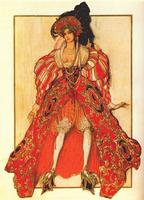
La legende de Joseph Potiphar's wife
Leon Bakst
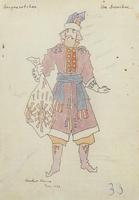
Servant
Konstantin Korovin
Ballerina. Costume design for Tamara Karsavina
Alexandre Benois
Cleopatre danse juive
Leon Bakst
Mizgir
Viktor Vasnetsov
First barrel organ player. Costume design
Alexandre Benois
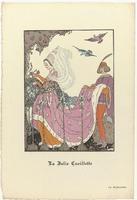
La Guirlande, Album Mensuel D'Art Et De Literature, La Jolie Cueillette
Gerda Wegener
Masqueraded Lady
Hendrick Avercamp
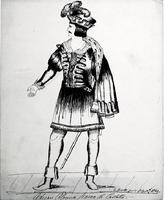
Cousturier
Dante Gabriel Rossetti
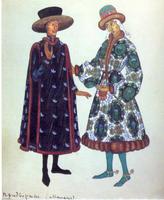
Courtiers
Nicholas Roerich
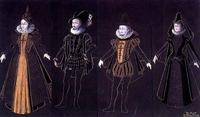
Don Quijote
Esteban Frances
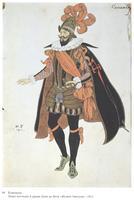
Costume design for the drama of Lope de Vega's "Fuente Ovejuna"
Ivan Bilibin
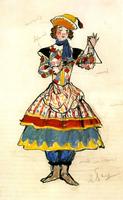
Street Dancer. Costume design
Alexandre Benois
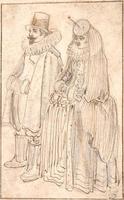
Study of a Lady and Gentleman in Winter Clothes
Hendrick Avercamp
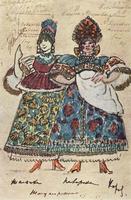
Tmutarakan
Konstantin Korovin
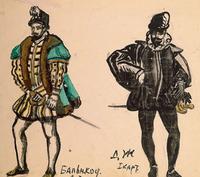
Costume design for the opera Don Giovanni by Wolfgang Amadeus Mozart, 'Don Giovanni'
Pyotr Konchalovsky
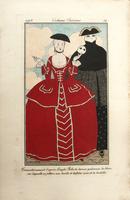
Costumes Parisiens Fashion Illustration No.56 from Journal Des Dames Et Des Modes, 1913
George Barbier
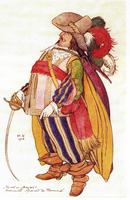
Sketch for the spectacle, Honor and Revenge, by Fiodor Sollogub
Ivan Bilibin
Design for Katinka
Serge Sudeikin
Hamlet
John Austen