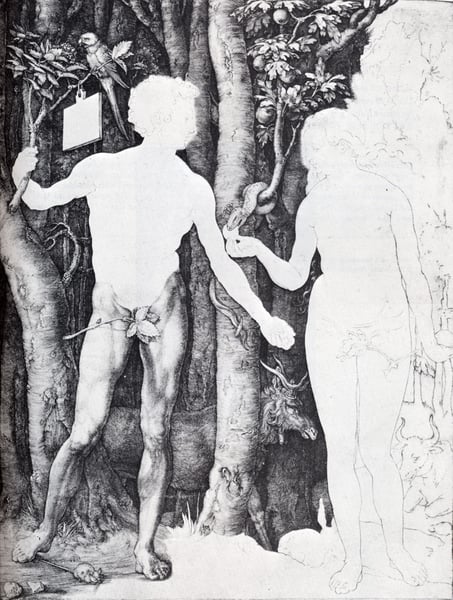
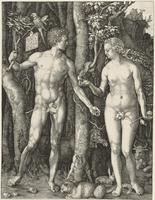
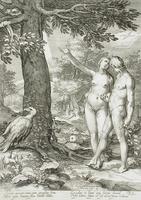
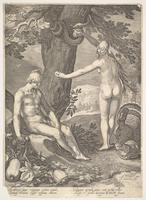
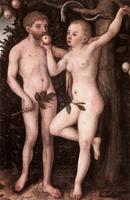
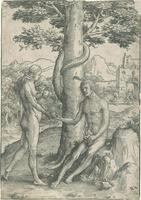
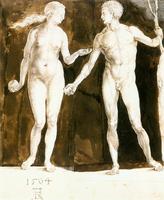
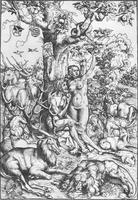
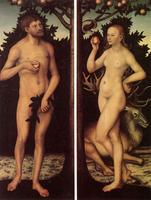
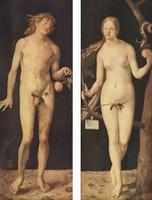
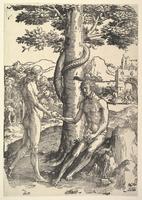
Albrecht Dürer’s Adam and Eve exemplifies the Northern Renaissance’s unique synthesis of meticulous observation and intellectual ambition. As a sketch and study, this work is significant for its role in Dürer’s artistic process—revealing his deep engagement with human anatomy, classical proportion, and naturalistic detail at a time when such preparatory works were rarely preserved or valued in the North. Unlike finished paintings or engravings, the sketch format here emphasizes Dürer’s direct, exploratory hand: his defining use of precise hatching, fluid contour lines, and delicate shading demonstrates the Northern Renaissance fascination with capturing texture, light, and the subtlety of flesh. The genre also highlights Dürer’s pioneering status as a draftsman who elevated the study from a mere preparatory tool to a finished work of art in its own right, bridging the gap between Italian Renaissance ideals of harmony and the Northern tradition of empirical realism.