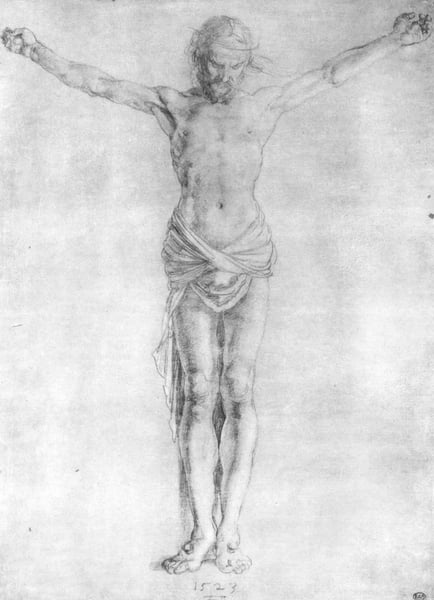
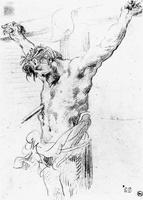
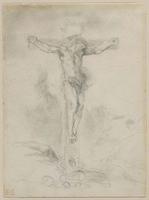
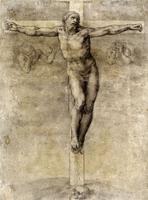
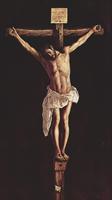
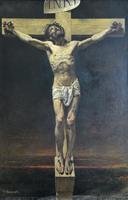
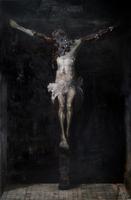
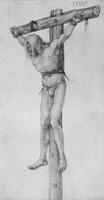
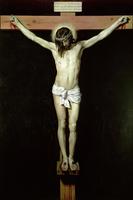
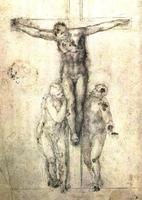
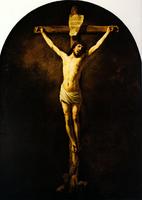
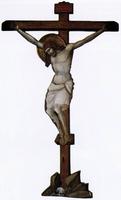
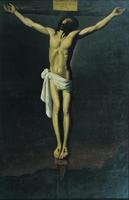
Albrecht Dürer's Christ on the Cross stands as a quintessential example of the Northern Renaissance's meticulous observation and spiritual intensity. As a sketch and study, it offers rare insight into Dürer's preparatory process—a hallmark of his genius. The work's significance lies in its demonstration of the Northern Renaissance emphasis on precise draftsmanship and emotional realism. Unlike finished paintings, this study reveals Dürer's direct, unfiltered exploration of anatomy, drapery, and divine suffering, showcasing his command of line to convey both physical detail and profound pathos. It underscores the period's shift toward naturalism and personal expression, while also highlighting Dürer's role as a pioneer in elevating the status of drawing and printmaking—fields where sketches became artworks in their own right.