
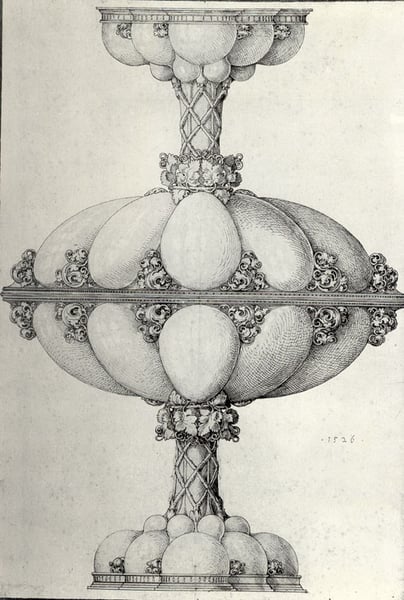
Expert analysis of Albrecht Durer’s Double Goblet
Style: Northern Renaissance · Genre: design
Albrecht Dürer’s "Double Goblet" is a masterful example of Northern Renaissance design, revealing the artist’s exceptional skill in merging meticulous observation with the period’s fascination for symbolic luxury and structural precision. Though functioning as a design for a metalwork object—likely intended for a goldsmith’s workshop—this work transcends mere craft to become a testament to Dürer’s intellectual engagement with geometry, proportion, and the natural world.
Significance within the Northern Renaissance style:
Dürer, a pivotal figure of the Northern Renaissance, was deeply influenced by his travels to Italy, where he absorbed humanist ideals and classical proportion. In Double Goblet, he applies these principles to a secular, decorative object, elevating a functional vessel into a study of balance and harmony. The twin goblets, often interpreted as a symbol of marriage or partnership, are depicted with exacting symmetry—a hallmark of Dürer’s graphic precision. Every curve, fluting, and ornamental band is rendered with the same painstaking detail he reserved for his famous engravings like Melencolia I, blurring the line between fine art and applied design.
What makes it significant:
-
Intersection of Art and Craft: Dürer treats the goblet as a subject for intellectual inquiry. The design showcases his understanding of perspective and chiaroscuro, giving the silver or gold vessel a convincing three-dimensional presence on paper. This elevates the genre of “design” from a working blueprint to an independent work of art.
-
Northern Realism and Symbolism: The intricate patterns and reflective surfaces are rendered with a micro‑realistic attention to light and texture, characteristic of Northern artists. Beyond aesthetics, the double form likely carries emblematic meaning—possibly alluding to temperance, unity, or the harmony of opposites—a common Northern Renaissance device of embedding moral or allegorical significance in everyday objects.
-
Influence on Decorative Arts: Dürer’s designs, including Double Goblet, directly impacted goldsmiths and silversmiths across Europe. His printed designs allowed artisans to replicate complex motifs, spreading the Northern Renaissance’s love of elaborate, symmetrically balanced ornamentation. This work exemplifies how Dürer’s graphic output informed the material culture of his time.
In essence, Double Goblet is a microcosm of the Northern Renaissance mind: deeply observant, mathematically ordered, and rich with symbolic resonance. It demonstrates that for Dürer, no object—whether sacred or secular—was beneath the dignity of artistic and intellectual scrutiny.
Museum / Gallery
Visually similar
20 works with related composition and palette
Design for a Table Fountain with the Badge of Anne Boleyn
Hans Holbein the Younger
Six Goblets
Albrecht Durer
Design for a Salt Cellar and Tazza
Francesco de' Rossi (Francesco Salviati), "Cecchino"
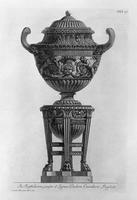
Another vessel supported by tripod
Giovanni Battista Piranesi
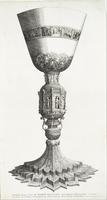
The Great Chalice
Wenceslaus Hollar
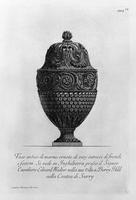
Antique vase of marble decorated with festoons and various plots of funds
Giovanni Battista Piranesi
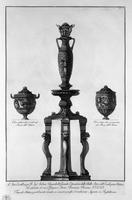
A tripod and two vessels
Giovanni Battista Piranesi
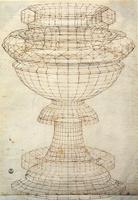
Vase in perspective
Paolo Uccello
Antique vase of marble in the Villa Valenti at Porta Pia
Giovanni Battista Piranesi
Antique vase of marble (Villa Albani)
Giovanni Battista Piranesi
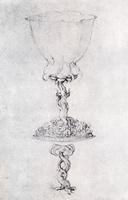
Design For a Goblet, With A Variant Of The Base
Albrecht Durer
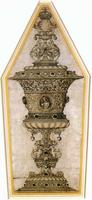
Jane Seymour's Cup
Hans Holbein the Younger
Ancient marble urn in the garden of the Quirinal
Giovanni Battista Piranesi
The so called `Warwick Vase`, an famous antique marble object, found in Tivoli, Italy, in 1771
Giovanni Battista Piranesi
View of elevation above the vessel
Giovanni Battista Piranesi
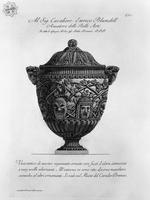
Ancient marble vase decorated with twisted stems of ivy, birds and scenic masks scherzanti
Giovanni Battista Piranesi
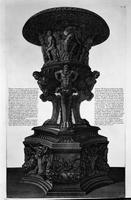
Perspective angle of the same vessel
Giovanni Battista Piranesi
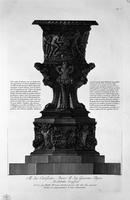
Great ancient vase with its marble pedestal found at Hadrian`s Villa in 1769
Giovanni Battista Piranesi
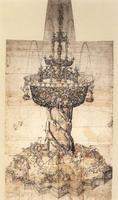
Sketch of a Table Fountain
Albrecht Durer
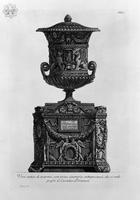
Antique vase on a marble cinerary urn
Giovanni Battista Piranesi