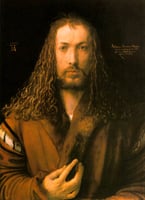
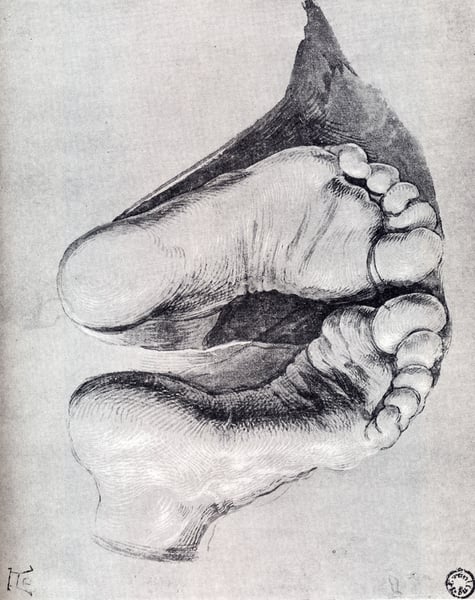
Analisi esperta di Feet Of A Kneeling Man di Albrecht Durer
Stile: Northern Renaissance · Genere: sketch and study
Expert Analysis: Feet Of A Kneeling Man by Albrecht Dürer
This intimate sketch, executed in Dürer’s characteristically precise hand, is a foundational study that exemplifies the Northern Renaissance’s commitment to empirical observation and anatomical accuracy. As a sketch and study, it reveals the artist’s rigorous preparatory process—dissecting a figure’s weight, balance, and tension through the humble yet vital detail of the feet.
Significance within its Style and Period:
-
Mastery of Naturalistic Detail: Dürer’s rendering of the bent ankles, the subtle splay of toes, and the shadowed creases of the skin is not mere decorative flourish. It demonstrates the Northern Renaissance ideal of verisimilitude—truth to nature achieved through painstaking draftsmanship. The study isolates a single body part to perfect its realistic depiction before integrating it into a larger composition.
-
Anatomical Draftsmanship as Intellectual Pursuit: In an era when artists were elevating their craft from manual labor to humanistic science, Dürer’s focus on anatomy aligns with his broader quest to understand the proportional and structural logic of the human body. This drawing is a record of that inquiry: it treats the feet as an architectural base, showing how weight shifts in a kneeling posture—a pose common in altarpieces and devotional scenes.
-
Influence of Italian Humanism, Rooted in Northern Precision: While Dürer admired Italian Renaissance ideals of ideal proportion, he fused them with the Northern tradition of empirical observation. Here, the knees and feet are not idealized but observed from life, with individual ankle bones and tendon lines rendered with almost surgical clarity. This synthesis—combining Italian disegno (design) with German genauigkeit (exactness)—makes the study a landmark of cross-cultural artistic innovation.
-
Function as Preparatory Study: The work’s significance lies in its role as a silent collaborator to Dürer’s major paintings and prints. Such studies allowed him to transfer lifelike gesture and weight into finished works like The Four Apostles or The Heller Altarpiece, anchoring religious narratives in tangible, human realism.
In sum, Feet Of A Kneeling Man is not a minor fragment but a microcosm of Dürer’s genius—a testament to how Northern Renaissance artists used meticulous study to achieve expressive, credible humanity. It reminds us that even the humblest part of the body can bear the weight of an entire artistic revolution.
Museum / Gallery
Visivamente simili
20 opere con composizione e palette affini
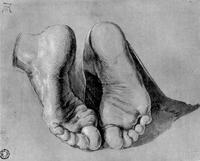
Feet of an apostle
Albrecht Durer
Studying my own foot
Alfred Freddy Krupa
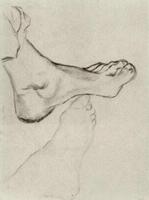
Feet
Vincent van Gogh
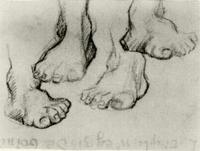
Four Sketches of a Foot
Vincent van Gogh
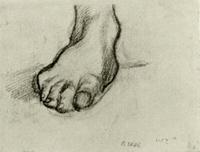
Sketch of a Foot
Vincent van Gogh
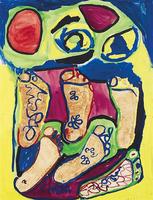
Feast of the Dancing Feet
Chaibia Talal
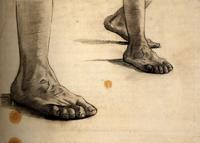
Feet
Vincent van Gogh
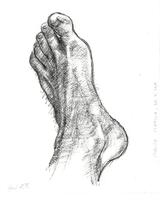
Foot study (30.11.1991)
Alfred Freddy Krupa
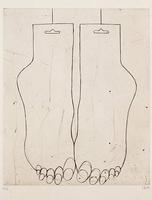
Feet
Louise Bourgeois
Et posuerunt eum in monumento (Mark 15:46)
Salvador Dali
A caminhada é longa...
Sônia Mellone
What Makes Cultures Higher
Kateryna Lysovenko
Leg
Kuzma Petrov-Vodkin
Study of Hands and Feet for The Golden Age
Jean Auguste Dominique Ingres
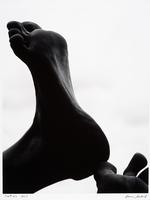
Feet 102
Aaron Siskind
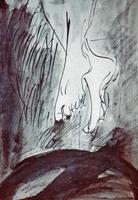
Visit in Mamre (Angel's legs)
Maria Bozoky
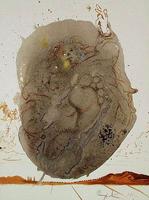
Faciamus hominem (Genesis 1:26)
Salvador Dali
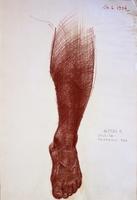
Study. The male leg (26.06.1994)
Alfred Freddy Krupa
The Happiness in One’s Pocket
Glenn Brown
Legs of a Seated Model
Thomas Eakins