
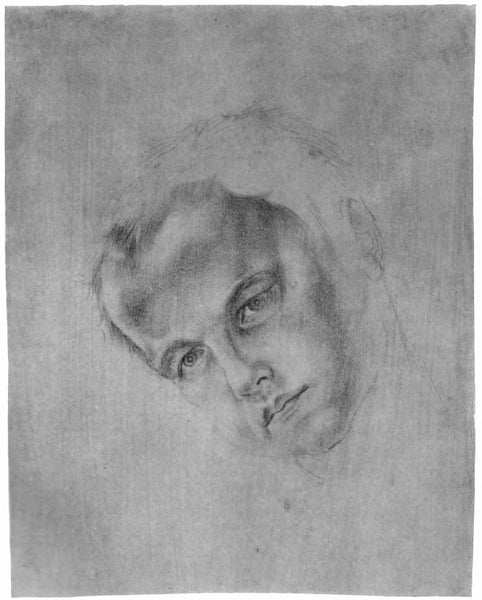
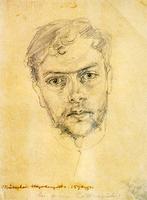
Head of a boy
Albrecht Durer の Head of a boy の専門的な分析
スタイル:Northern Renaissance · ジャンル:portrait
Expert Analysis: Head of a Boy by Albrecht Dürer
This work exemplifies the transformative power of Northern Renaissance portraiture, a genre revolutionized by Albrecht Dürer through his unprecedented fusion of meticulous observation with psychological depth. Head of a Boy is significant precisely because it transcends the mere recording of a sitter’s features—it captures a moment of lived, introspective youth, rendered with the crystalline precision that defined Dürer’s practice.
Achievement in Naturalism and Character:
Within the Northern Renaissance tradition, Dürer elevated portraiture from symbolic or status-driven representation to a study of individual humanity. Here, the boy’s direct gaze, the soft modeling of the cheekbones, and the subtle asymmetry of the lips reveal Dürer’s deep understanding of human anatomy, likely derived from his own detailed studies of proportion and physiognomy. The hair, painted with almost calligraphic finesse, frames the face in a way that feels both spontaneous and rigorously structured—a hallmark of Dürer’s graphic sensibility translated into paint.
Technical Mastery and Material Symbolism:
Though we lack details on medium, Dürer’s known works in this period (often on panel or paper) exhibit his mastery of layering and glazing. The effect would be a luminous skin tone that appears to breathe, with highlights that catch light as if from a studio window. This technical virtuosity underlines the Northern Renaissance fascination with surface texture as a window to the soul—the boy’s expression is not idealized but warmly particular, suggesting a real personality caught in a quiet moment.
Significance in Dürer’s Oeuvre:
As a portraitist, Dürer broke from earlier models (like Rogier van der Weyden or Jan van Eyck) by infusing his sitters with a sense of interior life. Head of a Boy anticipates the psychological intensity of his later masterpieces—such as the Self-Portrait at Twenty-Six—while retaining the tenderness of youth. It demonstrates Dürer’s belief that even a modest subject, a simple “head of a boy,” could carry the full weight of artistic inquiry: the search for truth in form, the accuracy of light, and the indelible mark of a unique human spirit.
Conclusion:
This artwork is a microcosm of the Northern Renaissance achievement: a perfect union of empirical observation and empathetic insight. Dürer’s Head of a Boy remains significant not merely as a portrait, but as a testament to how painting can dignify the ordinary, turning a fleeting face into an eternal monument of personality and craft.
視覚的に類似
構図やパレットが近い作品 20 件
Self-Portrait
Valentin Serov
Női Arc
Bela Czobel
Pastel
Robert Brackman
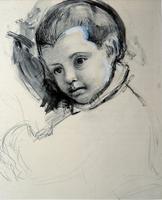
Head of a Boy from Veronese
John Ruskin
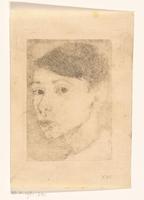
Self Portrait
Jan Mankes
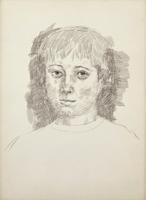
Female image
Hryhorii Havrylenko
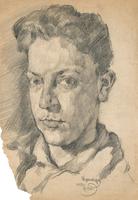
Vajda Lajos Önarckép 1924 Ceruza , Papír 376x255 Mm
Vajda Lajos
The artist's son Edoardo
Noè Bordignon
Portrait Drawing of George
Martin Yeoman
Female image
Hryhorii Havrylenko
Portrait of M.F. Petrova-Vodkina
Kuzma Petrov-Vodkin
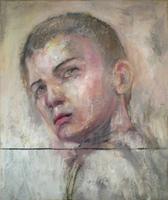
Kid #1
Carmen Delaco
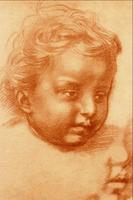
Head Of Child
Andrea del Sarto
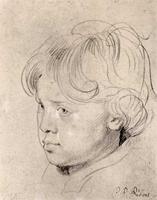
Nicolas Rubens
Peter Paul Rubens
Self-portrait, three-quarters to the left
Jan Mankes
Portrait of O. Trubnikova
Valentin Serov
Sketch of a woman's head to the picture Mother
Kuzma Petrov-Vodkin
Portrait of Colette, the daughter of the artist
Theophile Steinlen
Head of a Young Man
Andrea del Sarto
Self-portrait
Stanisław Wyspiański