
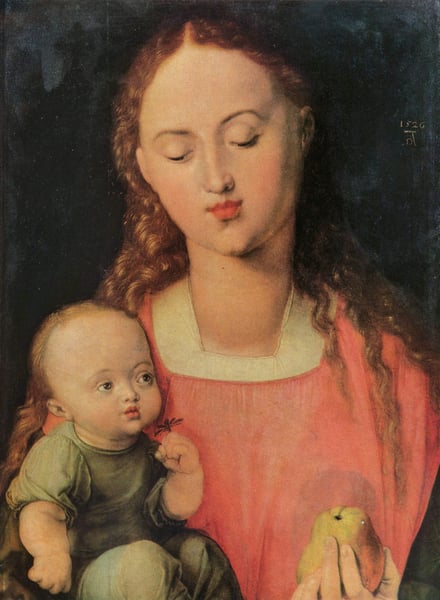
Analisi esperta di Maria with child di Albrecht Durer
Stile: Northern Renaissance · Genere: religious painting
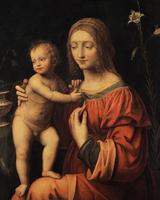
As an expert in Northern Renaissance art, I can confirm that Albrecht Dürer’s Maria with Child is a quintessential religious painting that exemplifies the period’s fusion of meticulous naturalism with profound spiritual symbolism. Dürer, a master of both painting and printmaking, brought an unprecedented level of detail and psychological depth to the Madonna and Child theme, making this work significant for several key reasons.
Precision and Naturalism: Dürer’s Northern Renaissance style is defined by an almost scientific observation of the natural world. In Maria with Child, this manifests in the intricate rendering of textures—the soft folds of Mary’s robes, the translucent skin of the infant Christ, and the careful play of light and shadow. This hyper-realistic attention to detail, inherited from the Flemish tradition, elevates the sacred figures into tangible, relatable presences, bridging the divine and the everyday.
Symbolic Layering: The painting is rich with theological symbolism typical of the period. For instance, if the Christ child holds an apple or a piece of fruit (common in Dürer’s Madonnas), it alludes to the Fall of Man and the promise of redemption. The inclusion of a landscape seen through a window or a floral element often references the Virgin’s purity (as in the hortus conclusus). These embedded symbols reward close inspection and demonstrate Dürer’s intellectual integration of iconography with naturalism.
Influence of Italian Humanism: Unlike many earlier Northern painters, Dürer traveled to Italy and absorbed Renaissance ideals of perspective, proportion, and classical harmony. In Maria with Child, this is evident in the balanced composition, the volumetric drapery that recalls Italian sfumato, and the tender, maternal exchange between Mary and Jesus. Dürer’s fusion of Northern detail with Italian monumentality created a new visual language that became a hallmark of the Northern Renaissance, influencing generations of artists.
Emotional Intimacy: The work’s significance also lies in its humanization of the divine. Dürer portrays the Virgin not as a remote, regal icon but as a nurturing mother, often gazing at her child with a mixture of love and foreknowledge of his fate. This psychological realism invites the viewer into a personal, contemplative relationship with the sacred, a move away from medieval formality toward modern emotional engagement.
In sum, Maria with Child by Albrecht Dürer is a masterpiece of the Northern Renaissance because it seamlessly blends microscopic naturalism, rich symbolic meaning, Italianate composition, and heartfelt humanity. It stands as a testament to Dürer’s role as a bridge between the Gothic and the Renaissance, and as a defining example of how religious painting in the North could be both meticulously observed and deeply moving.
Museum / Gallery
Visivamente simili
20 opere con composizione e palette affini
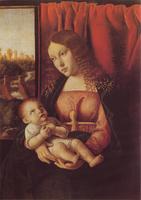
Madonna Con Il Bambino
Bartolomeo Veneto
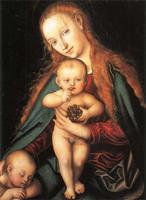
Madonna and Child
Lucas Cranach the Elder
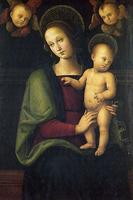
Madonna and Child with two cherubs
Pietro Perugino
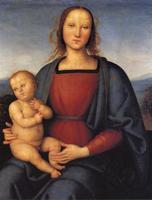
Madonna with Child
Pietro Perugino
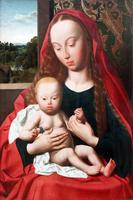
Virgin and Child
Geertgen tot Sint Jans
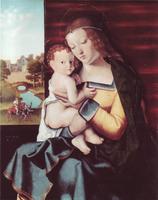
Madonna Con Il Bambino 1
Bartolomeo Veneto
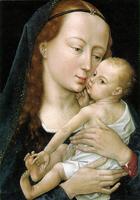
Virgin and Child
Rogier van der Weyden
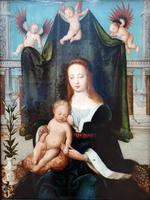
Mary with the Sleeping Christ Child
Hans Holbein the Elder
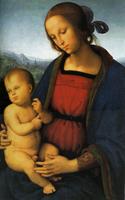
Madonna with Child
Pietro Perugino
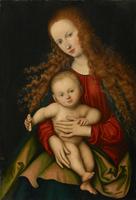
Madonna and Child
Lucas Cranach the Elder
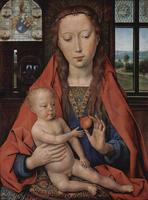
Madonna and Child, from The Diptych of Maerten van Nieuwenhove
Hans Memling
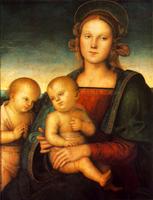
Madonna with Child and Little St. John
Pietro Perugino
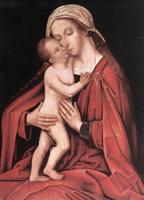
Virgin and Child
Hans Holbein the Elder
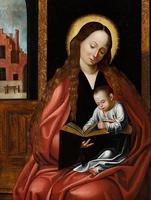
MARIA MIT DEM LESENDEN JESUSKIND
Frans Pourbus the Elder
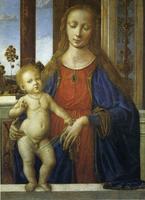
Madonna with Child
Pietro Perugino
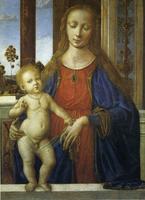
Madonna and Child
Andrea del Verrocchio
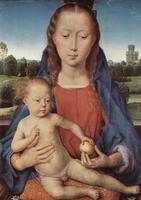
Portinari Triptych (central panel)
Hans Memling
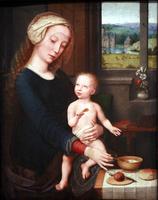
Madonna with the Milk Soup
Gerard David
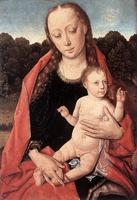
The Virgin and Child
Dirk Bouts
Madonna with Child
Bernardino Luini