
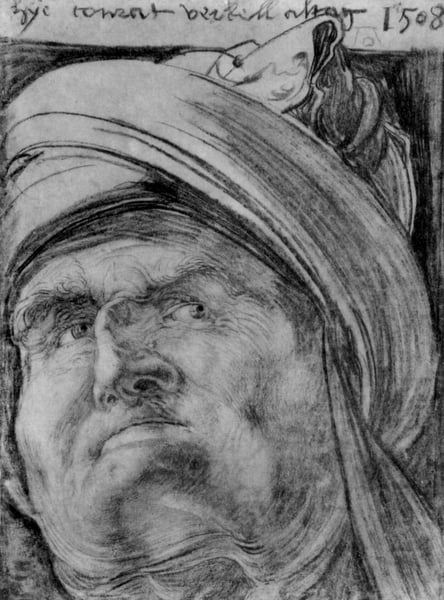
Albrecht Durer の Portrait of Conrat Verkell の専門的な分析
スタイル:Northern Renaissance · ジャンル:portrait
Expert Analysis: "Portrait of Conrat Verkell" by Albrecht Dürer
Albrecht Dürer’s Portrait of Conrat Verkell stands as a quintessential example of the Northern Renaissance’s shift toward heightened individualism and meticulous naturalism. Although the sitter’s identity (likely a Nuremberg merchant or craftsman) may be lesser-known, the work’s significance lies in Dürer’s masterful synthesis of Northern European precision with the humanist ideals emerging from Italy.
Composition and Technique
Dürer employs his signature fine, almost miniaturist brushwork to render every detail of Verkell’s face—the subtle wrinkles around the eyes, the texture of the beard, and the delicate veins in the hands. The lighting is soft yet directional, creating a three-dimensional volume that gives the sitter a tangible presence. The dark, neutral background focuses attention entirely on the subject, a hallmark of Dürer’s portraiture that emphasizes psychological depth over ornamentation.
Significance within the Northern Renaissance
-
Individual Identity: Unlike earlier medieval portraits that idealized or typified figures, Dürer captures Verkell’s unique character. The sitter’s direct gaze and slight asymmetry in expression suggest a specific personality—a merchant or scholar defined by his worldly experience. This aligns with the Northern Renaissance’s embrace of vanitas and the celebration of earthly accomplishment.
-
Influence of Italian Humanism: Dürer traveled to Italy and absorbed Renaissance principles of proportion and perspective. In this portrait, the careful rendering of bone structure and the naturalistic fall of light owe a debt to artists like Giovanni Bellini, yet Dürer retains a Northern insistence on tangible surface textures (the fur collar, the stubble).
-
Technical Virtuosity: Dürer’s use of oil paint (likely in this case) allowed him to achieve translucent layers and subtle tonal gradations. The work exemplifies his belief that painting could rival nature itself—a core tenet of Northern Renaissance art.
Historical and Artistic Impact
Portrait of Conrat Verkell is significant because it demonstrates how Dürer elevated portraiture from mere record-keeping to a form of intellectual and emotional inquiry. By humanizing a non-aristocratic sitter with the same gravity reserved for royalty, Dürer democratized portraiture and set a precedent for later Northern artists like Hans Holbein the Younger.
In summary, this artwork is a masterclass in the Northern Renaissance marriage of microscopic detail and profound humanism, marking Dürer not only as a virtuoso of his age but as a foundational figure in the history of European portraiture.
Museum / Gallery
視覚的に類似
構図やパレットが近い作品 20 件
Head of an Old Man
Matthias Grünewald
Head of old man with turban
Giovanni Battista Piranesi
Man with a Turban
Giovanni Bellini
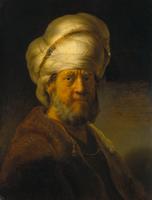
Portrait of a Man in Oriental Garment
Rembrandt
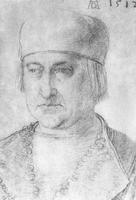
Portrait of a Man with cap
Albrecht Durer
A Man with a Turban
Salomon Koninck
Portrait of Dante Alighieri
Gustave Dore
Head of a Girl
Alphonse Mucha
Head of an Oriental man (Portrait of Mustapha)
Théodore Géricault
PORTRAIT OF A MAN, HEAD AND SHOULDERS, WEARING A TURBAN
Pietro Paolini
Gjergj Kastrioti - Skanderbeg
Gazmend Freitag
Study of a male face
Cristiano Banti
Old man with turban
Rembrandt
Head of an oriental man
Jean-François Portaels
Head of an old man in profile
Albrecht Durer
Ferdowsi
Amir Mohammad Ghasemizadeh
Portrait of Saladin
Cristofano dell'Altissimo
Josef Kriehuber, Austrian Lithographer and Artist (Self-Portrait)
Josef Kriehuber
Portrait of William Pirckheimer
Albrecht Durer
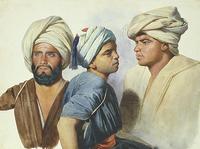
Three Fellahin
Charles Gleyre