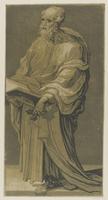
Expert Analysis: "Standing Apostle" by Albrecht Dürer
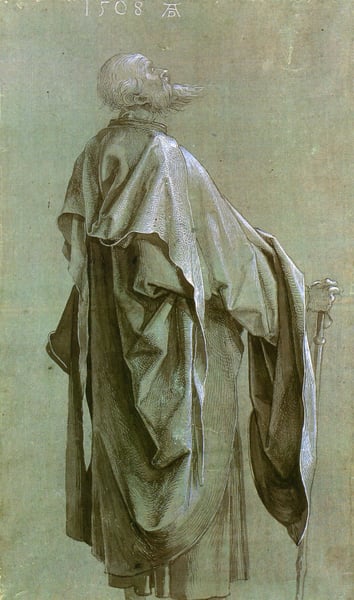
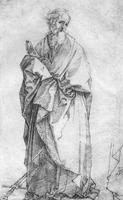
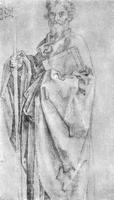
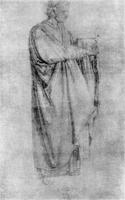
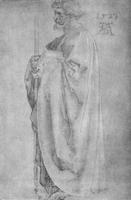
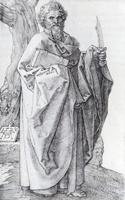
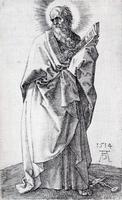
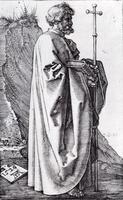
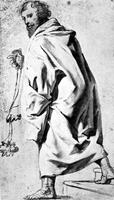
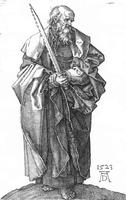
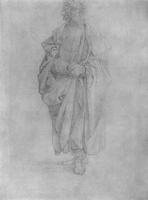
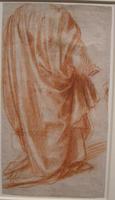
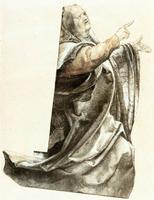
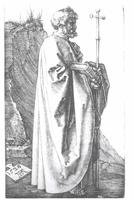
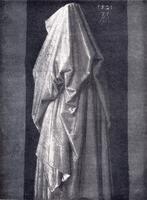
Albrecht Dürer’s Standing Apostle is a masterful example of the Northern Renaissance sketch and study, revealing the artist’s profound engagement with human anatomy, drapery, and expressive form. As a study, it demonstrates Dürer’s disciplined observation and his synthesis of Northern European linear precision with the proportional ideals he absorbed from Italian Renaissance art.
The work’s significance lies in its role as a preparatory drawing—likely for a larger altarpiece or print series—where Dürer refines the apostle’s static yet weighty posture. The meticulous handling of fabric folds, with deep shadows and crisp edges, typifies Northern Renaissance attention to texture and materiality, while the figure’s balanced contrapposto hints at Italian influence. This piece underscores Dürer’s pioneering use of the sketch not merely as a rough idea but as a finished study of light, volume, and character—elevating the genre from mere preparation to autonomous art.
Within the Northern Renaissance, Standing Apostle exemplifies how Dürer bridged regional Gothic traditions and humanist classicism, making it a cornerstone for understanding the evolution of draftsmanship in the early 16th century.