
Expertenanalyse zu Albrecht Durers Study of Three Hands
Stil: Northern Renaissance · Genre: sketch and study
Expert Analysis: "Study of Three Hands" by Albrecht Dürer
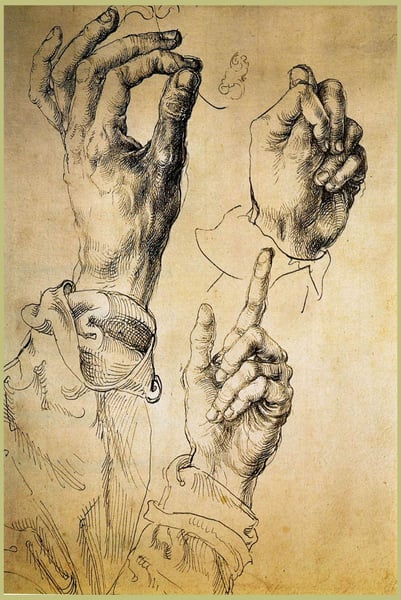
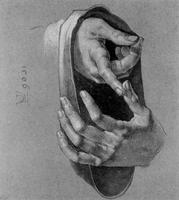
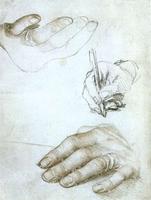
Albrecht Dürer’s Study of Three Hands (c. 1494–1508) stands as a quintessential example of the Northern Renaissance’s rigorous commitment to empirical observation and technical mastery. Executed in pen and ink on paper, this work is not merely a preparatory sketch but a profound meditation on human anatomy and the expressive potential of the hand—a subject that challenged artists across centuries.
Significance within the Northern Renaissance:
- Empirical Precision: Dürer, profoundly influenced by the humanist ideals of the era, approached the human form as a microcosm of divine creation. This study reveals his systematic investigation of musculature, tendons, and bone structure, achieved through direct observation rather than reliance on medieval conventions. Each hand is rendered with surgical clarity: the play of light and shadow models the flesh, while delicate hatching defines knuckles, nails, and venous networks.
- Innovative Draftsmanship: The sketch demonstrates Dürer’s revolutionary use of line as both description and expression. The varying pressure of the pen creates dynamic contours—tense in the gripping hand, relaxed in the open palm—anticipating the emotional weight later seen in his engravings. This emphasis on the hand as a vessel of gesture and thought elevates a simple study to a statement of Renaissance humanism.
- Anatomic Groundwork for Major Works: Scholars agree that this sheet likely served as a reference for prominent figures in Dürer’s altarpieces, such as the Paumgartner Altarpiece or the Heller Altarpiece. The lower hand, palm upward, echoes the passive gesture of a saint receiving stigmata; the clenched fist could prefigure the tension of an apostle. Thus, the study is a key to understanding how Dürer fused naturalistic detail with theological narrative.
Why It Endures: In an age when hands were notoriously difficult to depict—Leonardo da Vinci similarly obsessed over them—Dürer’s success here lies in his ability to make the ordinary sublime. The sketch transcends its function as a mere exercise; it captures the very essence of Northern Renaissance inquiry: the belief that close study of the physical world reveals the underlying order of the cosmos. Dürer’s hands are not isolated body parts but living instruments of perception, creation, and prayer. This work remains a cornerstone for anyone studying the evolution of observational drawing, proving that even the most humble study can achieve monumental significance.
Museum / Gallery
Visuell ähnlich
20 Werke mit ähnlicher Komposition und Farbpalette
Hand
Abidin Dino
Three Hands
Vincent van Gogh
Study Sheet with Seven Hands
Vincent van Gogh
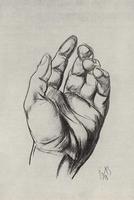
Drawing hands
Kuzma Petrov-Vodkin
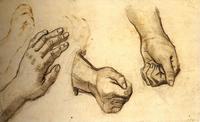
Three Hands
Vincent van Gogh
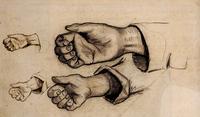
Four Hands
Vincent van Gogh
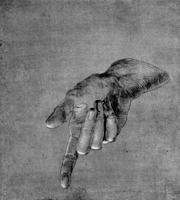
Right Hand of an Apostle
Albrecht Durer
Two Hands
Vincent van Gogh
Studies of men's hands
Maurice Quentin de La Tour
Study of a hand
Adolph Menzel
Hand
Kuzma Petrov-Vodkin
Study of Hands
Albrecht Durer
Three Hands
Vincent van Gogh
The study of the hand
Alfred Freddy Krupa
Hands
Vincent van Gogh
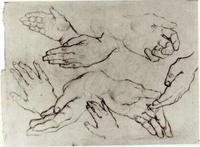
Hands
Vincent van Gogh
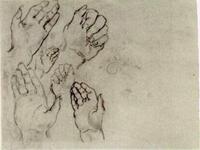
Hands
Vincent van Gogh
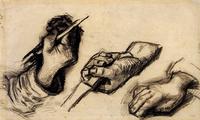
Three Hands, Two with Knives
Vincent van Gogh
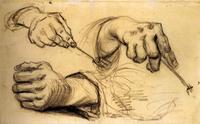
Three Hands, Two Holding Forks
Vincent van Gogh
Studies of the Hands of Erasmus of Rotterdam
Hans Holbein the Younger