
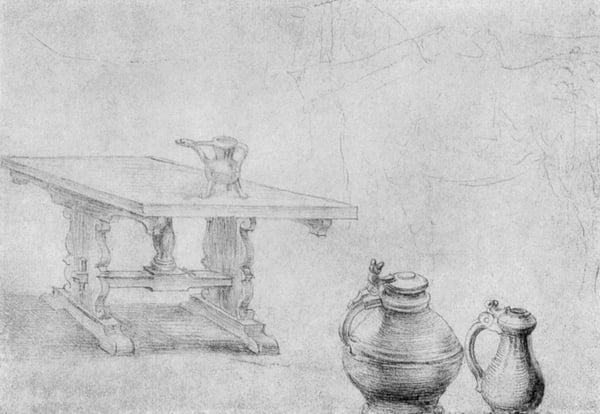
Table and cans
Analisi esperta di Table and cans di Albrecht Durer
Stile: Northern Renaissance · Genere: interior
Expert Analysis: "Table and Cans" by Albrecht Dürer
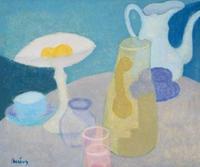
This work, attributed to the Northern Renaissance master Albrecht Dürer, stands as a striking example of the period's precision and symbolic depth, applied to the humble genre of interior still life. While Dürer is celebrated for his engravings, altarpieces, and self-portraits, "Table and Cans" demonstrates his ability to elevate everyday domestic objects into a study of texture, light, and meaning.
Significance within the Northern Renaissance:
The painting exemplifies the Northern Renaissance fascination with vanitas and the transience of material life. The cans—likely pewter or tin—are rendered with Dürer's signature meticulous detail, capturing the metallic sheen, subtle reflections, and worn surfaces. This level of realism was not mere technical display; it served to remind viewers of the fleeting nature of earthly possessions. The sparse table setting, devoid of human presence, invites contemplation of the mundane as a vessel for spiritual or moral reflection, a common theme in Northern European art of the 15th–16th centuries.
Genre and Composition:
As an interior scene, "Table and Cans" strips away narrative complexity to focus on a simple arrangement. Dürer's use of chiaroscuro and careful perspective anchors the objects in a tangible space, while the muted palette—browns, silvers, and deep shadows—creates an intimate, almost meditative atmosphere. The cans, possibly containing food or drink, might allude to the Eucharist or daily sustenance, a subtle nod to Protestant reforms that emphasized domestic piety.
Artistic Legacy:
This work is significant as an early precursor to the Dutch still-life tradition of the 17th century. Dürer’s ability to find profound meaning in the ordinary—through precision and symbolic restraint—marks "Table and Cans" as a pivotal piece that bridges late medieval devotional art and the emerging focus on secular, everyday life. It is a masterclass in how Northern Renaissance artists transformed the lowliest of subjects into a mirror of human existence.
Visivamente simili
20 opere con composizione e palette affini
Side Table with Mirror
Kmetty János
Fruit Still Life with Blue Jug
Kmetty János
Still life on the octagonal table
Pyotr Konchalovsky
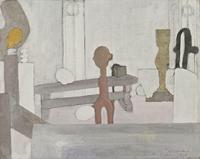
View of the Artist's Studio
Constantin Brâncuși
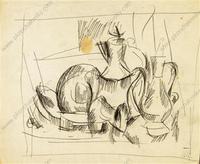
Sketch a still life with copper jugs
Pyotr Konchalovsky
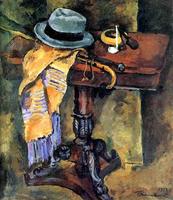
Still Life. Table with a hat.
Pyotr Konchalovsky
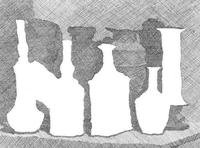
Still life with vases on a table
Giorgio Morandi
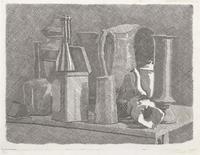
Grande natura morta con la caffettiera
Giorgio Morandi
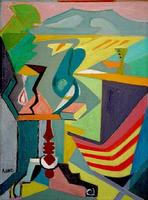
Sur La Terrasse
André Lhote
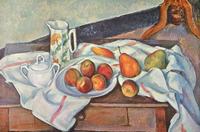
Still Life with Sugar
Paul Cezanne
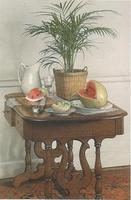
Still Life with Watermelon
John Stuart Ingle
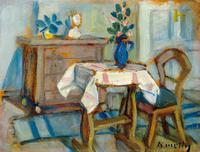
Interior
Kmetty János
Natura Morta
Giorgio Morandi
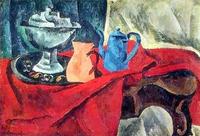
Vessels on the red tablecloth
Pyotr Konchalovsky
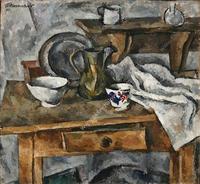
Still Life. Table with the dishes.
Pyotr Konchalovsky
Berény Róbert, Terrakotta Váza 1930
Berény Róbert
Jars of clay and glass found in Pompeii
Giovanni Battista Piranesi
Leo Tolstoy reading
Ilya Repin
Illustration
Maria Bozoky
Berény Róbert, Asztali Csendélet 1928
Berény Róbert