
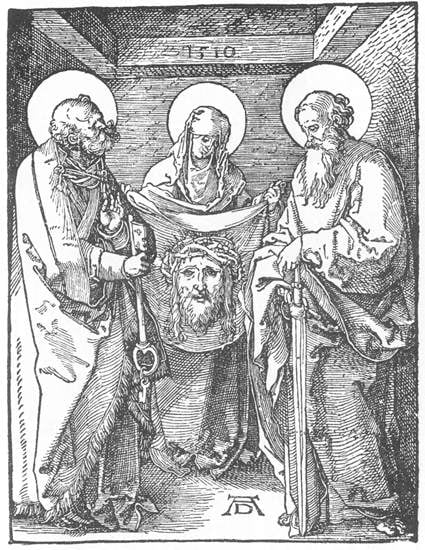
Expertenanalyse zu Albrecht Durers The Sudarium of St Veronica
Stil: Northern Renaissance · Genre: religious painting
Expert Analysis: "The Sudarium of St Veronica" by Albrecht Dürer
As a work of the Northern Renaissance, Albrecht Dürer’s The Sudarium of St Veronica stands as a masterful synthesis of late Gothic precision and burgeoning humanist ideals. Dürer, a pivotal figure bridging the art of the North with Italian Renaissance innovations, brings to this religious subject a level of naturalism and emotional directness that defines his legacy.
Composition and Technical Virtuosity
Dürer depicts the sudarium—the cloth with which St Veronica wiped Christ’s face on the Via Dolorosa—as a focused, almost iconic image. The face of Christ, imprinted on the linen, is rendered with extraordinary attention to the textures of the fabric and the flesh. The creases and folds of the cloth are meticulously observed, demonstrating Dürer’s deep engagement with the Northern tradition of recording physical detail. The face itself is not idealized but shows a specific, suffering man: the brow is furrowed, the cheeks hollow, the eyes closed in serene agony. This realism makes the divine imprint feel tangible and intimate.
Symbolic and Devotional Power
In the Northern Renaissance, devotional images like this one were meant to inspire private meditation on the Passion. Dürer elevates the sudarium from a simple relic to a psychological study. The absence of St Veronica herself focuses all attention on the miraculous cloth, making the viewer a direct witness. The stark background—often a dark or neutral field in Dürer’s engravings and paintings—enhances the otherworldly glow of the face, reinforcing the idea of a holy presence breaking into the mundane.
Significance within the Northern Renaissance
This work exemplifies the Northern Renaissance’s distinct approach: a marriage of spiritual intensity with empirical observation. Dürer, who traveled to Italy and absorbed Renaissance ideas of proportion and perspective, here applies them to a quintessentially Northern subject. His handling of the sudarium’s drapery recalls the intricate folds of Gothic sculpture, while the modeling of Christ’s face shows an understanding of volumetric form learned from Italian sources. The result is a painting that feels both medieval in its piety and modern in its naturalism.
Legacy
The Sudarium of St Veronica is significant not only as a devotional image but as a demonstration of Dürer’s ability to make a sacred narrative feel immediate and human. It reflects the Northern Renaissance’s core belief that divinity could be perceived through the most material details—a woven cloth, a bead of sweat, the subtle shadow of a nose. Dürer’s version stands as a touchstone for how northern artists balanced reverence with realism, influencing generations of printmakers and painters.
Museum / Gallery
Visuell ähnlich
20 Werke mit ähnlicher Komposition und Farbpalette
The Incredulity of St Thomas
Albrecht Durer
Christ Appears to His Mother
Albrecht Durer
Ecce Homo
Albrecht Durer
Illustration for the Poem "The Three Statues of Aegina"
Frederick Sandys
The Descent of the Holy Spirit
Albrecht Durer
Christ on the Cross with the Virgin and St John
Albrecht Durer
The Resurrection of Christ
Andrea Mantegna
St. Thomas
Albrecht Durer
Christ on the Cross
Albrecht Durer
St. Paul (First State)
Albrecht Durer
Christ Taking Leave of His Mother
Albrecht Durer
St. Paul (Second State)
Albrecht Durer
The Ascension
Albrecht Durer
Crucifixion
Albrecht Durer
St. Bartholomew
Albrecht Durer
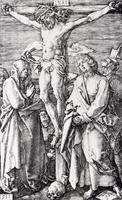
Crucifixion
Albrecht Durer
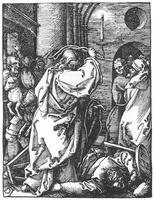
Christ Driving the Merchants from the Temple
Albrecht Durer
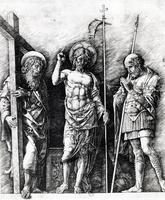
The resurrected Christ between St. Andrew and Longinus
Andrea Mantegna
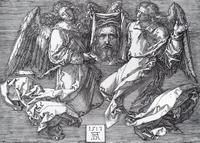
Sudarium Displayed By Two Angels
Albrecht Durer
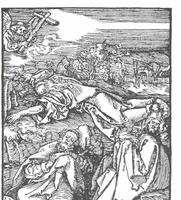
Christ on the mount olive
Albrecht Durer