
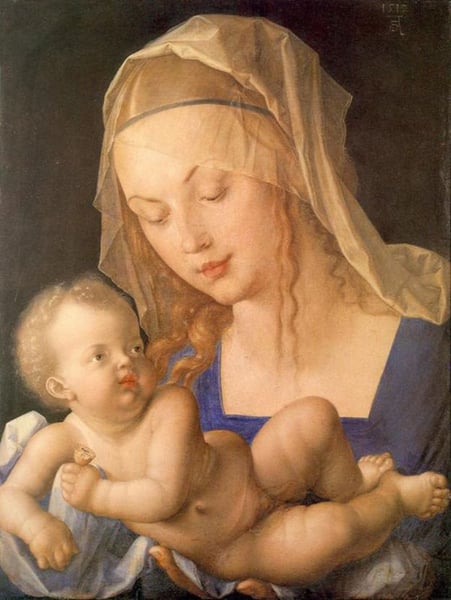
Expert analysis of Albrecht Durer’s Virgin and child holding a half eaten pear
Style: Northern Renaissance · Genre: religious painting
Expert Analysis: "Virgin and Child Holding a Half-Eaten Pear" by Albrecht Dürer
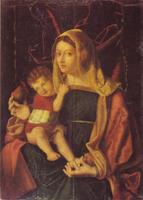
This work is a quintessential example of the Northern Renaissance style, demonstrating Albrecht Dürer’s extraordinary ability to merge meticulous naturalistic detail with profound religious symbolism. As a religious painting, it depicts a familiar devotional subject—the Virgin Mary with the Christ Child—but Dürer infuses it with a layered iconographic meaning that elevates the work beyond simple piety.
Significance within the Northern Renaissance: Dürer was the first Northern European artist to fully assimilate the principles of Italian Renaissance perspective and proportion while maintaining the Gothic tradition of intense detail and symbolic richness. Here, the half-eaten pear held by the Christ Child is a masterstroke of Northern Renaissance iconography. Typically, fruit in Marian imagery alludes to the Fall of Man (the apple) or redemption. The pear—often associated with sweetness and Christ’s love—when half-eaten introduces a poignant dualism: it suggests both the earthly sweetness of childhood and the impending sacrifice. The partially consumed fruit may foreshadow the Eucharist (the body of Christ “consumed” by believers) or even original sin, with the child already “tasting” the consequences of humanity’s fall. This subtle detail encapsulates Dürer’s genius for embedding theological narrative within everyday realism.
Stylistic and Thematic Significance:
- Precision and Texture: Dürer’s engraving and painting techniques, honed through his printmaking expertise, lend the scene an almost hyper-real texture—notice the soft folds of the Virgin’s drapery, the delicate curls of the Child’s hair, and the tactile surface of the pear.
- Humanity and Divinity: By showing the Christ Child as a playful infant grasping a half-eaten fruit, Dürer humanizes the holy figures, a hallmark of Northern Renaissance devotional art. Yet the specific choice of fruit carries a depth of symbolic meaning that invites contemplation—making the work both accessible and intellectually rich.
- Influence: This piece exemplifies how Dürer bridged the gap between the late Gothic world and the Renaissance, influencing generations of Northern artists who would continue to explore the tension between naturalism and allegory.
In sum, Virgin and Child Holding a Half-Eaten Pear is significant for its synthesis of Northern realism with symbolic complexity, its demonstration of Dürer’s technical mastery, and its contribution to the evolving language of religious imagery in the Northern Renaissance. It stands as a testament to Dürer’s role as a pivotal figure who transformed devotional art into a vehicle for both spiritual reflection and artistic innovation.
Museum / Gallery
Visually similar
20 works with related composition and palette
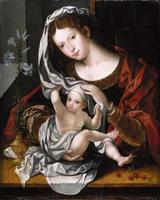
Madonna and Child playing with the veil
Mabuse
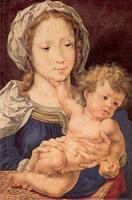
Virgin and Child
Mabuse
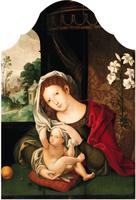
Madonna and Child playing with the veil
Mabuse
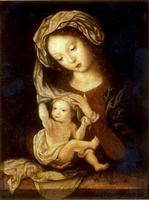
Madonna and Child with Cherries
Mabuse
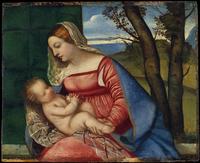
Madonna and Child
Titian
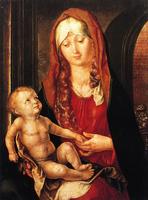
Virgin and Child before an Archway
Albrecht Durer
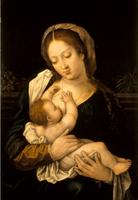
Madonna and Child (Madonna lactans)
Bernard Van Orley
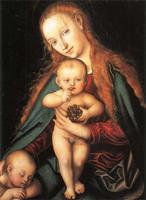
Madonna and Child
Lucas Cranach the Elder
Madonna and Child
Barbara Longhi
Bridgewater Madonna
Raphael
Madonna with the Milk Soup
Gerard David
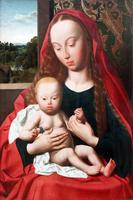
Virgin and Child
Geertgen tot Sint Jans
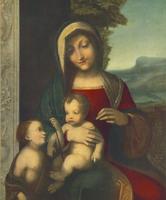
Madonna
Correggio
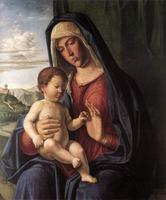
Madonna and Child
Cima da Conegliano
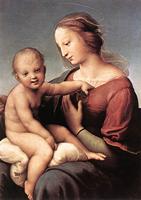
Niccolini-Cowper Madonna
Raphael
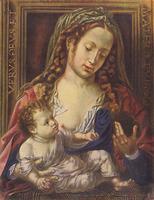
Madonna and Child
Mabuse
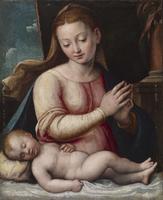
Madonna Adoring the Child
Barbara Longhi
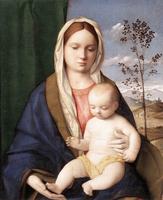
Madonna and child
Giovanni Bellini
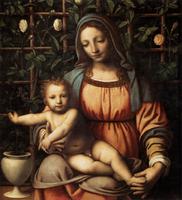
Madonna of the Rose-bush
Bernardino Luini
Madonna Della Pera
Bartolomeo Veneto