Expert Analysis of "Don Quixote" by Gustave Dore
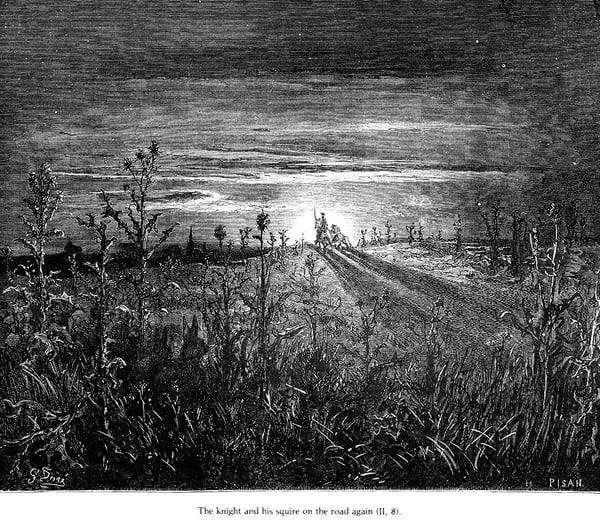
Gustave Dore’s illustration for Don Quixote stands as a quintessential example of Romanticism applied to the literary genre of illustration. Within the Romantic style, Dore harnesses dramatic chiaroscuro, exaggerated emotional expression, and a sublime sense of scale to capture the epic yet tragicomic spirit of Cervantes’ novel.
The significance of this work lies in how Dore elevates the illustration from mere visual accompaniment to a powerful interpretive lens. In typical Romantic fashion, he emphasizes the inner drama of the protagonist: the gaunt, wind-blown figure of Quixote is rendered with a heightened sense of isolation and visionary fervor, his tilting at windmills transformed into a symbol of noble, doomed idealism. The turbulent skies and rugged landscapes echo the knight’s own tempestuous imagination, merging external reality with internal obsession.
As an illustration, Dore’s work is pivotal because it defined the visual archetype of Don Quixote for generations, fusing Romanticism’s fascination with medieval chivalry, individualism, and the blurred boundary between sanity and madness. The artwork’s significance thus lies in its ability to encapsulate the Romantic ethos—celebrating the power of imagination and emotion while highlighting the pathos of a dreamer in a disillusioned world—all within the accessible, narrative-driven genre of book illustration.