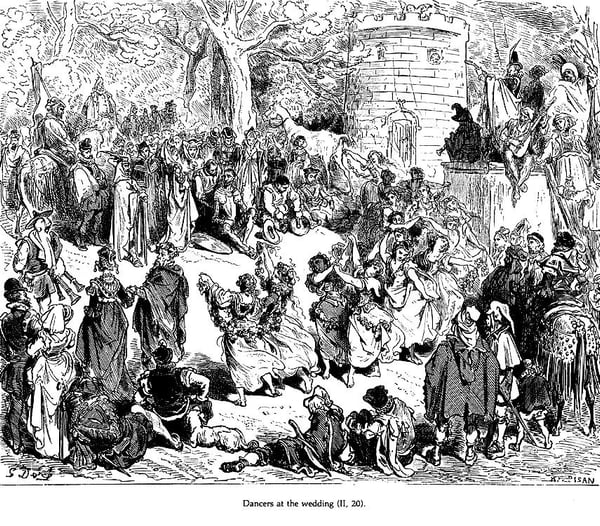
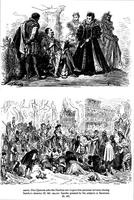
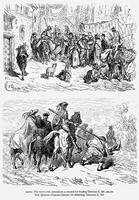
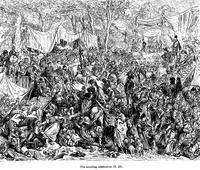
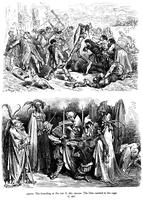
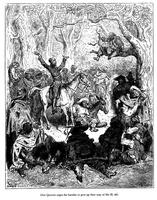
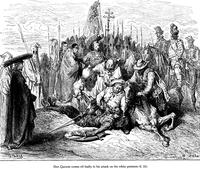
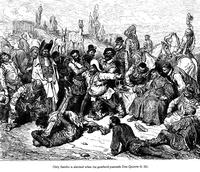
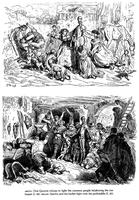
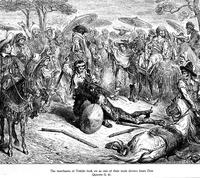
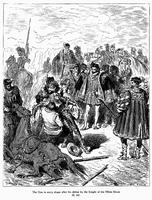
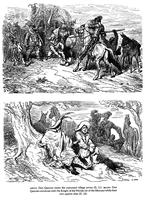
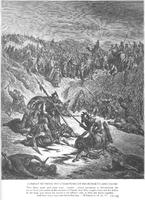
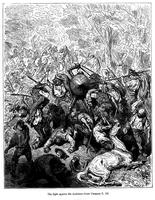
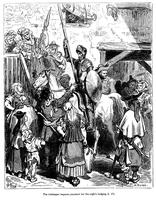
As a Romantic illustration, Gustave Doré’s Don Quixote exemplifies the movement’s emphasis on emotional intensity, dramatic contrasts, and the sublime potential of literary subject matter. The significance of this work within the Romantic style lies in its ability to transform a narrative scene into a visual experience that heightens the psychological depth and imaginative scope of Cervantes’ novel. Doré’s mastery of chiaroscuro—a hallmark of Romantic illustration—creates a charged atmosphere, while his dynamic composition captures the tension between idealism and reality central to Don Quixote’s character. As an illustration, the artwork bridges literature and visual art, demonstrating Romanticism’s fascination with storytelling, individual vision, and the power of the imagination. This piece stands as a seminal example of how Romantic illustrators elevated book illustration into a vehicle for profound artistic expression, making Doré’s interpretation a lasting touchstone for the period’s aesthetic ideals.