
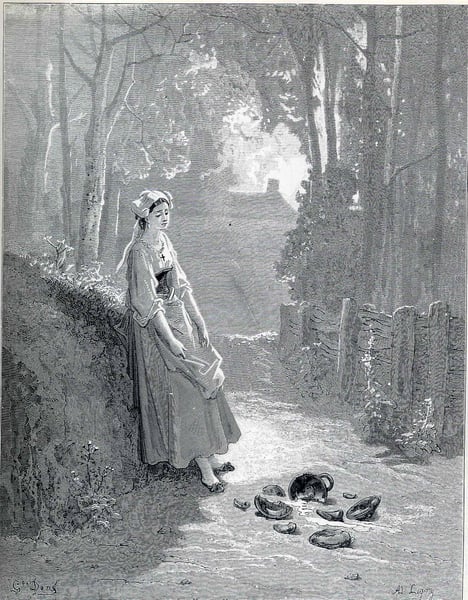
Expert analysis of Gustave Dore’s Illustration for The Milkmaid and the Milk Can
Style: Romanticism · Genre: illustration
This artwork, "Illustration for The Milkmaid and the Milk Can" by Gustave Doré, is significant as a masterful example of Romanticism applied to the illustration genre. Doré, renowned for his dramatic and highly detailed engravings, here transforms a simple fable into a poignant, emotionally charged moment.
Significance within Romanticism and Illustration:
- Narrative and Emotional Weight: The illustration captures the precise instant of the milkmaid’s realization—the spilled milk and shattered dreams. Romanticism prized strong emotional impact and the depiction of human vulnerability; Doré amplifies the fable’s moral by focusing on the fleeting, tragic consequence of daydreaming. The scene is not merely decorative but carries a profound, almost theatrical pathos.
- Technical Virtuosity and Atmosphere: Doré’s use of deep chiaroscuro and intricate linework creates a sense of drama and interiority. The light falls dramatically on the milkmaid’s face and the broken jug, while the surrounding shadows suggest a world indifferent to her misfortune. This compositional intensity elevates the illustration from a simple narrative aid to a standalone work of art, characteristic of Romanticism’s emphasis on subjective experience.
- Elevating the Fable Tradition: While illustrations for fables were common, Doré’s treatment gives the tale a gravitas and psychological depth rarely seen. His ability to infuse a humble, everyday scene with monumental significance underscores the Romantic fascination with the ordinary as a vehicle for universal truths. This work thus stands as a testament to how illustration, under Romanticism, could achieve the same artistic and emotional sophistication as painting or sculpture.
Museum / Gallery
Visually similar
20 works with related composition and palette
Times of the Day: Evening
William Hogarth
Tircis and amaranth
Gustave Dore
Country figure in traditional dress
Publio de Tommasi
The shepherdess
Alexandre Antigna
The Spanish Gypsy
Rembrandt
Femme
Charles Jacque
The Sixties (The Agony)
Frederick Sandys
Two Roman ladies and their children
Penry Williams
Female bathers
Ernest Hébert
At a Stream in the Mountains near Rome
Bartolomeo Pinelli
A Harlot's Progress, plate 1
William Hogarth
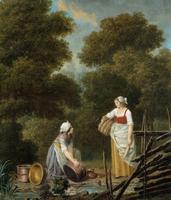
Two Maid-Servants at a Brook
Pehr Hillestrom
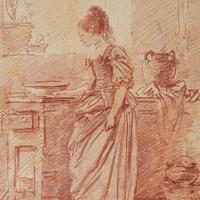
Die hübsche Köchin
Johann Anton de Peters
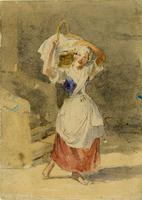
Young Woman with Basket
Thomas Stuart Smith
Leigh from Southend
John Absolon
Rural idyll
Federico Andreotti
Picnic. Illustration to the Book of the Marquise
Konstantin Somov
Shepherdesses Seated In The Shade
Jean-Francois Millet
Illustration to "A Week of Kindness"
Max Ernst
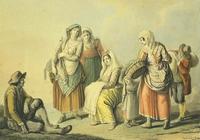
Province, Terra di lavoro
Saverio della Gatta