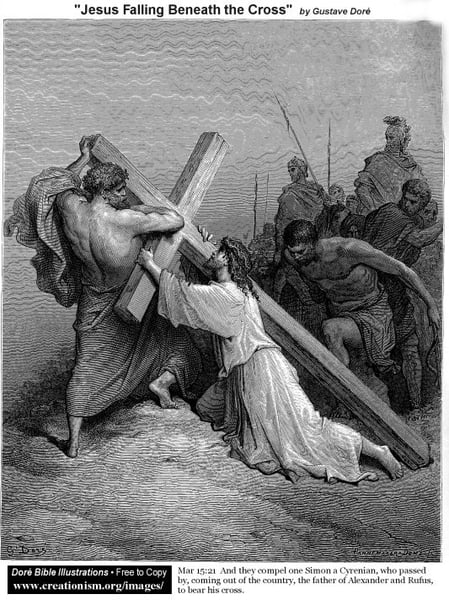
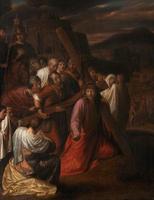
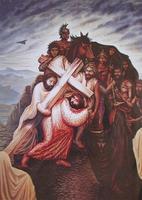
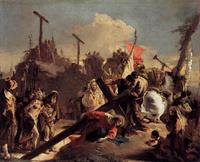
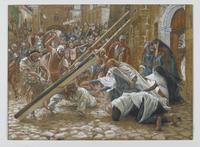
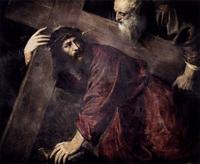
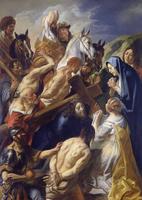
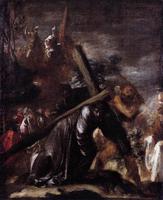
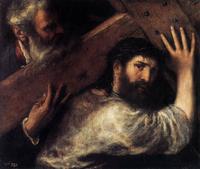
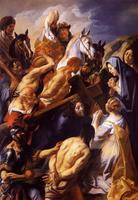
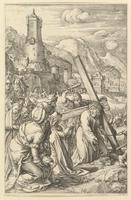
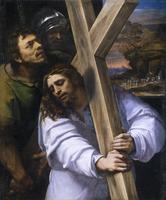
This painting is significant as a prime example of Romanticism applied to religious narrative. Gustave Doré transforms the traditional "Stations of the Cross" moment into a highly dramatic, emotionally charged scene. In keeping with Romantic ideals, the work emphasizes intense human suffering, the sublime weight of sacrifice, and the individual's spiritual struggle. The composition likely uses stark contrasts of light and shadow (chiaroscuro) and a dynamic, crowded arrangement to heighten the viewer's emotional response, making the divine subject feel visceral and immediate rather than serene or iconic. This approach reflects Romanticism's broader shift away from Neoclassical calm toward expressive, passionate, and awe-inspiring depictions of faith and tragedy.