
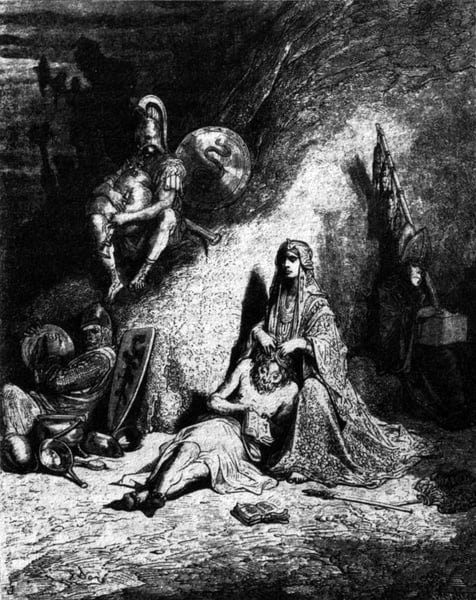
Expert analysis of Gustave Dore’s Semiramide, spidocchiatrice di straccioni
Style: Romanticism · Genre: genre painting
Gustave Doré’s Semiramide, spidocchiatrice di straccioni (Semiramis, Delouser of Ragamuffins) stands as a compelling and unexpected example of Romanticism’s fascination with dramatic contrasts and the dignity of everyday life. Executed within the genre painting tradition—scenes of ordinary people or anecdotal moments—this work subverts expectation by placing a legendary Assyrian queen in a humble, maternal role.
Significance within Romanticism:
Doré was best known for his dark, fantastical illustrations (Dante, Milton, the Bible), but this painting reveals his Romantic interest in emotional intensity and moral paradox. The subject matter is deliberately jarring: Semiramis, a figure associated with power, conquest, and legendary beauty, is shown performing the lowly act of delousing poor children (straccioni means “ragamuffins” or “tattered ones”). This inversion of hierarchy—a queen stooping to care for the destitute—embodies the Romantic ideal of compassion over status. The artist captures a poignant stillness: the queen’s focused, tender expression contrasts with the rags and dirt of the children, creating a tableau that is both intimate and allegorical.
Stylistic hallmarks:
Doré’s rendering employs a rich chiaroscuro typical of Romanticism, with light falling gently across Semiramis’s face and hands while the children’s forms emerge from darker, muted tones. His attention to texture and detail—the frayed fabric, the women’s hair, the worn floor—grounds the scene in gritty realism, yet the overall composition retains a painterly, almost theatrical focus. This combination of realist observation and emotive narrative aligns with Romanticism’s push against Neoclassical rigidity.
What makes it significant:
The painting challenges conventional depictions of historical heroines. Instead of a warrior or ruler, Doré presents Semiramis as a figure of unexpected humility and grace, transforming a mundane act into a symbol of redemption. Within Doré’s oeuvre, it demonstrates his versatility beyond fantasy and horror, proving his ability to find profound human truth in the smallest, most ordinary moments. It remains a vivid testament to Romanticism’s belief that true nobility is revealed in compassion, not in crown or sword.
Visually similar
20 works with related composition and palette
The beheading of John the Baptist
Rembrandt
Samson and Delila
Lucas van Leyden
The death of Epaminondas
Bartolomeo Pinelli
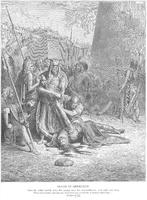
The Death of Abimelech
Gustave Dore
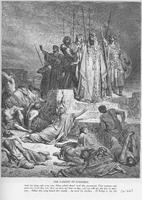
A Famine in Samaria
Gustave Dore
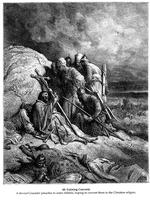
Gaining Converts
Gustave Dore
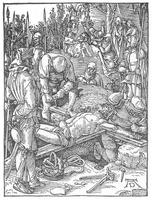
Christ Being Nailed to the Cross
Albrecht Durer
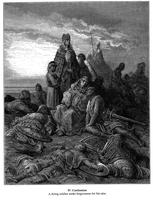
Confession
Gustave Dore
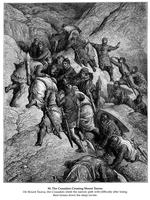
The Crusaders Crossing Mount Taurus
Gustave Dore
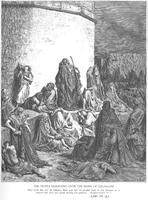
The People Mourning over the Ruins of Jerusalem, Lamentations 1:1-2
Gustave Dore
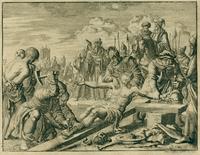
Christ Being Nailed to the Cross
Jan Luyken
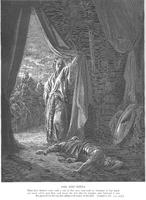
Jael Kills Sisera
Gustave Dore
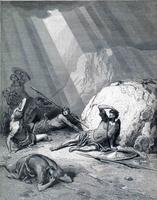
The Conversion of St. Paul
Gustave Dore
Don Quixote
Gustave Dore
Don Quixote
Gustave Dore
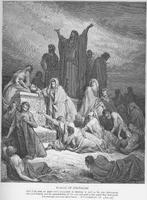
The Plague of Jerusalem
Gustave Dore
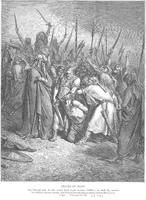
The Death of Agag
Gustave Dore
Four illustrations to a Spanish book
Rembrandt
A young man seated and standing (The walking trainer)
Rembrandt
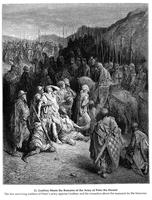
Godfrey Meets the Remains of the Army of Peter the Hermit
Gustave Dore