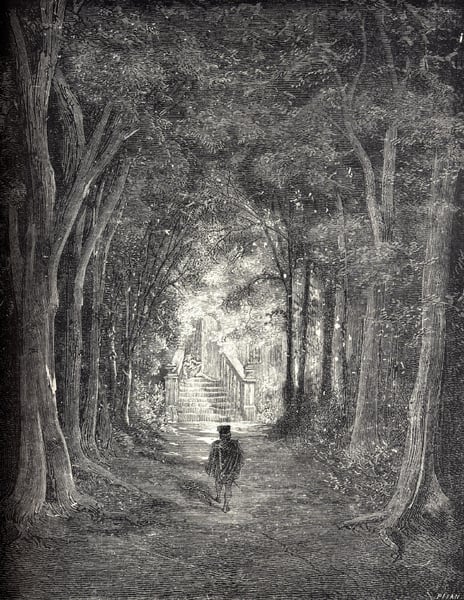
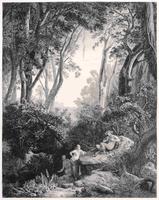
Gustave Doré’s Sleeping Beauty is a quintessential example of Romantic illustration, where the artist transforms a literary fairy tale into a dramatic, emotionally charged visual experience. Executed in the Romantic style, the work emphasizes mood, mystery, and the sublime—qualities that distinguish Doré’s illustrations from mere decorative imagery. The detailed, almost theatrical composition draws the viewer into the enchanted castle, its tangled vines and deep shadows evoking both the beauty and the eerie stillness of the sleeping princess. Doré’s mastery of line and light creates a sense of suspended time, capturing the poignant tension between the curse and the promise of awakening. Significant within Romanticism, this illustration showcases how Doré elevated the genre of book illustration to a fine art, blending narrative clarity with atmospheric depth. His Sleeping Beauty remains a landmark of 19th-century visual storytelling, influencing later fairy-tale imagery and demonstrating how Romanticism’s focus on emotion and imagination can breathe life into a classic fable.