
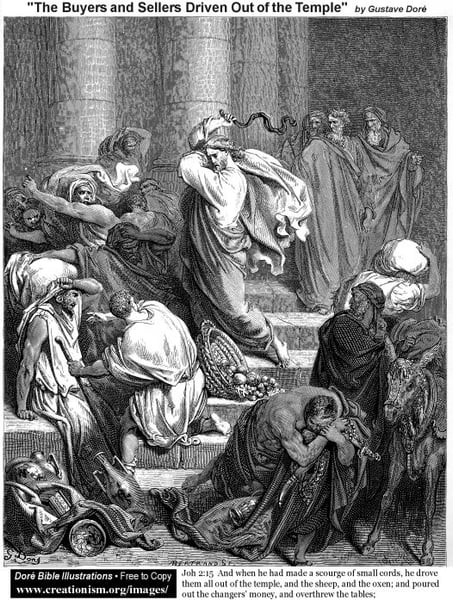
Gustave Dore sanatçısının The Buyers And Sellers Driven Out Of Temple eseri hakkında uzman analizi
Tarz: Romanticism · Tür: religious painting
Expert Analysis: "The Buyers And Sellers Driven Out Of Temple" by Gustave Doré
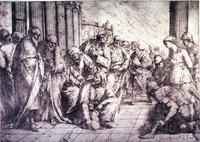
Gustave Doré’s The Buyers And Sellers Driven Out Of Temple stands as a powerful example of Romantic religious painting, imbued with the movement’s characteristic drama, emotional intensity, and focus on spiritual confrontation. While Doré is best known for his prolific work as an illustrator, this painting—executed within the Romantic style—elevates a familiar biblical narrative into a scene of profound moral and physical upheaval.
Significance within Romanticism:
The Romantic period prized the sublime, the turbulent, and the deeply personal expression of faith or conflict. Doré captures this through a dynamic, almost chaotic composition. The forceful expulsion of the moneychangers is not a static historical reenactment but a swirling vortex of motion. Figures recoil, animals scatter, and the central figure of Christ—often depicted with a whip or commanding gesture—becomes an agent of righteous fury. Doré’s use of stark contrasts between light and shadow (chiaroscuro) heightens the emotional stakes, casting divine illumination on Christ while plunging the corrupt merchants into murky darkness. This technique aligns with Romanticism’s obsession with light as a symbol of spiritual revelation.
Significance within Religious Painting:
As a religious painting, this work departs from the serene, orderly depictions of earlier periods (e.g., Renaissance or Neoclassical). Instead, Doré emphasizes the human and dramatic dimensions of the Gospel episode (Matthew 21:12–13). The temple setting is rendered with architectural grandeur yet feels tumultuous, reflecting the internal spiritual conflict. Doré’s ability to crowd the canvas with dozens of distinct, expressive figures—each reacting with fear, anger, or surprise—creates a visceral sense of historical immediacy. This approach made biblical scenes accessible and emotionally resonant to 19th-century audiences, who were accustomed to his richly detailed illustrations in deluxe editions of the Bible.
Overall Significance:
Doré’s treatment of this subject bridges the gap between popular illustration and high art, demonstrating that a religious theme could be both devotional and thrilling. The painting’s raw energy and moral clarity exemplify Romanticism’s celebration of individual righteousness over institutional corruption. It remains a testament to Doré’s mastery in translating sacred text into a visually arresting, emotionally charged tableau—one that compels viewers to witness both the chaos of sin and the power of divine justice.
Görsel olarak benzer
İlişkili kompozisyon ve renk paletine sahip 20 eser
Christ Presented To The People
Gustave Dore
Christ Mocked
Gustave Dore
Deborah, engraved by Ettlin
Gustave Dore
The Prophet Jeremiah
Gustave Dore
The Plague of Jerusalem
Gustave Dore
Last Supper
Peter Paul Rubens
St. Paul At Ephesus
Gustave Dore
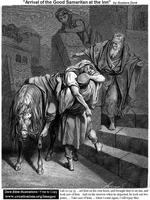
Arrival Of The Good Samaritan At The Inn
Gustave Dore
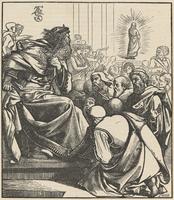
The King at the Gate
Frederick Sandys
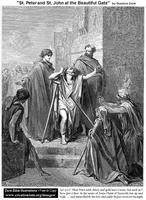
St. Peter And St John At Beautiful Gate
Gustave Dore
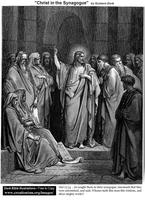
ChristIn The Synagogue
Gustave Dore
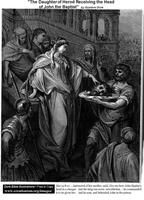
The Daughter Of Herod Head Of John The Baptist
Gustave Dore
Adoration of the Magi
Giovanni Battista Piranesi
The story of the greatest nations
Edward Poynter
Penelope Announces Odyseus's Return
Theodoor van Thulden
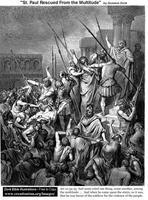
St. Paul Rescued From The Multitude
Gustave Dore
Detail of the Dispute of the Sacrament of Raphael
Giovanni Battista Piranesi
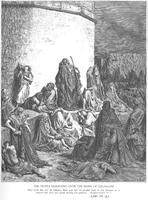
The People Mourning over the Ruins of Jerusalem, Lamentations 1:1-2
Gustave Dore
Allegory of Providence
Giovanni Battista Piranesi
Christ and the Adulteress
Luca Giordano