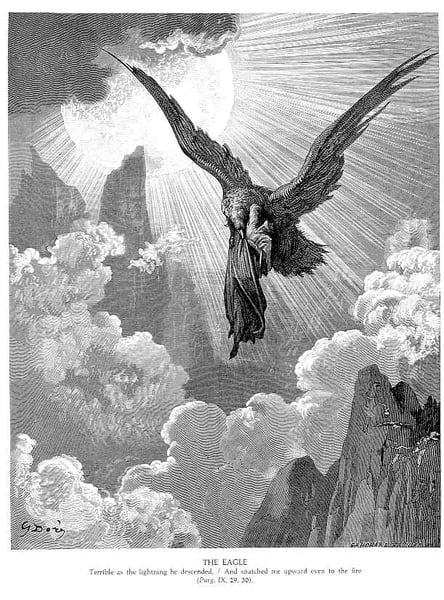
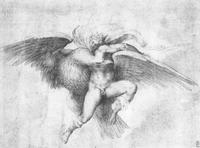
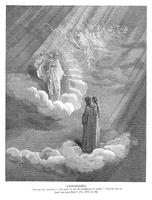
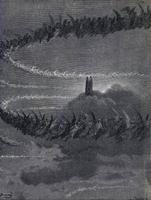
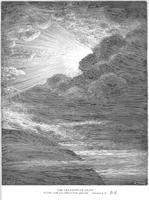
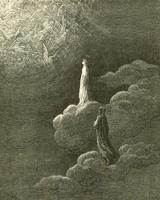
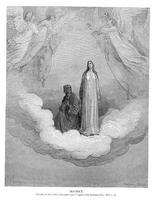
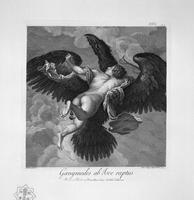
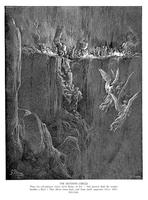
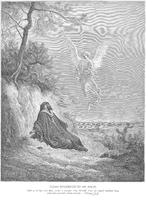
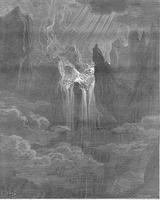
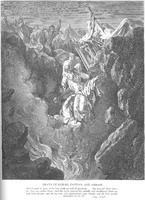
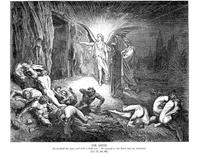
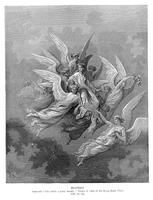
“The Eagle” by Gustave Doré is significant as a masterful example of Romantic illustration, a genre where Doré’s technical virtuosity and dramatic vision elevated storytelling into high art. Rooted in Romanticism’s emphasis on untamed nature, emotional intensity, and the sublime, the work likely portrays the eagle as a symbol of solitary power and wild majesty—a subject perfectly suited to the movement’s fascination with awe-inspiring, often overwhelming forces. Doré’s illustration transcends mere decoration; his precise yet dynamic linework, chiaroscuro contrasts, and compositional grandeur capture a moment of raw drama, making the image feel both immediate and mythic. Within the context of Romanticism, this piece embodies the era’s shift from idealized classicism to a visceral, individualistic encounter with nature. Doré’s ability to infuse a commercial genre like illustration with the philosophical weight and emotional resonance of Romantic painting underscores the period’s broader redefinition of artistic boundaries, securing “The Eagle” as a testament to how illustration can achieve profound significance through Romantic sensibility.