
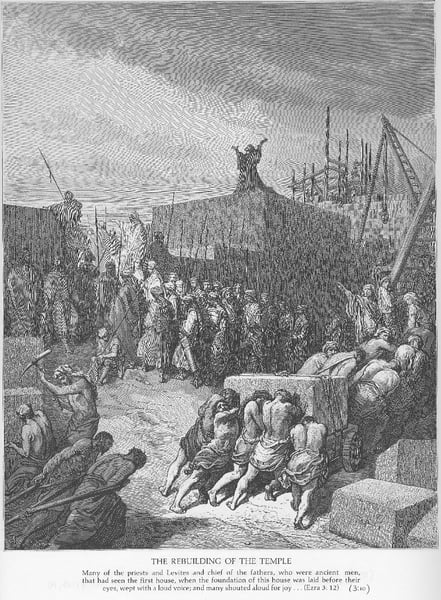
Gustave Dore sanatçısının The Rebuilding of the Temple Is Begun eseri hakkında uzman analizi
Tarz: Romanticism · Tür: religious painting
Expert Art Historical Analysis: "The Rebuilding of the Temple Is Begun" by Gustave Doré
Gustave Doré’s The Rebuilding of the Temple Is Begun stands as a quintessential example of Romantic religious painting, distinguished by its fusion of biblical narrative with the dramatic, sublime aesthetic that defines the Romantic movement. Within the context of Doré’s wider oeuvre—he is best known for his monumental book illustrations—this work elevates a scriptural episode into a sweeping, emotionally charged tableau.
Significance within Romanticism:
Romanticism prioritizes intense emotion, the awe-inspiring power of nature (or the divine), and the heroic struggle of humanity. Doré captures these elements masterfully. The scene does not merely depict a historical reconstruction; it portrays a sacred, epic undertaking. The artist uses dramatic chiaroscuro—deep shadows contrasted with bursts of light—to draw the viewer’s eye to the laborers and the emerging structure, emphasizing the monumental effort and spiritual devotion. The composition is vast, with figures dwarfed by the partially built temple and the surrounding landscape, evoking the Romantic sublime: a sense of wonder mixed with humility before something greater than oneself.
Contribution to Religious Painting:
Doré revitalizes the religious genre by infusing it with the narrative dynamism and emotional urgency of Romanticism. Rather than a static, iconic representation of a sacred event, this painting becomes a living tableau of faith in action. The figures—workers, architects, onlookers—are not idealized saints but active participants, suggesting that divine purpose is fulfilled through human endeavor. This humanization of the biblical story aligns with Romanticism’s interest in individual experience and collective struggle.
Artistic Legacy:
Doré’s mastery here lies in his ability to translate the grand scale of a biblical undertaking into a visually compelling narrative. The work anticipates later Romantic and pre-modernist treatments of religious subjects, where drama and atmosphere take precedence over doctrinal rigidity. It reminds us that for Doré, the temple rebuild is not just a past event but a symbol of spiritual renewal—a theme that resonates deeply with the Romantic era’s fascination with redemption, history, and the sublime power of faith.
In sum, The Rebuilding of the Temple Is Begun is significant for its successful marriage of Romantic visual language—emotional intensity, sublime scale, and dramatic lighting—with a traditional religious subject, creating a work that feels both sacred and profoundly human.
Görsel olarak benzer
İlişkili kompozisyon ve renk paletine sahip 20 eser
The Spies Return from the Promised Land
Gustave Dore
The Martyrdom of Eleazar the Scribe
Gustave Dore
Martyrdom of Lombardian Christians, AD 566
Jan Luyken
Felicitas Killed with Her 7 Sons, Rome, AD 104
Jan Luyken
Evangelist Matthew Beheaded, Naddavar, Ethiopia, AD 70
Jan Luyken
The Death of Ahab
Gustave Dore
A Famine in Samaria
Gustave Dore
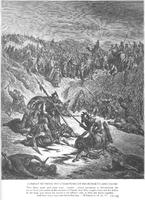
Combat between Soldiers of Ish-bosheth and David
Gustave Dore
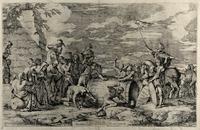
Carthaginian Soldiers Preparing the Martyrdom of Attilius Re
Salvator Rosa
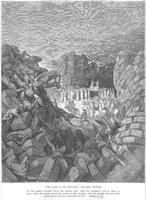
The Walls of Jericho Fall Down
Gustave Dore
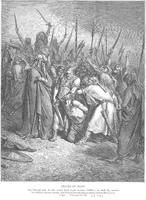
The Death of Agag
Gustave Dore
Burning of Barnabas at Salamanca, Cyprus, AD 64
Jan Luyken
David Attacks the Ammonites
Gustave Dore
Don Quixote
Gustave Dore
The Tower of Babel
Gustave Dore
Burning of 224 Waldensians, Toulon, AD 1243
Jan Luyken
Apostle Paul Beheaded, Rome, AD 69
Jan Luyken
The Death of Abimelech
Gustave Dore
Apostle Bartholomew Skinned Alive and Beheaded, Armenia, AD 70
Jan Luyken
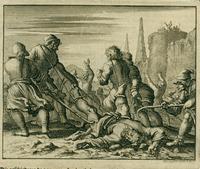
Death of Mark the Evangelist, Alexandria, AD 64
Jan Luyken