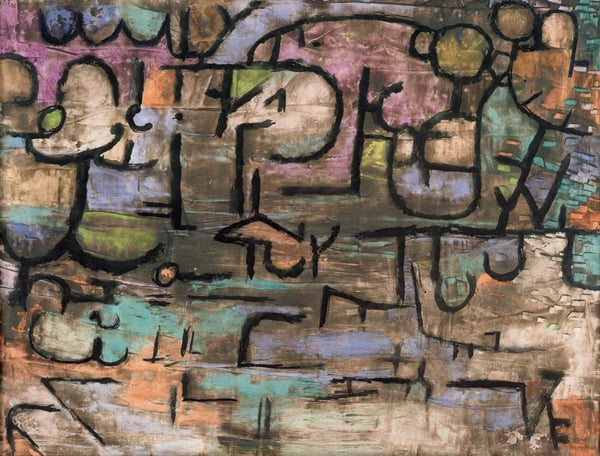
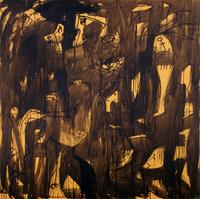
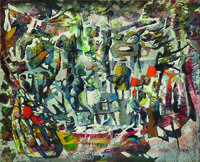
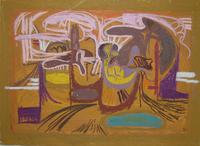
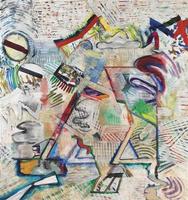
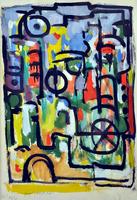
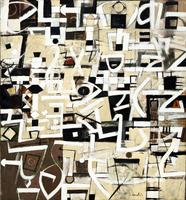
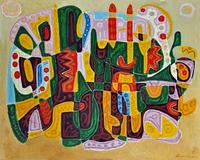
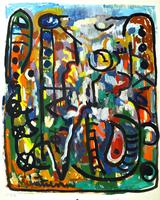
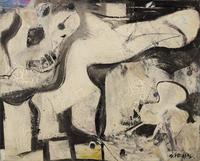
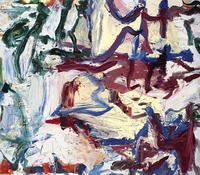
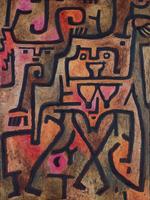
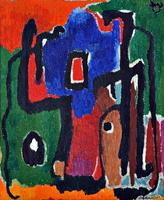
As a late work by Paul Klee, After the floods exemplifies the artist’s mature engagement with Abstract Art. Its significance within this period lies in how it distills complex natural and emotional experiences into a purely abstract visual language—a hallmark of Klee’s final creative phase. The painting’s genre as abstract allows it to transcend literal representation, instead using color, line, and form to evoke the aftermath of a flood without depicting it directly. This piece is notable for representing the synthesis of Klee’s lifelong exploration of symbolism and simplified structure, characteristic of his Late Works period, where he often turned to elemental shapes and subdued palettes to convey deeply personal and universal themes.