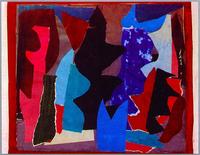
Expert analysis of Paul Klee’s Side Panels for 'Anatomy of Aphrodite'
Style: Abstract Art · Genre: abstract
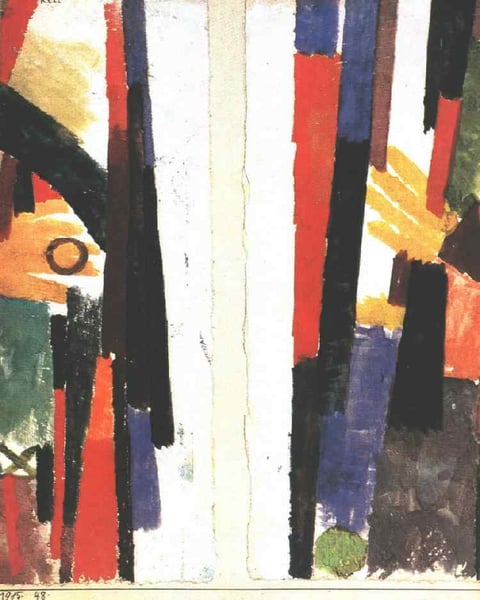
As an early work by Paul Klee, Side Panels for 'Anatomy of Aphrodite' exemplifies the artist's foundational shift toward abstraction, laying the groundwork for his later, more iconic explorations of form and symbolism. Created during his Early Works period, this piece is significant for several reasons:
-
Emergence of Abstraction: In this period, Klee was moving away from representational art, and here he uses Abstract Art to deconstruct the classical subject of Aphrodite—traditionally a symbol of idealized beauty—into fragmented, non-figurative elements. The side panels suggest a triptych-like structure, allowing Klee to experiment with composition and spatial relationships outside conventional narrative.
-
Conceptual Anatomy: The title Anatomy of Aphrodite points to Klee’s intellectual approach: he dissects not a physical body but the essence of a myth, using abstract geometry and line to probe underlying structures. This aligns with his lifelong interest in the interplay between visible reality and invisible forces (such as color theory and musical rhythm).
-
Influence on Modernism: As an early abstract piece, it foreshadows Klee’s mature style—characterized by childlike whimsy, symbolic notation, and a lyrical balance between chaos and order. It also reflects the broader Expressionist and Bauhaus currents that Klee would later help define, where abstraction became a tool for psychological and spiritual expression.
While limited in available detail, its position within Klee’s early output marks a critical turning point: a bold departure from figurative tradition toward the radical, multi-perspective abstraction that would earn him a central place in 20th-century art.
Visually similar
20 works with related composition and palette
Man with guitar
Pablo Picasso
Wine, Women and Song
Will Barnet
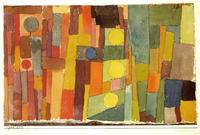
In the Style of Kairouan
Paul Klee
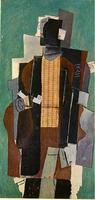
Man with pipe
Pablo Picasso
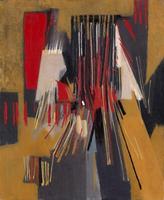
Composition abstraite
Huguette Arthur Bertrand
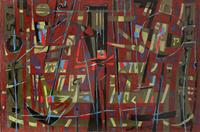
Instrument de la passion
Jean Bertholle
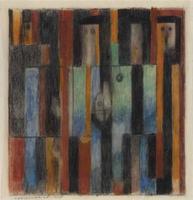
Composición abstracta
Carlos Merida
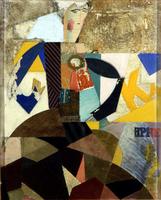
La Petite
Eduardo Viana
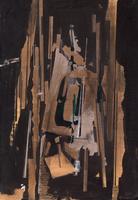
Drawing in black and white
Alekos Kontopoulos
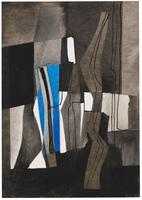
Untitled
Fritz Winter
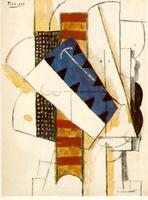
Head of a man
Pablo Picasso
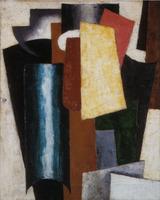
Portrait
Lyubov Popova
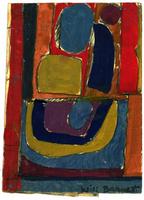
Untitled
Will Barnet
Untitled
Will Barnet
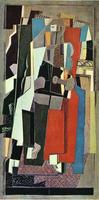
The Musician
Georges Braque
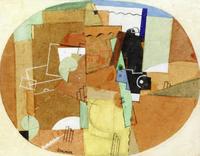
Cubist Composition
Georges Valmier
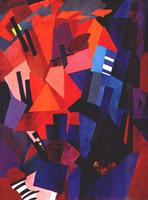
Cityscape (composition
Aleksandra Ekster
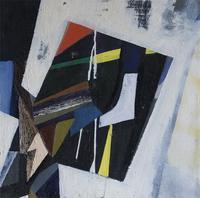
Abstract composition
Florin Maxa
Application
Karlo Zvirynsky
Figure
Georges Valmier