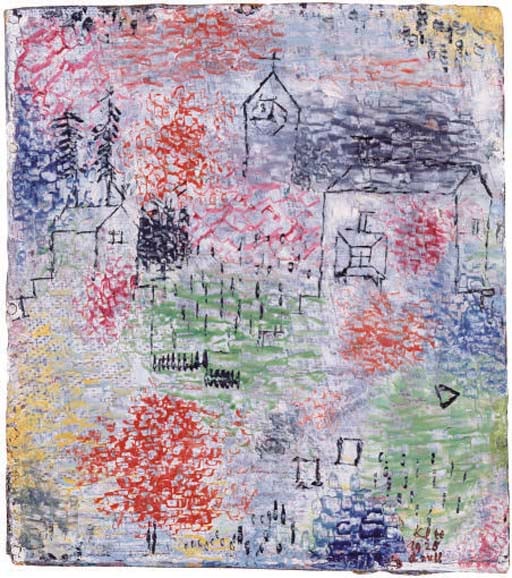
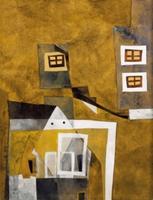
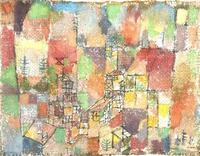
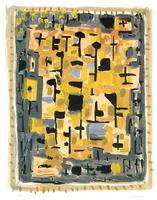
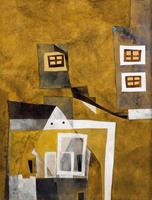
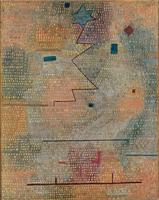
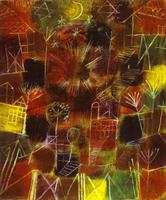
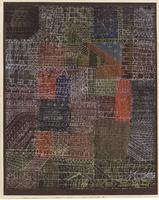
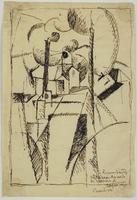
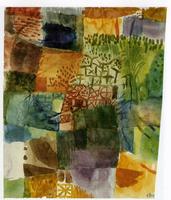
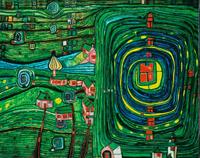
"Small Landscape with the village church" by Paul Klee exemplifies the artist's unique synthesis of Expressionist emotion and Bauhaus rationalism. Painted during his tenure at the Bauhaus (1920s), this cityscape transforms a humble church into a geometric symphony of color and line. Klee reduces the village to essential shapes—the spire, roof planes, and surrounding foliage—while infusing the scene with a childlike, poetic sensibility. The work's significance lies in its demonstration of Klee’s pedagogical theories: color as rhythm, form as notation, and landscape as a visual score. It bridges the subjective intensity of Expressionism with the Bauhaus emphasis on fundamental design principles, making the ordinary village church a transcendent emblem of modern art’s quest for spiritual and structural harmony.