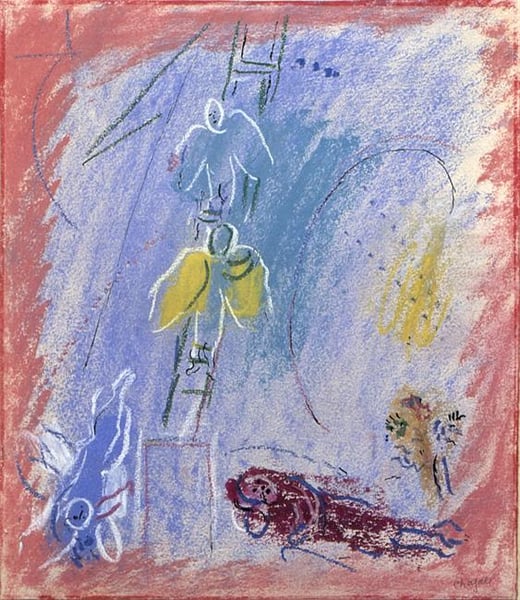
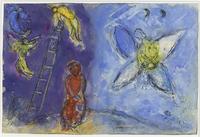
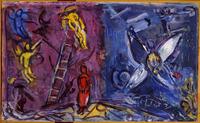
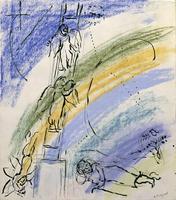
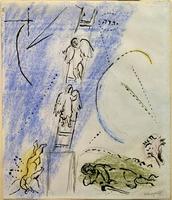
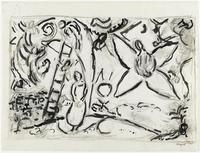
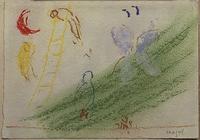
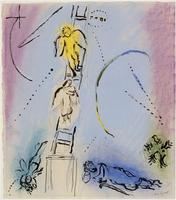
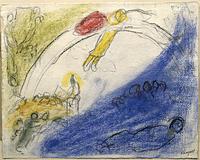
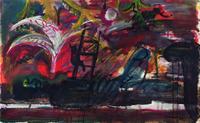
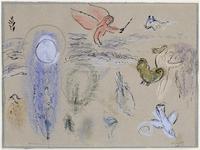
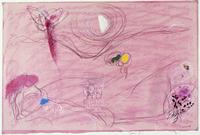
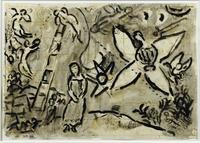
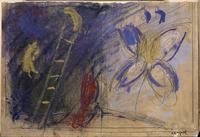
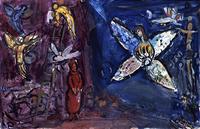
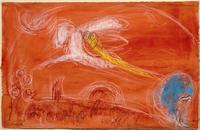
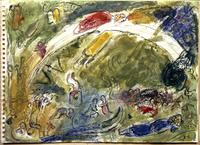
As a study for the larger work The Jacob's Dream, this piece by Marc Chagall offers a unique window into the creative process of a master of Naïve Art (Primitivism). Within the Naïve style, which intentionally rejects academic conventions in favor of intuitive, symbolic, and often dreamlike imagery, a sketch or study holds particular significance: it reveals the raw, unpolished genesis of Chagall's fantastical vision. The biblical subject of Jacob's ladder—a bridge between heaven and earth—aligns perfectly with the Primitivist tendency toward mythic, folkloric themes. Here, the study format strips away finished detail, emphasizing Chagall’s spontaneous handling of composition and form. This spontaneity is central to Naïve Art's appeal, and the work's significance lies in documenting how Chagall translated a visionary religious dream into his signature, childlike yet profoundly poetic visual language, making the intangible tangible through the most direct of artistic means.