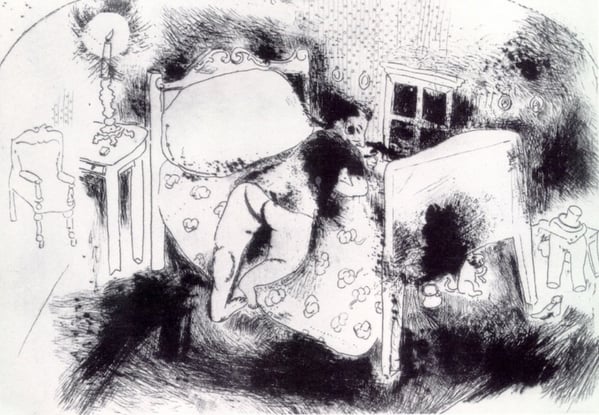
Analisi esperta di Tchitchikov on his bed di Marc Chagall
Stile: Naïve Art (Primitivism) · Genere: illustration
Expert Analysis: "Tchitchikov on his bed" by Marc Chagall
Context & Significance
This work is part of Marc Chagall’s celebrated series of illustrations for Nikolai Gogol’s satirical novel Dead Souls (published 1842). Chagall, a master of Naïve Art (Primitivism), eschews academic naturalism in favor of a childlike, dreamlike visual language. His illustrations for Gogol are considered among the most imaginative literary interpretations of the 20th century, merging Russian folk culture, Jewish mysticism, and modernist distortion into a single, disarming style.
Composition & Visual Language
In Tchitchikov on his bed, Chagall depicts the novel’s antihero, Pavel Chichikov, in a moment of private reverie. The scene is typical of Chagall’s naïve approach: spatial logic is suspended. The bed floats or tilts, the figure of Chichikov is slightly out of proportion, and the room lacks consistent perspective. Colors are vivid but unblended—bright blues, reds, and greens applied in flat, emphatic patches. The composition reads more as a memory or a dream than a literal representation.
Primitivist Elements
Chagall’s primitivism here is deliberate, not accidental. By flattening depth and simplifying forms, he taps into the emotional directness of folk art and children’s drawings. This technique strips away the pomp of realist illustration and instead conveys the psychological strangeness of Gogol’s world. The bed becomes both a physical object and a symbol of Chichikov’s restless ambition—his schemes and deceptions simmering just beneath a deceptively calm surface.
Significance within Style & Genre
As an illustration, Tchitchikov on his bed transcends mere accompaniment; it interprets the text through a lens of playful, almost surreal naivety. Chagall’s Primitivism was revolutionary for literary art because it valued inner vision over external accuracy. Where a traditional illustrator might have rendered a credible hotel room, Chagall gives us the feeling of Chichikov’s solitude and absurdity. This work demonstrates how Naïve Art can serve high literature—not by documenting, but by translating its spiritual and comic undertones into a universal, childlike idiom.
Key Takeaway
What makes Tchitchikov on his bed significant is its ability to merge the vernacular directness of Primitivism with the sophisticated narrative of a Russian classic. Chagall invites viewers to see Gogol’s world afresh: unburdened by realism, full of emotional truth, and anchored in the timeless power of the naïve vision.
Museum / Gallery
Visivamente simili
20 opere con composizione e palette affini
Reclining on the bed
Marc Chagall
Le menage hereux
Jean David
Early Morning
Will Barnet
Death
Jeanne Hébuterne
Dream of the forest
Oleg Holosiy
Hospital Visit
Kathe Kollwitz
Auguste is Sick (Toy #1)
Gabriele Munter
Elijah resurrects the son of the widow of Zarephath (I Kings, XVII, 17-22)
Marc Chagall
Remords
Theophile Steinlen
My hospital bed
Hubertine Heijermans
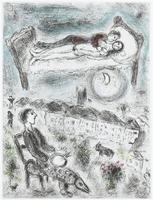
Illustration for Louis Aragon's work "One who says things without saying anything"
Marc Chagall
Wounded at Partisan Hospital
Alfred Krupa
Big Brother
Luc Tuymans
Reclining Female Nude on a Couch
Ernst Ludwig Kirchner
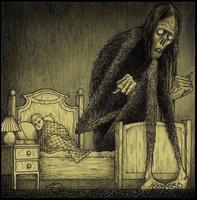
Bedtime
Don Kenn
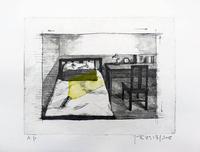
Green Wall series No. 2
Zhang Xiaogang
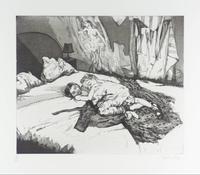
Mist IV
Paula Rego
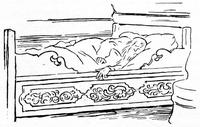
Herre Gud Gi Mig En Skraa
Theodor Severin Kittelsen
Woman in bed (Sleeping girl)
Walter Gramatté
Sleeping Beauty
Charles Blackman