Analisi esperta di The cowshed di Marc Chagall
Stile: Naïve Art (Primitivism) · Genere: symbolic painting
Expert Analysis of "The Cowshed" by Marc Chagall
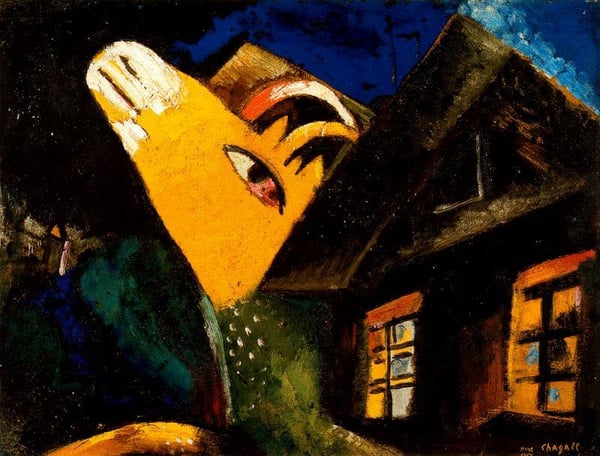
Marc Chagall’s The Cowshed exemplifies the artist’s distinctive fusion of Naïve Art (Primitivism) with deeply personal symbolic painting, a combination that makes the work significant both within his own oeuvre and within the broader modernist movement.
In this scene, Chagall takes an ordinary rural subject—the cowshed—and transforms it into a dreamlike, emotionally charged tableau. The hallmark of Naïve Art, with its deliberately childlike perspective, simplified forms, and vivid, unnatural colors, is here used not as a mark of artistic inability but as a conscious strategy to bypass academic conventions and tap into raw, universal feeling. Chagall’s handling of the barn interior, the animals, and any human figures (likely present but not specified) would be flattened, tilted upward, and bathed in an otherworldly light—common techniques that evoke memory and fantasy rather than literal observation.
What makes The Cowshed significant within the Primitivist tradition is its rejection of Renaissance perspective and naturalism in favor of an expressive, almost folkloric vocabulary. Chagall, like other Primitivists (e.g., Henri Rousseau, though with a different sensibility), sought authenticity and spiritual depth in simplicity. However, Chagall uniquely layers this naive style with a rich symbolic language drawn from his Jewish heritage, personal memories of his childhood in Vitebsk, and a cosmic sense of wonder. The cowshed, a humble agricultural space, becomes a stage for themes of home, love, or even transcendence—perhaps with a floating figure or a tiny fiddler, motifs typical of his work.
Within the period of early 20th-century modernism, The Cowshed stands as a bridge between folk art and avant-garde painting. It challenges the viewer to see the miraculous in the mundane, affirming that the most ordinary subject can, through the lens of naive symbolism, reveal profound emotional and spiritual truths. This blending of the naive and the symbolic is exactly why Chagall’s work remains unparalleled: it makes the familiar strange and the strange familiar, all while retaining an intense, childlike wonder.
Visivamente simili
20 opere con composizione e palette affini
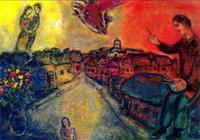
Artist over Vitebsk
Marc Chagall
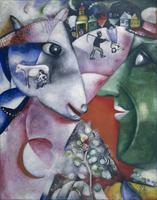
I and the Village
Marc Chagall
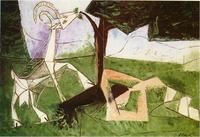
Spring
Pablo Picasso
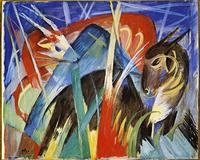
Fairy Animals
Franz Marc
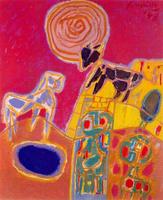
The House of Animals
Corneille
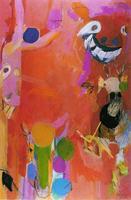
Mascarados de Pirenópolis XIV
Julio Pomar
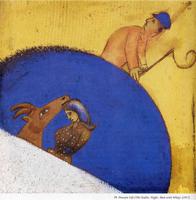
Peasant Life (The Stable Night Man with Whip)
Marc Chagall
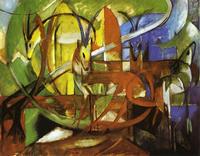
Gazelles
Franz Marc
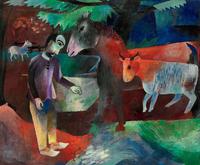
Mann, Pferd, Kuh
Heinrich Campendonk
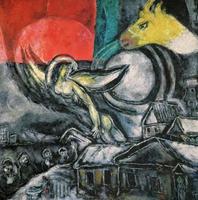
Easter
Marc Chagall
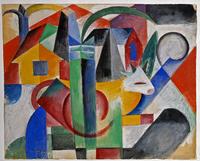
Gelb-weiße Kuh vor Häusern
Heinrich Campendonk
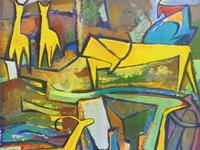
Yellow Afternoon
Walter Battiss
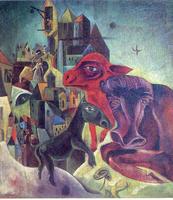
Untitled
Max Ernst
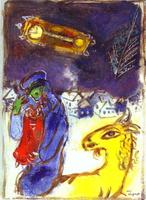
A jew with Torah
Marc Chagall
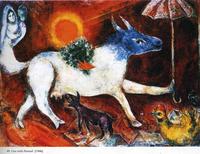
Cow with Parasol
Marc Chagall
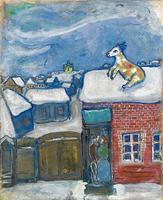
A village in winter
Marc Chagall
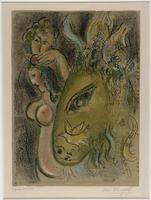
Paradise
Marc Chagall
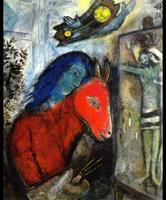
Self Portrait with a Clock In front of Crucifixion
Marc Chagall
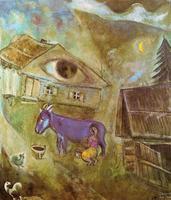
The House with the Green Eye
Marc Chagall
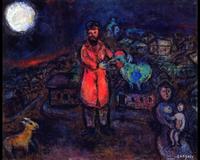
Village
Marc Chagall