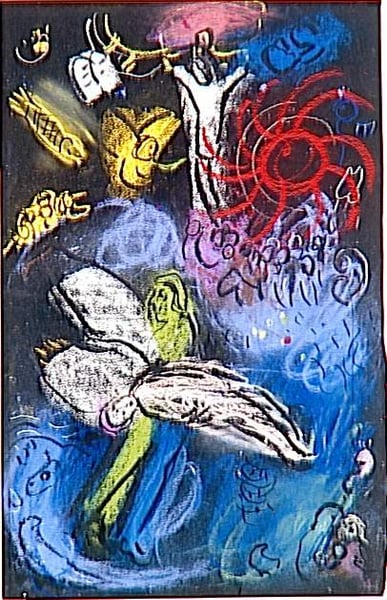
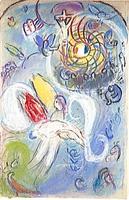
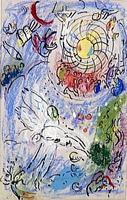
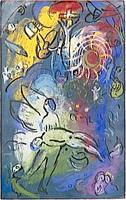
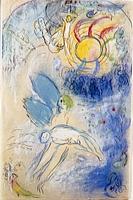
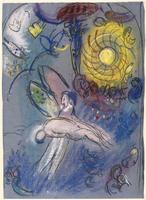
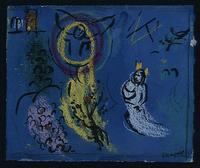
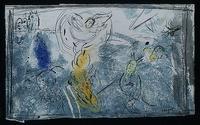
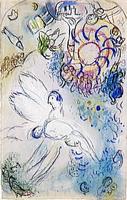
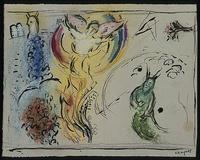
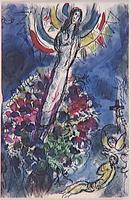
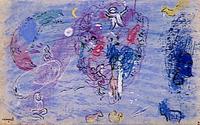
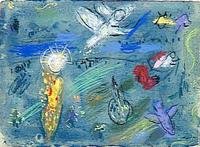
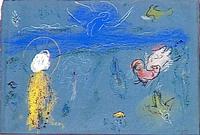
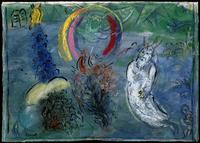
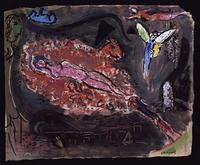
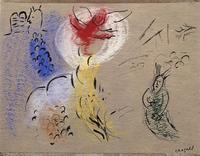
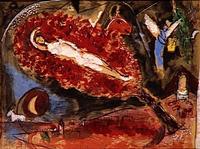
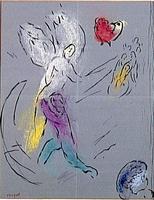
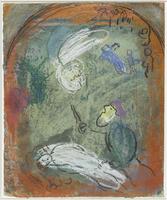
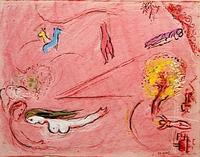
As a sketch and study, Marc Chagall's "The Creation of Man" exemplifies the core principles of Naïve Art (Primitivism), a style that deliberately rejects academic polish in favor of raw, intuitive expression. Working in this vein, Chagall transforms a grand biblical subject—the moment of human creation—into an intimate, almost childlike vision. The sketch format is significant: it captures the artist’s immediate, unmediated thought process, where line and form convey a sense of spontaneous wonder rather than polished anatomy or perspective. This aligns with Primitivism’s celebration of “untutored” directness, even though Chagall was a formally trained artist.
What makes this work notable is how Chagall infuses a universal religious narrative with personal, folkloric imagery. The sketch likely features floating figures, dreamlike proportions, and a flattening of space—hallmarks of his naïve style. By rendering such a profound act as God breathing life into man with the simplicity of a sketch, Chagall emphasizes emotional and spiritual truth over realistic depiction. In the context of early 20th-century modernism, this approach challenged conventional religious art, which often demanded grandeur or solemnity. Instead, "The Creation of Man" stands as a testament to how Primitivism could rejuvenate ancient stories through a lens of innocent, visionary sincerity.