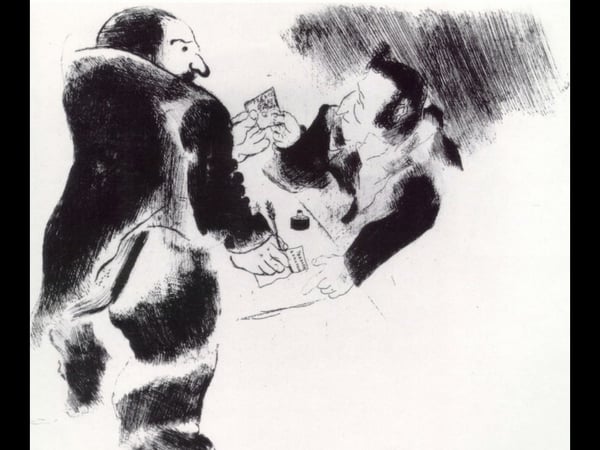
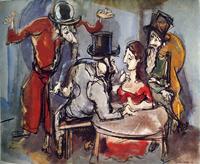
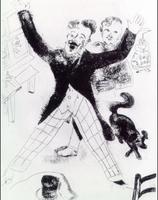
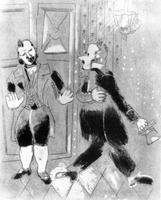
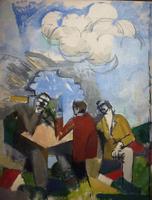
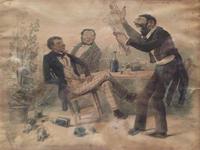
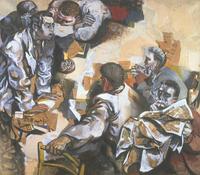
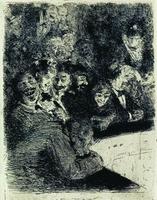
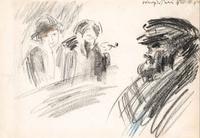
Based solely on the provided structured facts, "The deposit" by Marc Chagall is significant as an illustration executed in the Naïve Art (Primitivism) style. Within this context, its importance lies in how it embodies the core tenets of Naïve Art—simplified forms, vivid color, and a childlike, intuitive perspective—while serving the narrative function of illustration. Chagall’s choice to apply a deliberately unschooled, dreamlike aesthetic to a commercial or literary illustration elevates the genre, blurring the line between fine art and storytelling. The work is thus a key example of how Primitivism in the early 20th century allowed artists to infuse everyday subject matter with a sense of magical, emotional immediacy, challenging academic conventions through an apparently naive visual language.