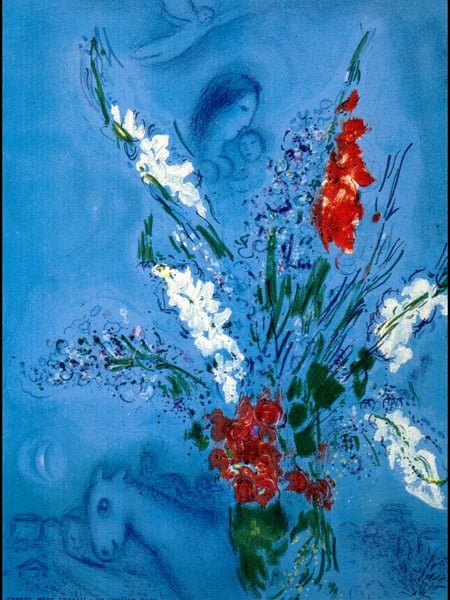
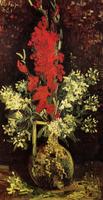
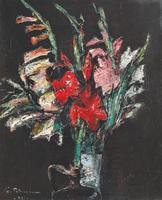
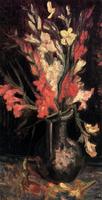
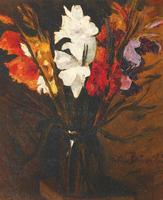
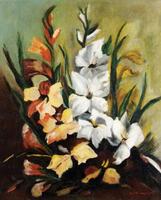
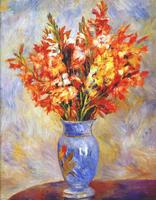
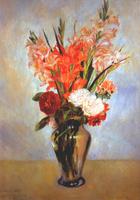
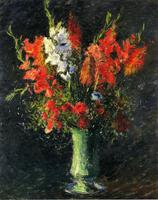
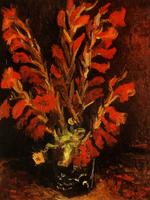
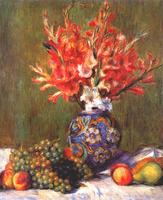
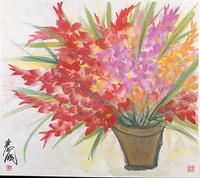
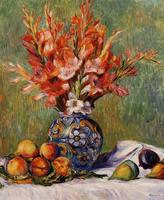
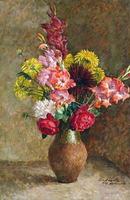
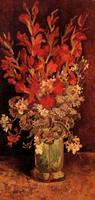
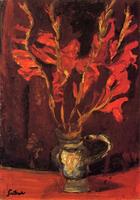
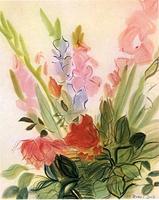
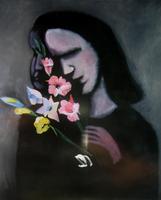
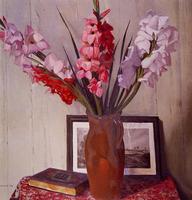
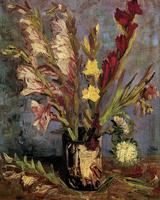
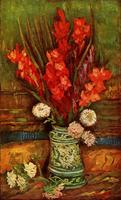
In The Gladiolas, Marc Chagall transforms a traditional still life genre into a vibrant expression of Naïve Art (Primitivism). The work’s significance lies in how it subverts the academic conventions of still life—typically concerned with meticulous realism and spatial accuracy—by embracing a deliberately unsophisticated, childlike vision. The bold, unmodulated colors and flattened perspective characteristic of Naïve Art allow Chagall to infuse a humble bouquet with emotional intensity and a sense of joyous immediacy. Within his broader style, this painting exemplifies how Primitivism could elevate ordinary subject matter into a poetic, folk-infused symbolism, challenging the hierarchy of genres and celebrating raw visual expression over technical polish.