
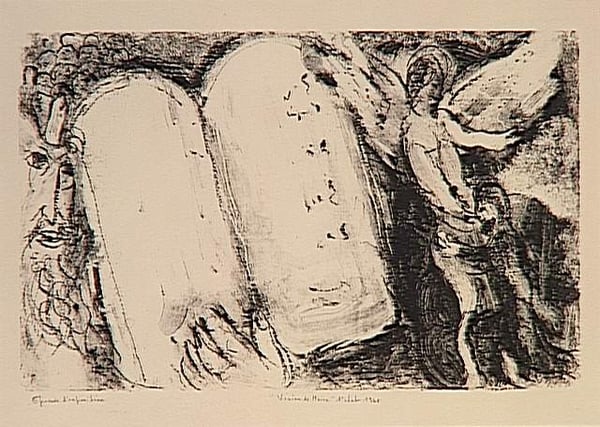
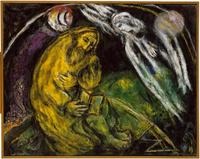
The Vision of Moses
Ayrıntılar
Marc Chagall sanatçısının The Vision of Moses eseri hakkında uzman analizi
Tarz: Naïve Art (Primitivism) · Tür: religious painting
Expert Art Historical Analysis: "The Vision of Moses" by Marc Chagall
Within the framework of Naïve Art (or Primitivism) and the genre of religious painting, Chagall's work achieves a distinctive synthesis that transcends conventional categorization. Despite the apparent simplicity of the Naïve style—characterized by flat, often unrealistic perspectives, bold outlines, and a childlike directness—Chagall employs these very qualities to articulate a profoundly spiritual and visionary experience.
Significance within Naïve Art / Primitivism:
Chagall appropriates the formal “naïveté” of folk art and early modern primitivism not as a limitation but as a liberating language. In The Vision of Moses, the flattened space, exaggerated scale, and floating figures reject academic naturalism. Instead, they evoke the emotional truth of a biblical encounter. The primitivist approach strips away realism to access a more intuitive, symbolic realm—one where the miraculous becomes believable. Chagall’s version of Naïve Art is unique because it is layered with sophisticated cultural references (Jewish folklore, Eastern European shtetl memories, and Christian iconography), making the style a vehicle for personal and collective mythology rather than a mere stylistic exercise.
Significance as Religious Painting:
The painting’s theme—Moses receiving the Law or beholding a divine vision—is a cornerstone of Judeo-Christian tradition. Chagall reimagines this moment with an intimate, dreamlike quality. The figures often float or tilt in space, as if unbound by gravity, mirroring the ecstatic nature of revelation. By placing Moses in a luminous, almost hallucinatory landscape, Chagall moves religious painting away from historical illustration and toward an expression of inner spiritual turmoil and hope. The work stands as a bridge between sacred narrative and modernist subjectivity, foregrounding the artist’s own identity as a Jewish-Russian emigrant deeply engaged with universal themes.
Overall Significance:
The Vision of Moses is significant because it exemplifies how Naïve Art can serve a profound theological and emotional purpose. Chagall proves that “primitive” visual language need not be simplistic; it can be a powerful tool for conveying the ineffable. The painting’s dreamlike logic, vivid symbolism, and fusion of personal heritage with biblical history make it a landmark work—one that redefines religious painting for the modern age by approaching faith through the eyes of a visionary child.
Görsel olarak benzer
İlişkili kompozisyon ve renk paletine sahip 20 eser
The Vision of Moses
Marc Chagall
Moses with the Tablets of the Law
Marc Chagall
Ten Commandements
Marc Chagall
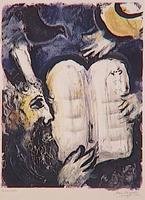
Moses with the Tablets of the Law
Marc Chagall
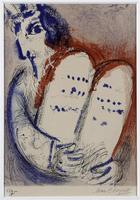
Moses with the Tablets of the Law
Marc Chagall
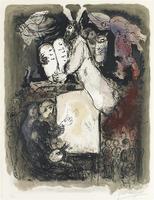
Painter`s dream
Marc Chagall
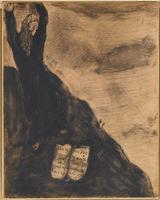
In rage which he felt to the idolatry of the chosen people of God, Moses broken the Tablets of the Law (Exodus, XXXII, 15-19)
Marc Chagall
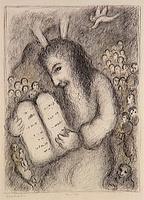
Moses
Marc Chagall
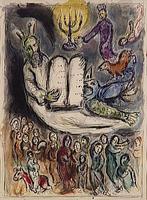
Moses called the elders and presents Tablets of Law
Marc Chagall
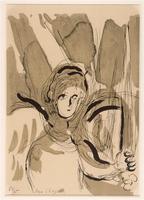
Angel with a sword
Marc Chagall
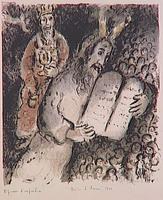
Moses and Aaron
Marc Chagall
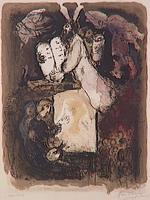
The painter's dream
Marc Chagall
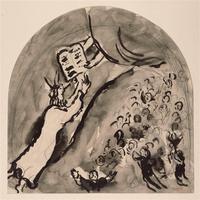
Moses receiving the Tablets of Law
Marc Chagall
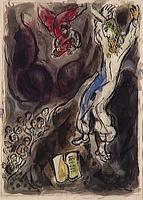
Moses breaks Tablets of Law
Marc Chagall
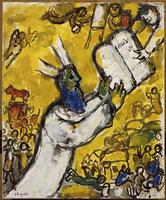
Moses receiving the Tablets of Law
Marc Chagall
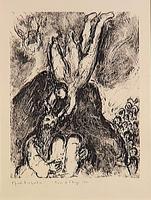
Moses and angel
Marc Chagall
Praying
Marc Chagall
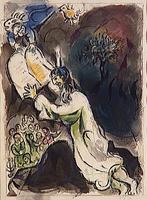
Moses received the Tablets of Law
Marc Chagall
Debussy: The Sunken Cathedral
Maria Bozoky
Prophet Jeremiah
Marc Chagall