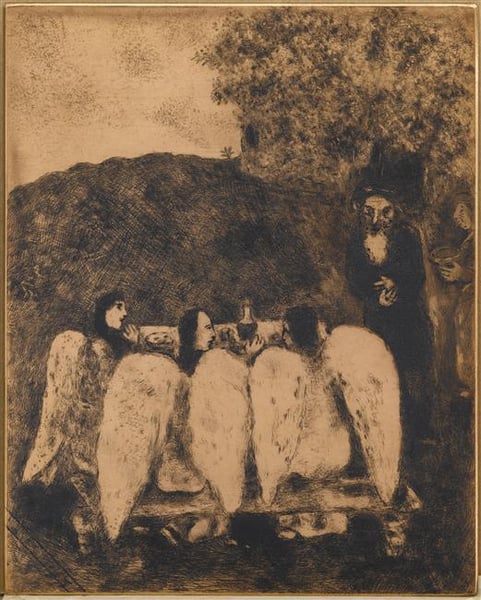
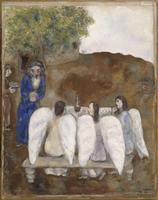
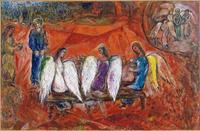
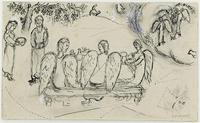
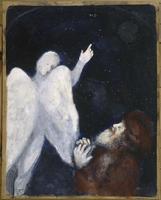
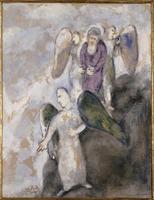
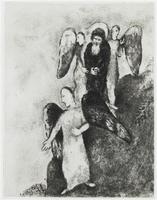
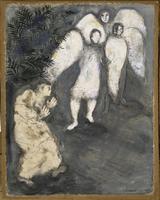
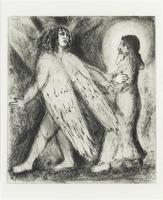
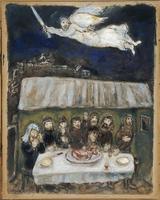
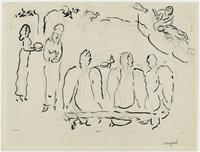
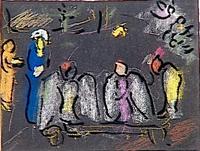
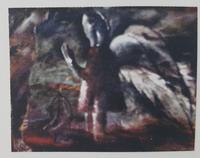
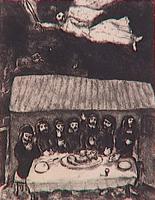
Marc Chagall’s "Three Angels Visit Abraham (Genesis, XVIII, 1-8)" exemplifies the artist’s unique fusion of Naïve Art (Primitivism) with deep religious narrative, marking a significant departure from traditional biblical illustration. Chagall transforms the solemn Old Testament episode into a dreamlike, emotionally direct vision: the angels appear as floating, ethereal figures, their simplified forms and vibrant colors evoking folk art and childhood memory. The composition’s lack of rigid perspective—a hallmark of Naïve style—allows symbolic elements (such as the oversized table or skewed architectural details) to heighten the miraculous encounter. This work is significant for how Chagall, as a Jewish modernist, reimagines sacred history through a lens of personal, whimsical spirituality, blending religious devotion with the raw, intuitive expressiveness of Primitivism. The painting thus becomes not a literal depiction but a poetic meditation on hospitality, divine presence, and the intersection of the earthly and the celestial.