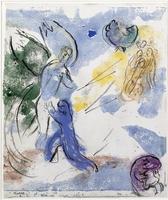
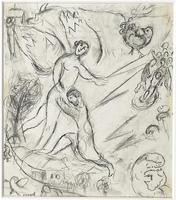
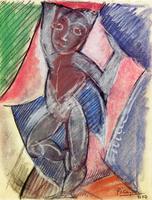
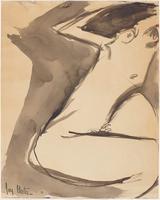
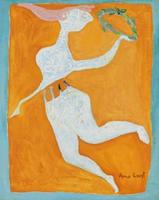
Expert Analysis of "Title page, Angel" by Marc Chagall
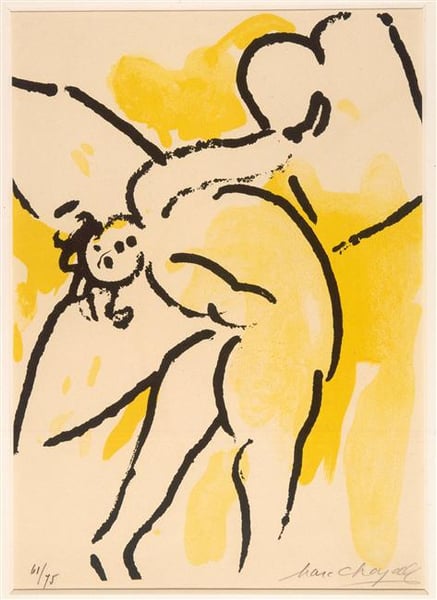
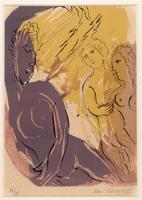
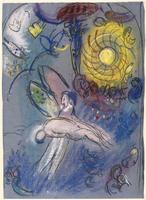
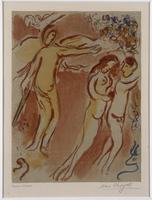
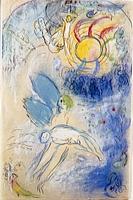
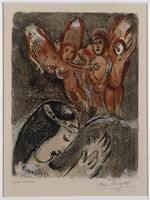
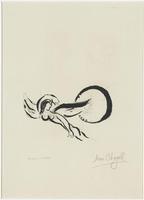
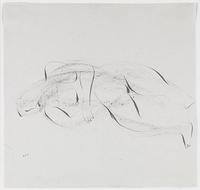
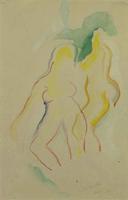
Within the realm of Naïve Art (Primitivism) and religious painting, Marc Chagall’s Title page, Angel achieves significance through its fusion of folkloric innocence with profound spiritual symbolism. Chagall, though not a self-taught “naïve” artist in the strict sense, deliberately adopted a childlike, intuitive visual language in this work—flattening perspective, simplifying forms, and using vivid, dreamlike colors. This approach allows the angelic figure to inhabit a space that feels both otherworldly and intimately human.
As a religious painting, the work transcends traditional iconography. Instead of depicting an august, celestial being, Chagall presents a tender, almost whimsical angel—perhaps a guardian or messenger—that merges the ethereal with the earthly. The “title page” context suggests that this angel serves as an introduction, a threshold between the viewer and a deeper narrative. Its significance lies in how Chagall democratizes the sacred: the angel’s awkward, loving posture and earthy palette make the divine accessible, resonating with the naïve art movement’s rejection of academic grandiosity in favor of heartfelt sincerity. This piece exemplifies Chagall’s ability to harmonize personal Jewish mysticism with universal Christian themes, all while maintaining the raw, emotional clarity that defines Primitivism.