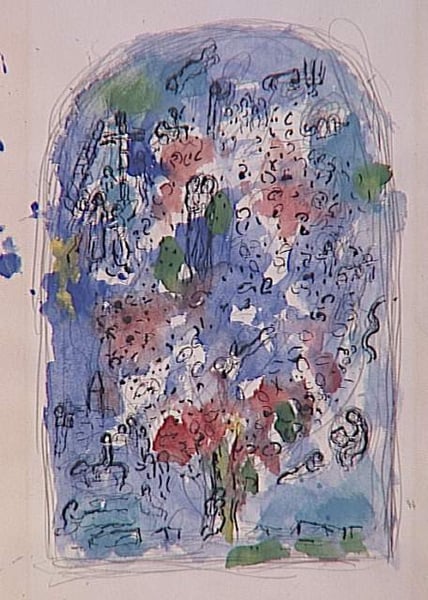
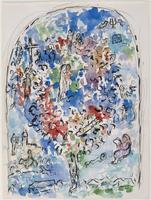
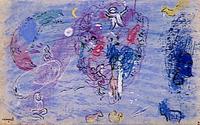
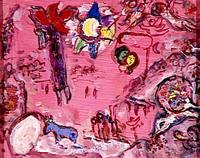
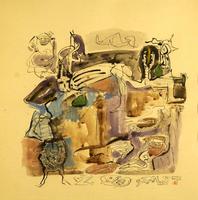
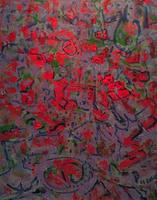
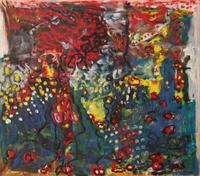
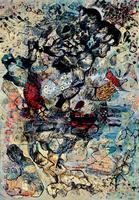
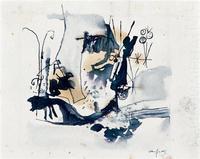
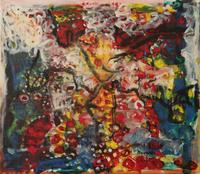
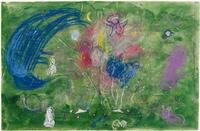
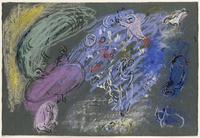
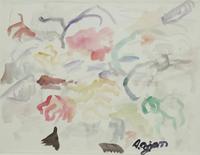
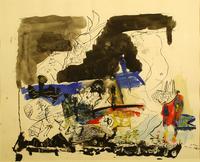
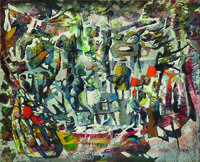
This sketch by Marc Chagall, Tree of Life (sketch to vitrage in Chapelle des Cordeliers in Sarrebourg), is significant as a preparatory design that bridges Chagall’s characteristic Naïve Art style with the monumental medium of stained glass. Within the Primitivist tradition, the work employs a flat, symbolic composition and vivid, unmodulated colors—hallmarks of the style that reject academic naturalism in favor of emotional and spiritual directness. As a design for a vitrage, it captures the essential interplay of light and color that would animate the finished window, while the tree-of-life motif reflects Chagall’s fusion of Biblical imagery, folkloric roots, and personal mysticism. The sketch’s importance lies in its role as a creative blueprint for a permanent sacred installation, demonstrating how Naïve Art’s simplified forms and dreamlike logic can be translated into a luminous, architectural context—making it a key document of Chagall’s late-career engagement with religious space and modernist stained glass.